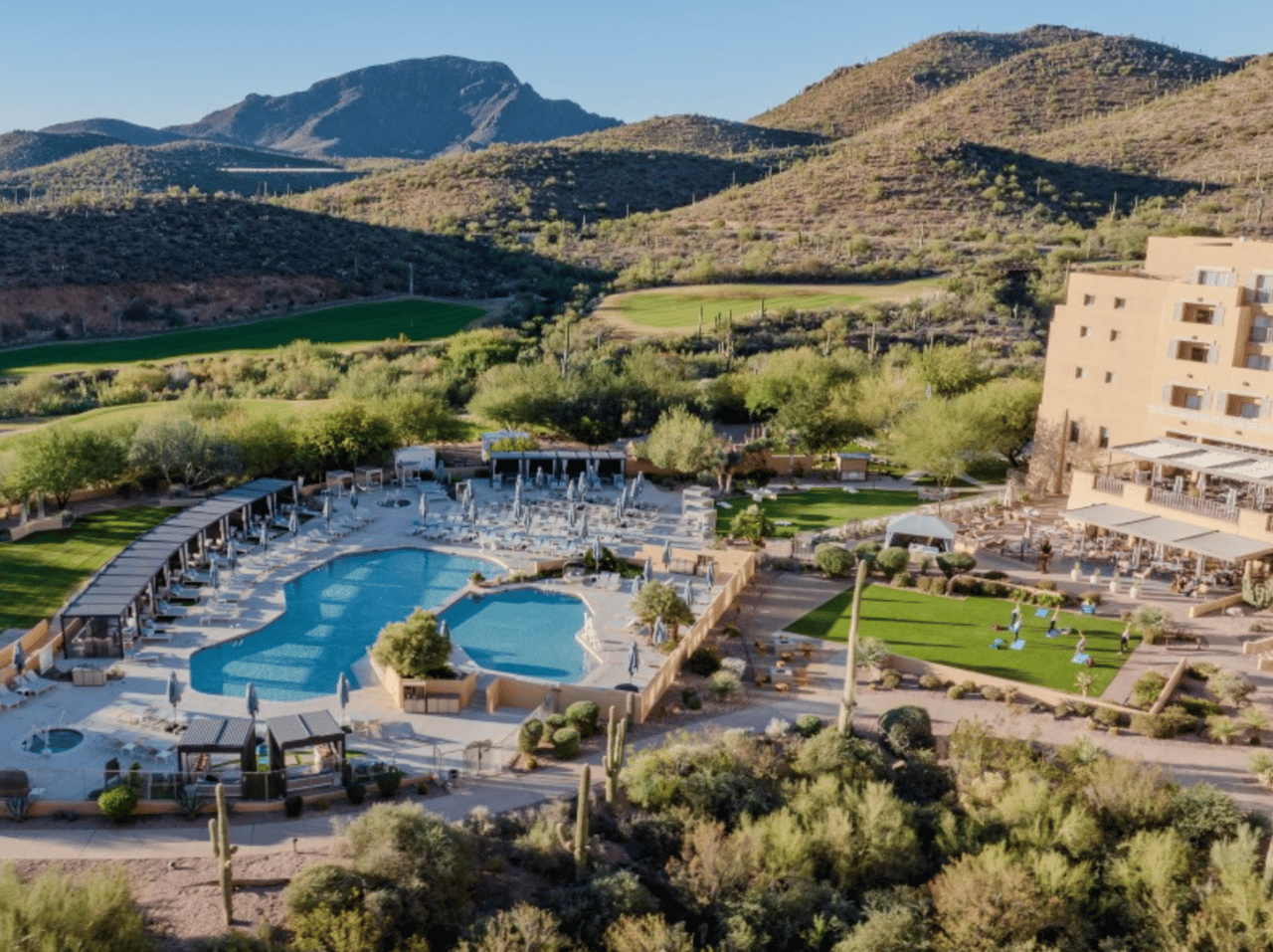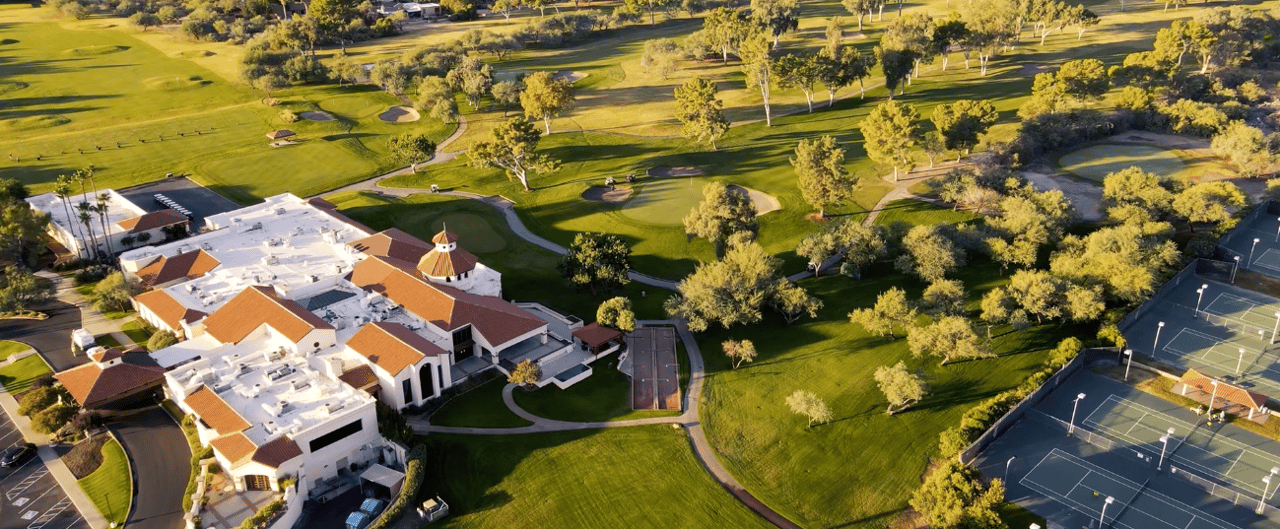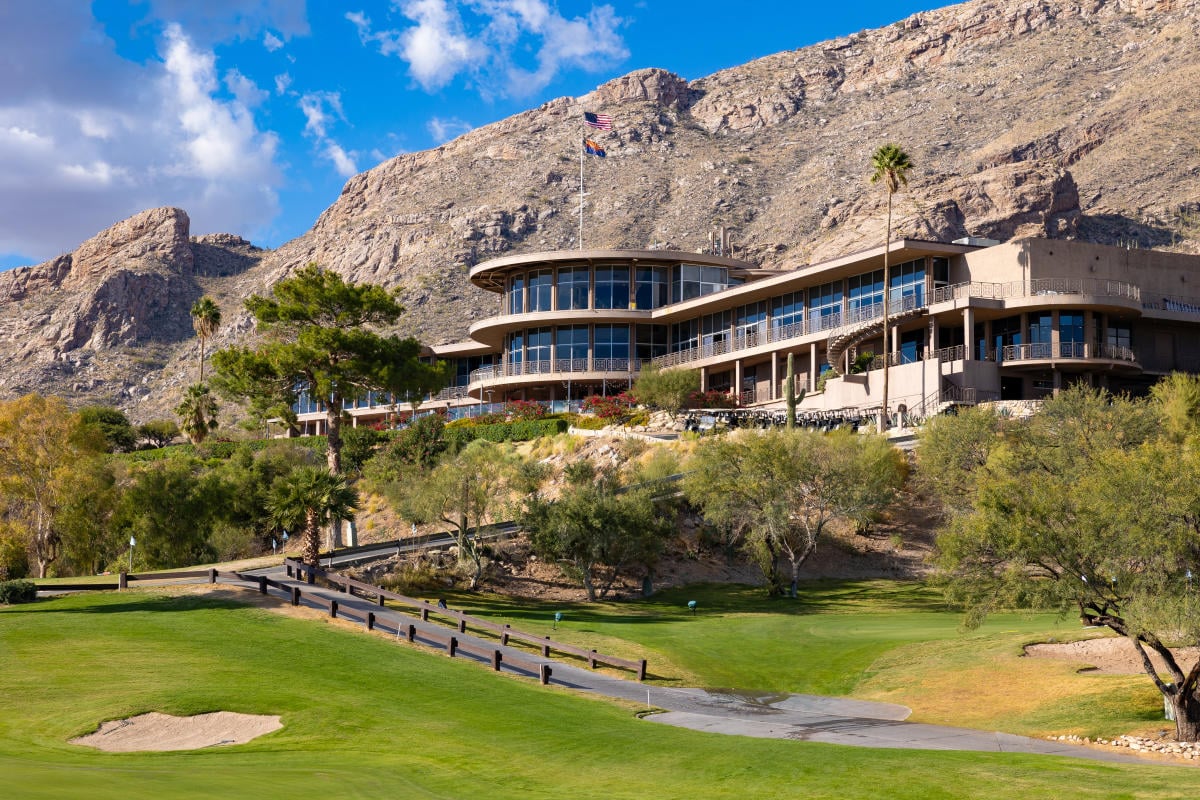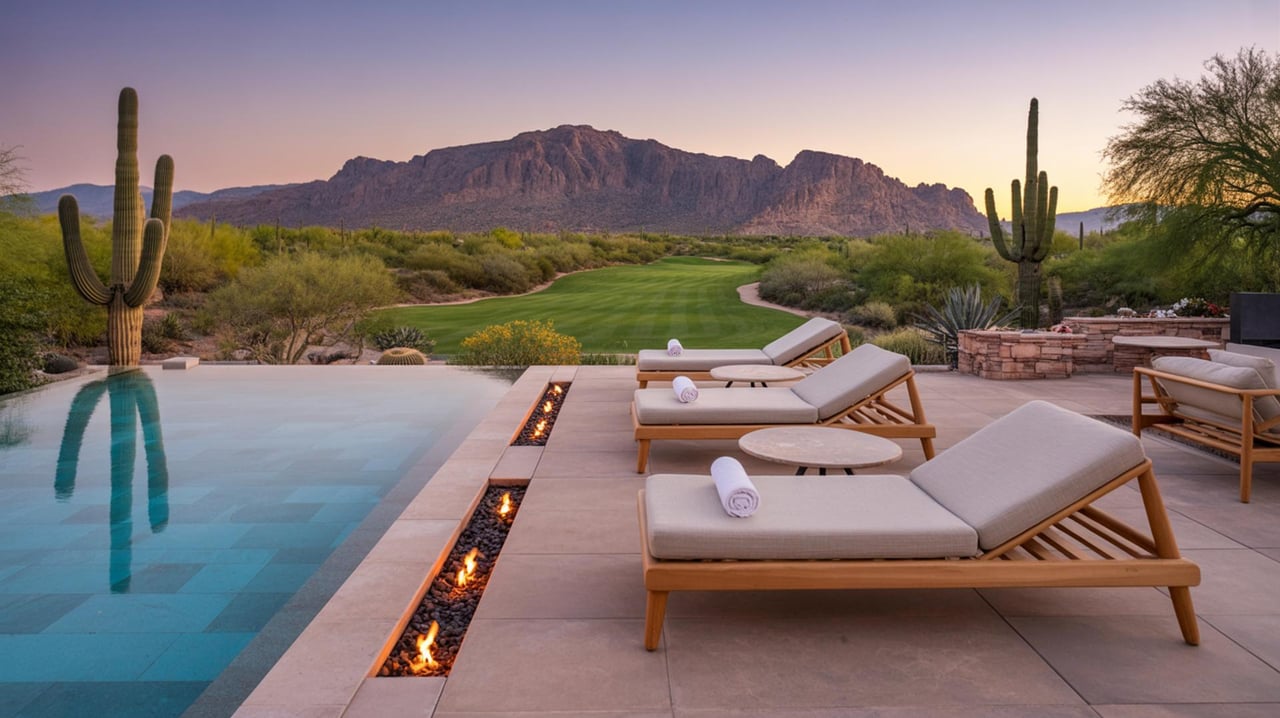
Ask a longtime Barrio Hollywood resident what El Rio is, and you'll get one answer depending on which Tuesday you catch them. Ask a golfer and they'll describe a tight, old-school muni layout with small greens that punish anything but a soft touch. Ask someone with a disc golf bag in their trunk and they'll describe 36 baskets spread across a course rated hard by the people who track that sort of thing. Ask a runner heading out at dawn and they might not mention golf at all. They'll talk about the dry riverbed and the paved path that slides past the property without a green fee in sight.
All three are talking about the same 90-some acres off Speedway. Most of them have never done what the other two do.
A Course Built for One Game, Then Asked to Hold Two More
El Rio's story starts as a private country club in the 1930s, back when it was also the original home of the PGA's Tucson Open. The course's best-known moment from that era belongs to Babe Didrikson Zaharias, who famously Monday-qualified into the 1945 Tucson Open here, a detail that still shows up in golf histories of the property. The country club ran until 1968, when the City of Tucson bought it and reopened it as public land, which is the version everyone in the neighborhood has actually walked past.
What the city inherited was a course built for one sport at a time when 6,400 yards from the back tees and a par-70 layout with two lakes and mature trees felt generous. It still plays that way today. It rewards patience over power, which is part of why it draws steady weekday traffic from golfers who've aged out of longer courses but haven't aged out of golf.
What nobody in 1968 planned for was a second sport moving onto the same grass.
Same Fairways, Different Rules
Somewhere along the way, El Rio also became one of Tucson's disc golf destinations, and not as a separate parcel tucked off to the side. The 36-hole disc course runs across the same fairways the ball golfers use, rated hard by the community that tracks these things on UDisc, with a walk-on fee running around $10 and a cart option closer to $15 as of recent listings. That's a fraction of a standard green fee, which is exactly why it draws a different crowd on a different clock.
It also means two groups of people are sharing one strip of turf with two different sets of expectations. A disc golfer lining up a long drive and a foursome waiting on the tee box aren't always reading the situation the same way. Neighbors who've played both sides of El Rio will tell you the etiquette gets sorted out fast once you know it's happening, but almost nobody arrives already knowing. You show up for one sport, and the other one is just there, playing through.
If you've lived in Barrio Hollywood for years and only ever set foot on El Rio for one of these two things, you've been treating a shared course like a single-purpose one. The other game has been running the whole time, on the same nine holes you thought you knew.
A Week at El Rio, Broken Down by Who's Actually There
- Weekday mornings: the driving range opens at 5:30 a.m., and it's mostly the same regulars, working on the short game the small greens demand.
- Midday and early afternoon: disc golfers filter in on the cheaper walk-on rate, sharing fairways with whatever golf group is out at the same time.
- Weekend late afternoons: the pace slows, PM rates apply, and the course empties out just enough that both sports coexist without much friction.
- Any time, along the eastern edge: cyclists and runners pass by on the Loop without ever stepping onto the course itself, using a completely separate right of way that happens to border the same property.
That last group is the one most Barrio Hollywood residents already belong to, often without connecting it back to El Rio at all.
The Third Door Doesn't Go Through the Gate at All
The Santa Cruz River Park Trail runs along the property's edge as part of what locals call the Loop, the Chuck Huckelberry Loop, a car-free path system that now stretches past 130 miles across Tucson and Pima County. It didn't start as a recreation project. It started as flood control after the Santa Cruz River caused serious damage in 1983, and the access roads built for maintenance crews eventually got paved and opened to the public. A stretch of the Santa Cruz segment even overlaps with the Anza National Historic Trail, so a neighborhood jog can technically retrace a few hundred feet of an 18th-century Spanish colonial route without anyone noticing.
This is the version of El Rio that requires no green fee, no disc, no scorecard. You don't pass through a clubhouse or a pro shop to use it. You just step onto pavement that happens to trace the same boundary as the golf course, and depending on the season, you're moving alongside a riverbed that's dry most of the year and briefly alive after summer monsoon rain.
Plenty of Barrio Hollywood residents use this stretch of the Loop constantly, for a run before work or a slow bike ride in the evening, and have never once connected it to the golf course sitting a few hundred feet away. It's the same land, functioning as a third thing entirely.
One Property, Three Different Tuesdays
The interesting part isn't that El Rio has a golf course, a disc course, and a trail. It's that the property has spent decades quietly running all three at once, and the design of the place means residents self-sort into exactly one lane and mostly stay there. The golfer doesn't clock the disc golfers sharing the fairway. The runner on the Loop doesn't clock either sport happening just past the tree line. Each group has its own price point, its own hours, its own unspoken rules, and its own idea of what El Rio actually is.
If you've called Barrio Hollywood home for a while, there's a decent chance you've settled into one of these three relationships with El Rio without ever trying the other two. The course that hosted a Tucson Open qualifier in 1945 is the same course where you can walk on with a disc bag for less than the price of lunch, and it's also the same stretch of ground where the pavement under your running shoes used to be a flood-control access road. Three different uses, one shared address, and most of the neighborhood only knows the one they picked first.
For more on what daily life looks like around Barrio Hollywood, including where locals actually eat and explore nearby and what the riverwalk side of the neighborhood offers day to day, the Barrio Hollywood neighborhood guide has more of the texture that makes this stretch of Tucson's west side worth paying attention to.
If you're a longtime neighbor, a recent arrival, or just someone with questions about this corner of Tucson, Daniel Sotelo would love to hear from you. Let's connect.