This spring, a crew was rebuilding the stone staircase beside Sabino Dam. Hikers kept stopping to tell the stonemason the same thing. "Since we've been building it, several people have come by to tell us how they've had to crawl down without getting hurt," Darrell Klesh told KGUN in May. Those stairs are open again now. They are also the first finished piece of a much larger plan for Sabino Canyon. That plan is being built in an order that makes sense once the price tags sit side by side. The staircase cost $38,000. The new visitor center at the canyon entrance is a $32.8 million project.
For anyone in Ventana Canyon who heads west on Sunrise Drive for a morning hike, that gap between the two numbers decides what changes at Sabino this year and what doesn't.
Stairs That Waited Two Decades for $38,000
The stairs climb to the upper level of Sabino Dam, a native-stone structure from the Works Progress Administration era that was completed in 1938. KVOA reported that a flood damaged them more than 20 years ago, and visitors couldn't use them after that.
The rebuild reused the old staircase itself. KGUN reported that contractors took original pieces from the 1930s and repurposed them for the new stairs. Jim Darling, president of Friends of Sabino Canyon, said the new version would be "a little bit wider, and the steps themselves will be kept to the current standards." Klesh led the work with masons Rodney and Corey. Before construction began, the Coronado National Forest reviewed the project's environmental and cultural effects, and the work was coordinated with the Arizona State Historic Preservation Officer to meet historic preservation standards.
The funding is the detail that matters for the rest of this story. KVOA reported that private donors through Friends of Sabino Canyon paid for more than half of the project, and the Coronado National Forest covered the rest. A $38,000 job split between a volunteer nonprofit and a federal agency can move from approval to ribbon-cutting in a matter of months. That is what happened here.
One Approval, Four Projects, Four Different Speeds
On December 1, 2025, the Coronado National Forest signed off on the environmental review for the Sabino Canyon Visitor Center Reimagined project. The project grew out of a master planning effort the Forest and Friends of Sabino Canyon began in March 2023. That single decision cleared several projects at once, and they are moving at very different speeds. Here is where each one stood as of mid-October 2026:
- Sabino Dam stairs. Finished and celebrated by the Santa Catalina Ranger District, Friends of Sabino Canyon and local partners.
- A permanent restroom at the overflow parking lot. The Arizona Daily Star listed it among the smaller projects scheduled to begin "in the coming months." We could not confirm whether it has been installed.
- A new Bajada Loop trail. Darling told the Star that the old trail has deteriorated and has to move to make room for visitor center construction. He said its replacement, an accessible interpretive trail, was already designed and ready to be installed later this year. In June, KGUN reported more shade structures, updated trails and routes, and new art at some restrooms as "coming this fall."
- The visitor center itself. In the Forest Service's own words, "not currently funded."
The list runs smallest to largest, and that is also the order of how finished each project is.
Why the Biggest Piece Moves Slowest
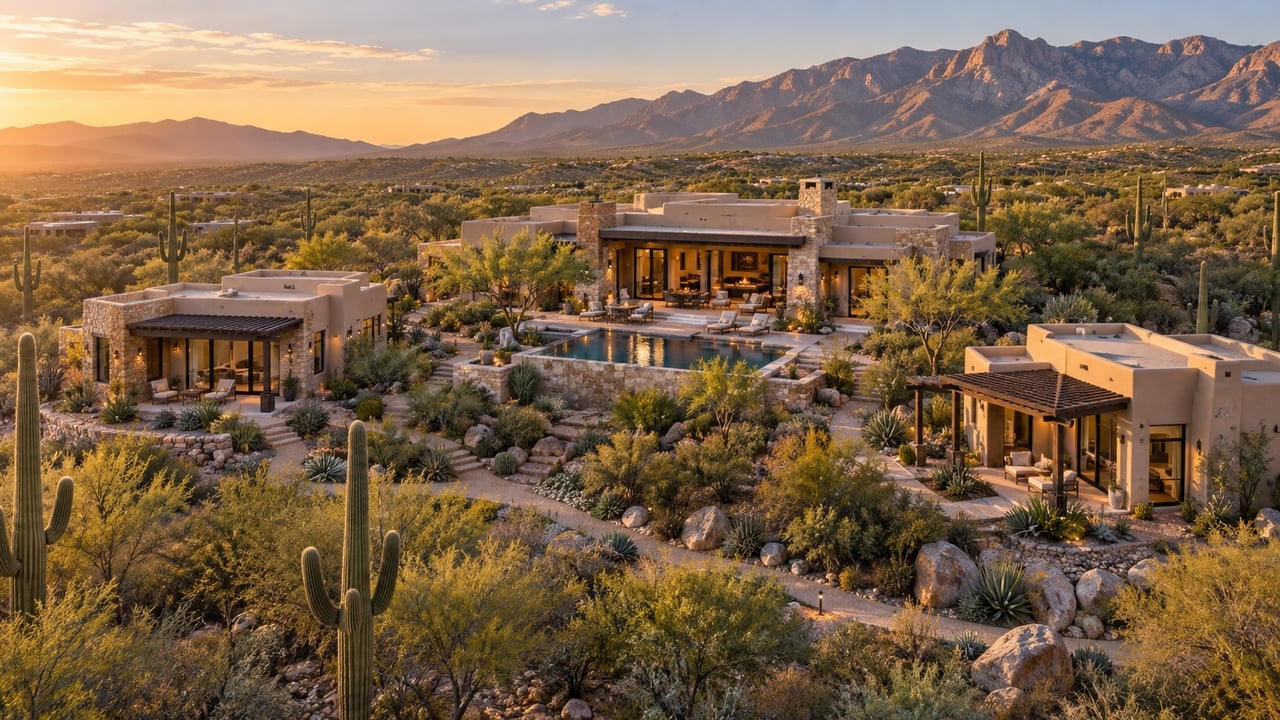
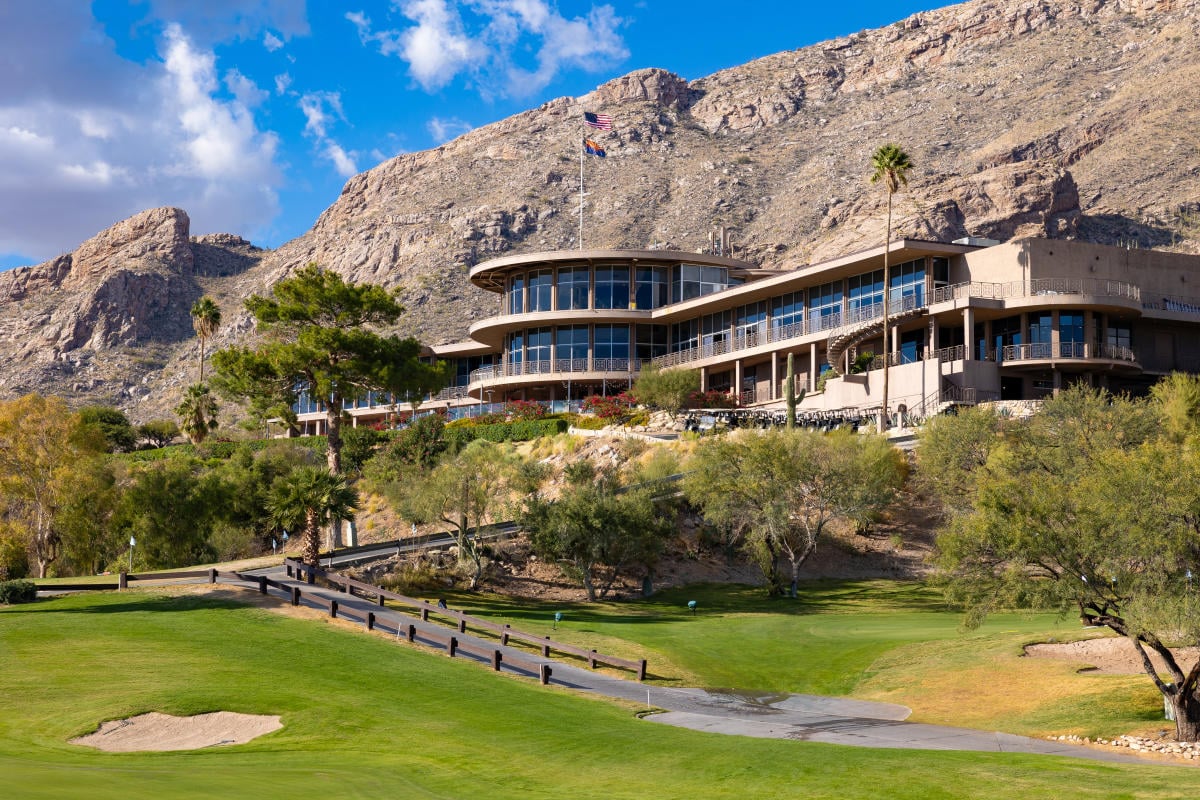
According to the Arizona Daily Star, the plan would replace nine existing buildings, some more than 60 years old, with a single structure covering up to 29,000 square feet. It would include exhibit space, a bookstore, a small café, a multipurpose room and a better ticketing and boarding area for the Sabino Canyon Crawler. The current visitor center was built in 1963. The modular office buildings next to it went in in 1991 and, as the Star put it, were "never meant to last 35 years in the desert sun."
Paying for it runs through a federal competition. Adam Milnor, recreation, heritage and lands staff officer for the Coronado National Forest, told the Star that local officials have requested money through the agency's internal competitive process. The most likely source is the Legacy Restoration Fund, which Congress created in 2020 under the Great American Outdoors Act. That is where the neighbors come in. Darling said projects with strong community financial support "tend to move to the top of the list." So Friends of Sabino Canyon has committed to raising almost $5 million, about 15% of the cost.
The size of that goal shows when you compare it with the group's past work. The Star reported that Friends has raised more than $1 million for earlier canyon projects since its founding in 1993, which makes this its largest campaign by far. Darling expects to launch the campaign formally sometime in 2027 and to collect the group's share within two to three years. Milnor's construction timeline adds more time on top of that:
- About 12 months to finish construction drawings
- Additional time to seek competitive bids, choose a contractor and order materials
- At least 18 months of construction
- No groundbreaking before 2028 at the earliest
"It's a generational project. I tell folks we're not building it for us. Quite frankly, we're not building it for our kids. We're building it for our grandchildren, that couple of generations away."
Jim Darling, Friends of Sabino Canyon, to the Arizona Daily Star
The Parking Lot Is the Part That Reaches Closest to Home
For people who live nearby, the most practical piece of the plan is the parking, not the café or the exhibits. Milnor told the Star that the 378-space main lot fills to capacity on 40 to 50 days a year, and the overflow lot also fills on the busiest 10 to 15 of those days. The recreation area draws between 1.1 million and 1.4 million visitors a year. The Star noted that the master plan counts roughly 2,000 residential lots within a mile of the entrance.
The redesign would add up to 122 parking spaces and dedicated walking paths meant to improve traffic flow and pedestrian safety. The new building would go up north of the current complex, and the existing buildings would stay open the whole time. Milnor said a community steering committee decided early on that keeping public access during construction was essential.
In practice, the crowding patterns locals know will last for several more seasons. The overflow lot restroom and the Bajada Loop trail are the improvements aimed at the entrance area in the meantime.
Visiting This Fall, While the 1963 Building Still Stands
The Forest Service says the lot "can be crowded during the fall, winter and spring," so these are the busy months. An overflow gravel lot sits just past the main entrance. Here is what a visit looks like right now:
- Fees. $8 per vehicle per day or $10 per vehicle per week. A Coronado annual pass costs $40 and is valid only within this forest. Interagency America the Beautiful passes are honored too.
- Visitor center hours. The visitor center, bookstore and shuttle are listed as open daily, 8 a.m. to 4:30 p.m. Visitor center restrooms close from 5 p.m. to 8 a.m. because of continued vandalism, but outdoor drinking fountains stay available.
- Crawler fares. On the Sabino route, adults pay $15 and children ages 3 to 12 pay $8. On the Bear Canyon route, adults pay $8 and children pay $5. Children under 3 ride free with a guardian. Shuttle tickets cover transportation only. The recreation fee is separate.
- Crawler frequency. Sabino departures run at least hourly from 9 a.m. to 4 p.m., and Bear Canyon departures run hourly from 9:15 a.m. to 4:15 p.m. Service can increase to every half hour in peak season. The Forest Service says the Bear Canyon shuttle runs daily through the winter and on weekends in summer.
- Saturday night tours. The operator's June 25 release lists the 2026 season as July 4 through October 31. Its homepage lists tickets at $15 per person but still says the tours run "through Oct. 25." October 25 falls on a Sunday this year, which points to the later date. Check the booking page before planning around the October 31 tour.
The Sabino Canyon Volunteer Naturalists have a full October calendar. It includes a "Skulls and Pelts, Wildlife of Sabino Table" on October 13 at 9:30 a.m., a Friday Trail Hike on October 16 at 8 a.m., a Sabino Canyon Bird and Nature Walk on October 18 at 8 a.m., and "Panning for Garnets" on October 22 at 9 a.m. Start times and meeting spots vary by hike, so check each listing for details. Ventana Canyon has its own trail with a closure calendar, which we covered in our look at the Ventana Canyon Trail's seasonal closures. On those weeks, Sabino is the obvious alternative.
To see the reopened stairs, walk to the dam. The stones next to it went up in the 1930s, came apart in a flood more than 20 years ago, and were put back together this year. According to KVOA, private donors through Friends of Sabino Canyon paid for more than half of the work.
I follow projects like this because they shape what living near Sabino Canyon will feel like over the next few years: the parking, the trails, the entrance most of us drive past every week. If you'd like to talk about Ventana Canyon homes near the canyon, or which streets give the easiest access to Sabino, Daniel Sotelo is glad to share what he knows. Let's connect.