5055 N Calle La Vela: Lee Marvin’s Historic Joesler Estate in Tucson
Great Houses of Tucson | By Daniel Sotelo
Some houses are valuable because of their location, size or finishes.
Others become significant because they tell us something about the place in which they were built.
5055 N Calle La Vela in Tucson, Arizona, is one of those houses.
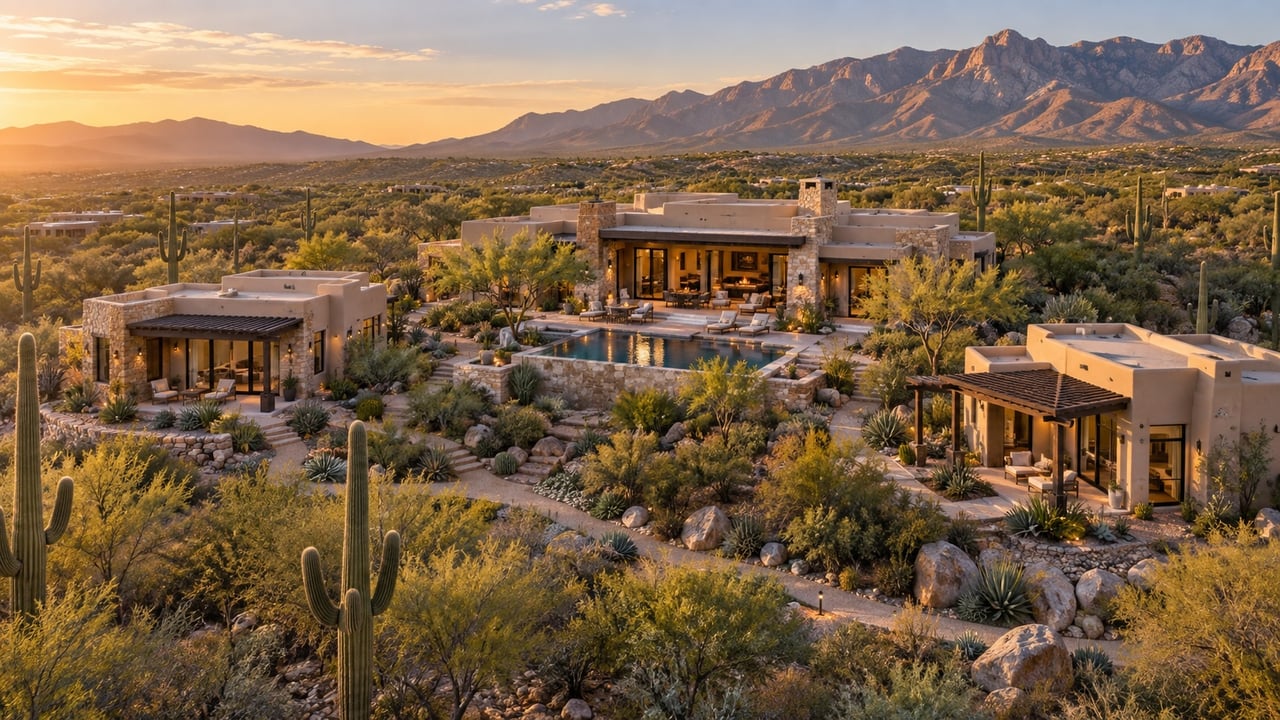
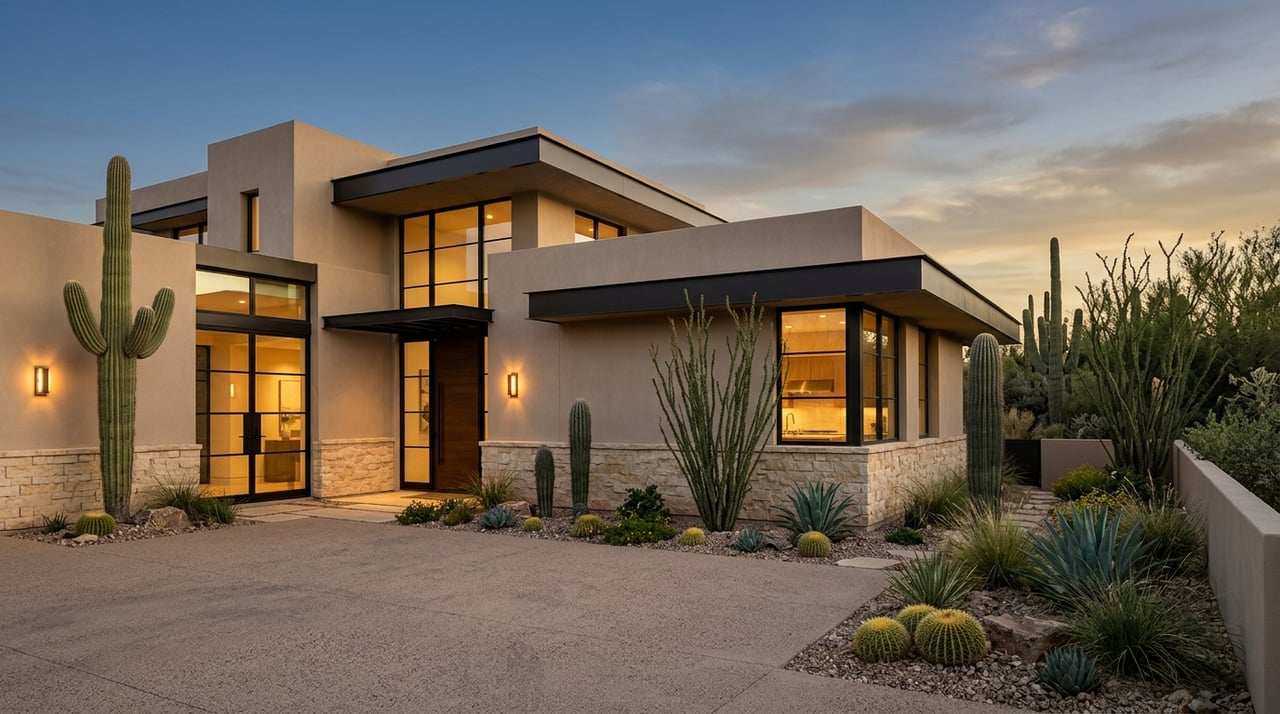
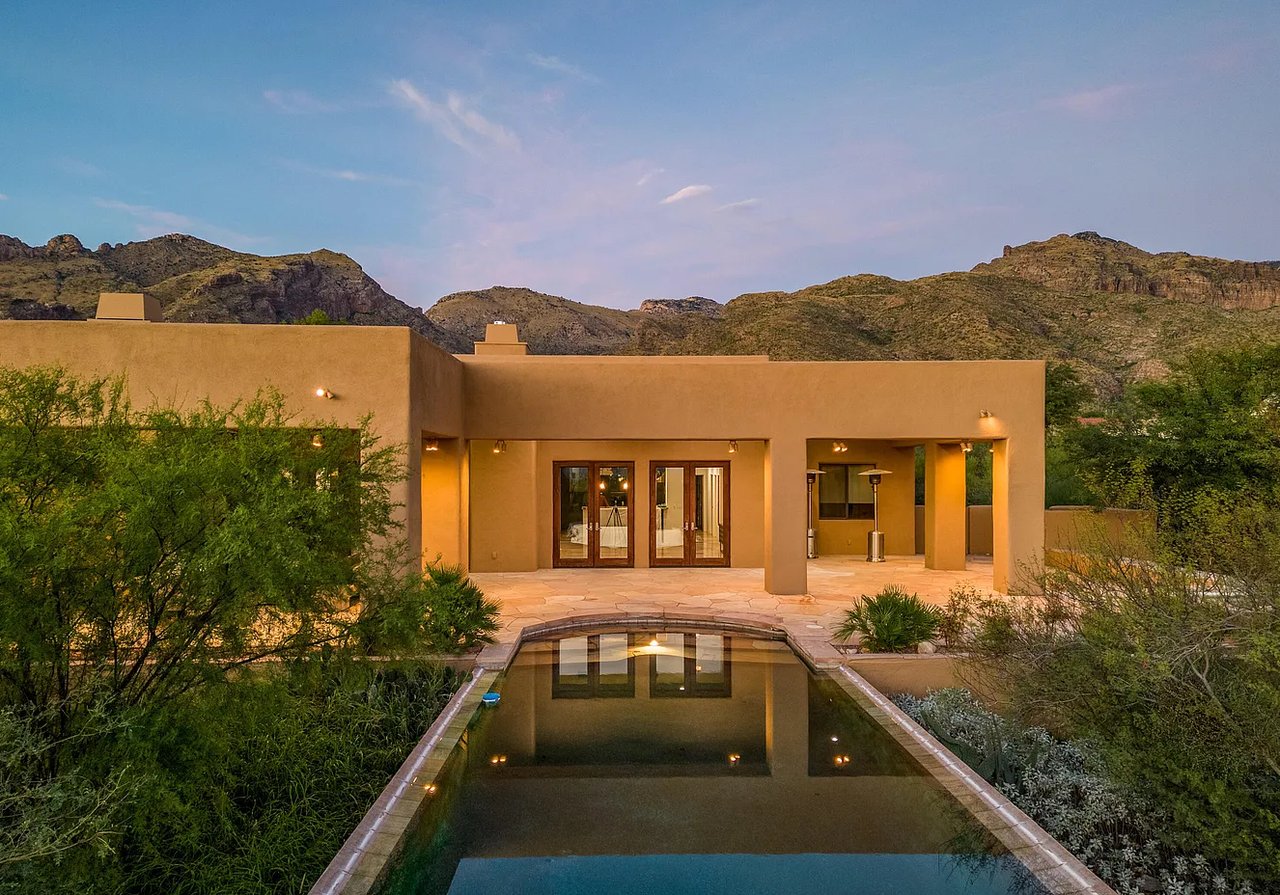
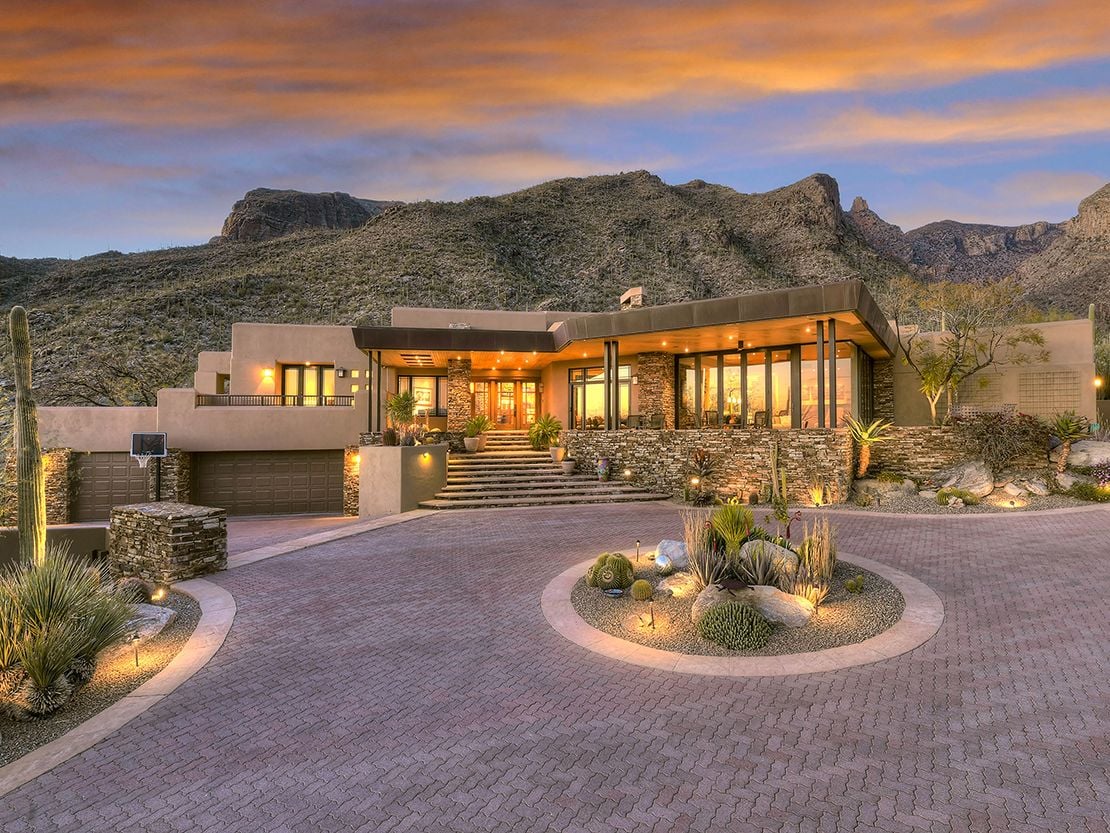
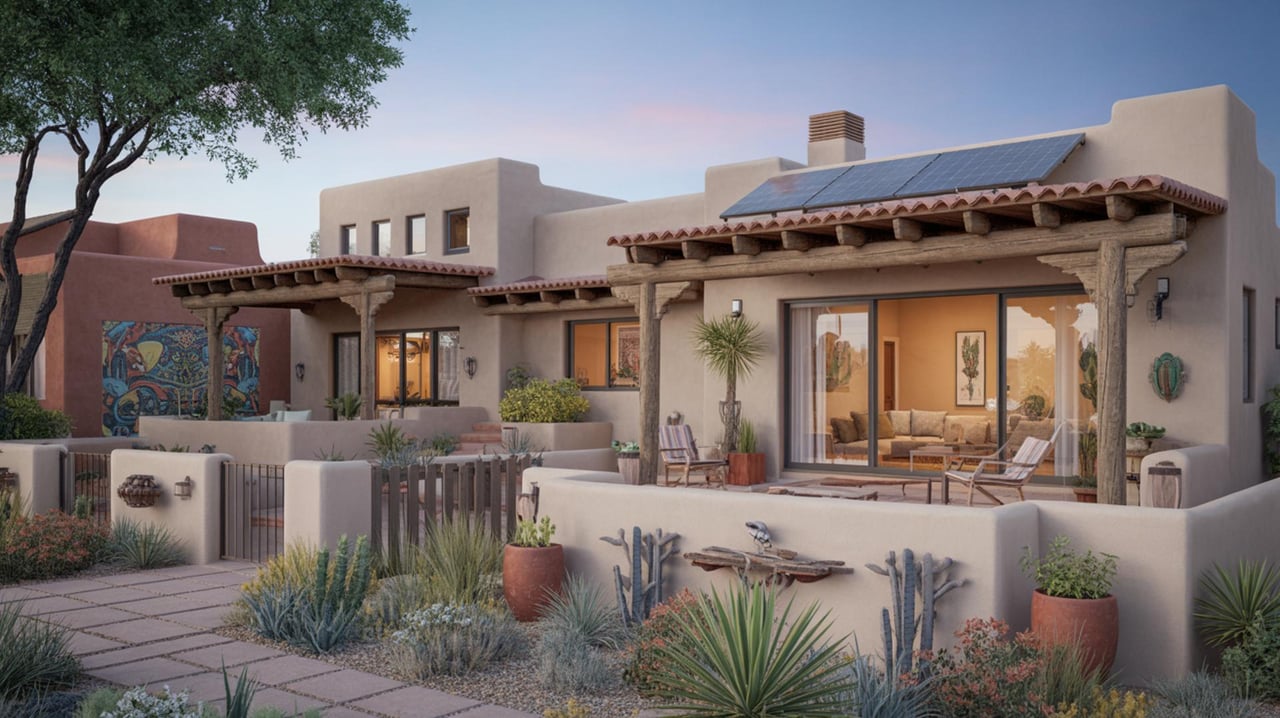
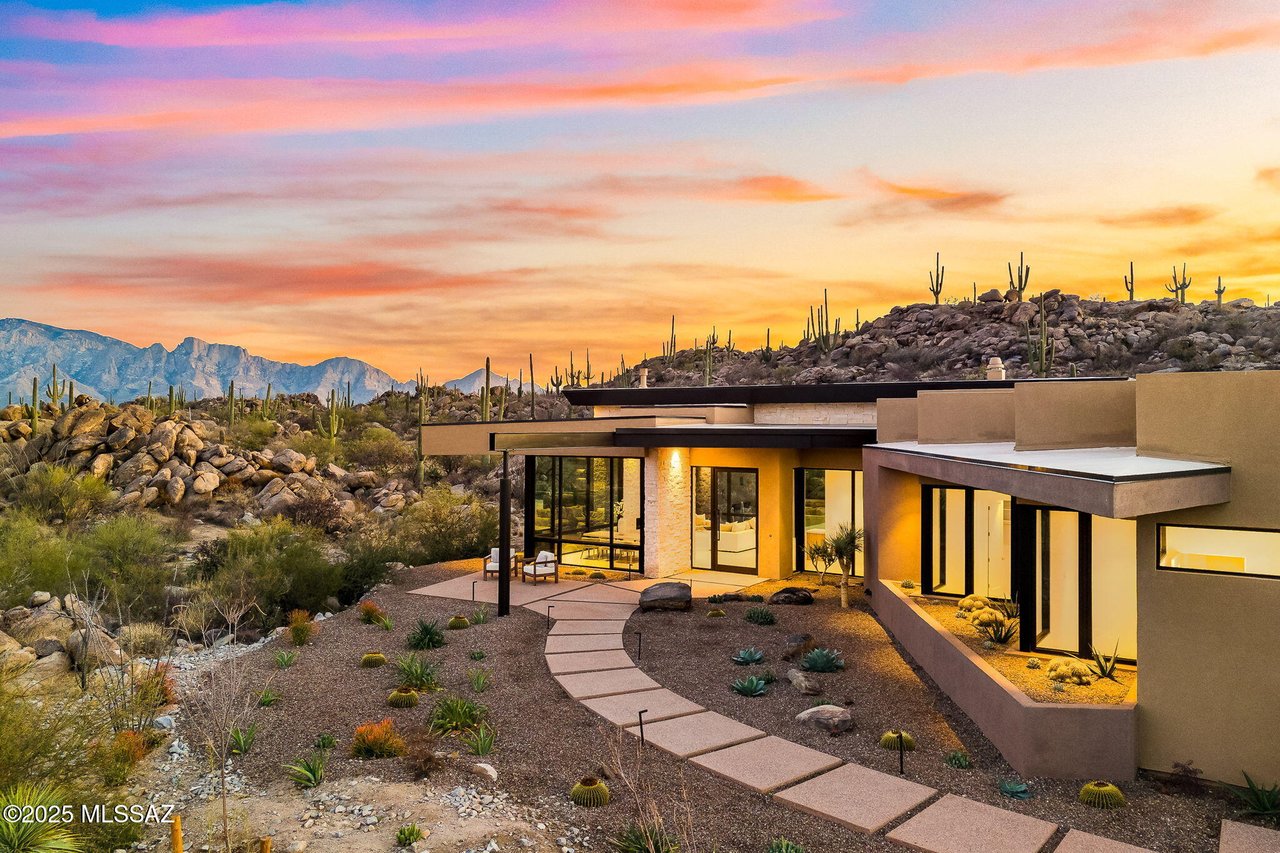
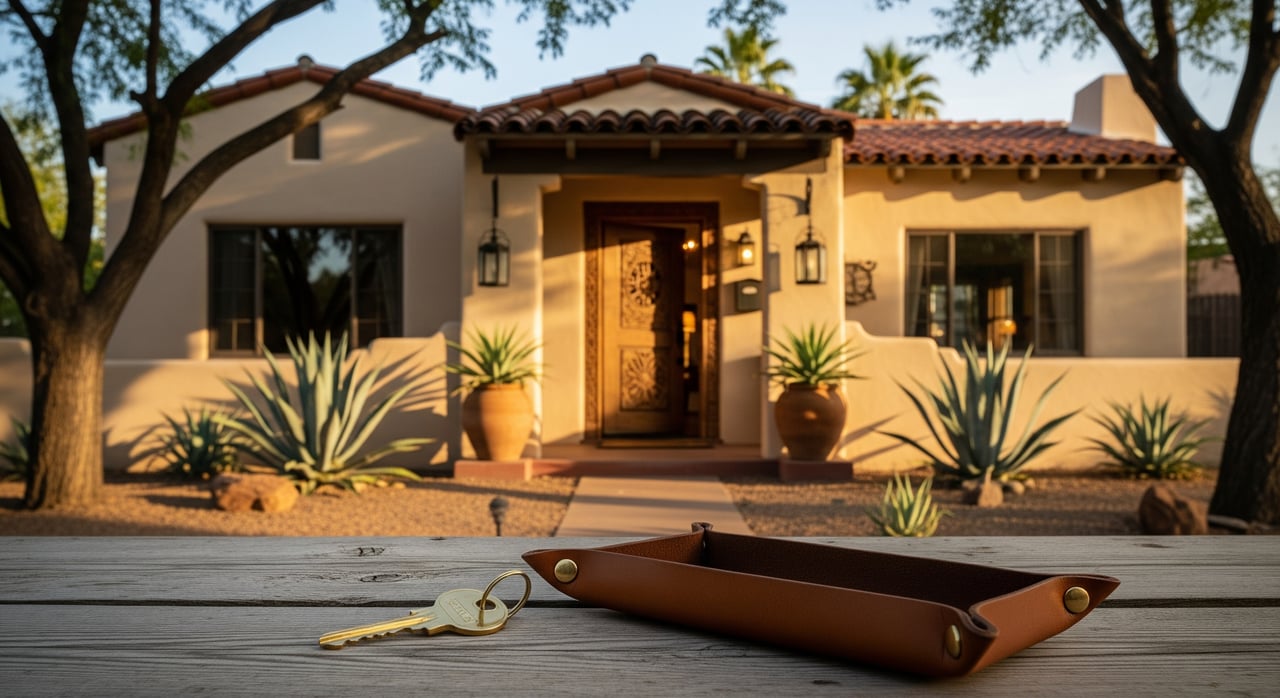
Designed in 1936 by celebrated Tucson architect Josias Joesler, the adobe estate stands within Catalina Foothills Estates, one of the foundational residential developments of the Catalina Foothills. Decades later, the property became the longtime Tucson home of Academy Award-winning actor Lee Marvin, who purchased it in 1975 and lived there until his death in 1987.
It is an unusual convergence of architecture, Hollywood history, desert living and Tucson luxury real estate.
And, to me, that is what makes the house worth discussing.
In Brief: 5055 N Calle La Vela
5055 N Calle La Vela is a historic adobe estate in Tucson’s Catalina Foothills designed by Josias Joesler and built in 1936. Actor Lee Marvin purchased the property in 1975 and made it his Tucson home for more than a decade.
The residence represents an early chapter in the development of the Catalina Foothills and the architectural legacy that continues to distinguish some of Tucson’s most significant homes.
Before There Was “Luxury Real Estate” in the Catalina Foothills
To understand this house, you first have to understand the landscape around it.
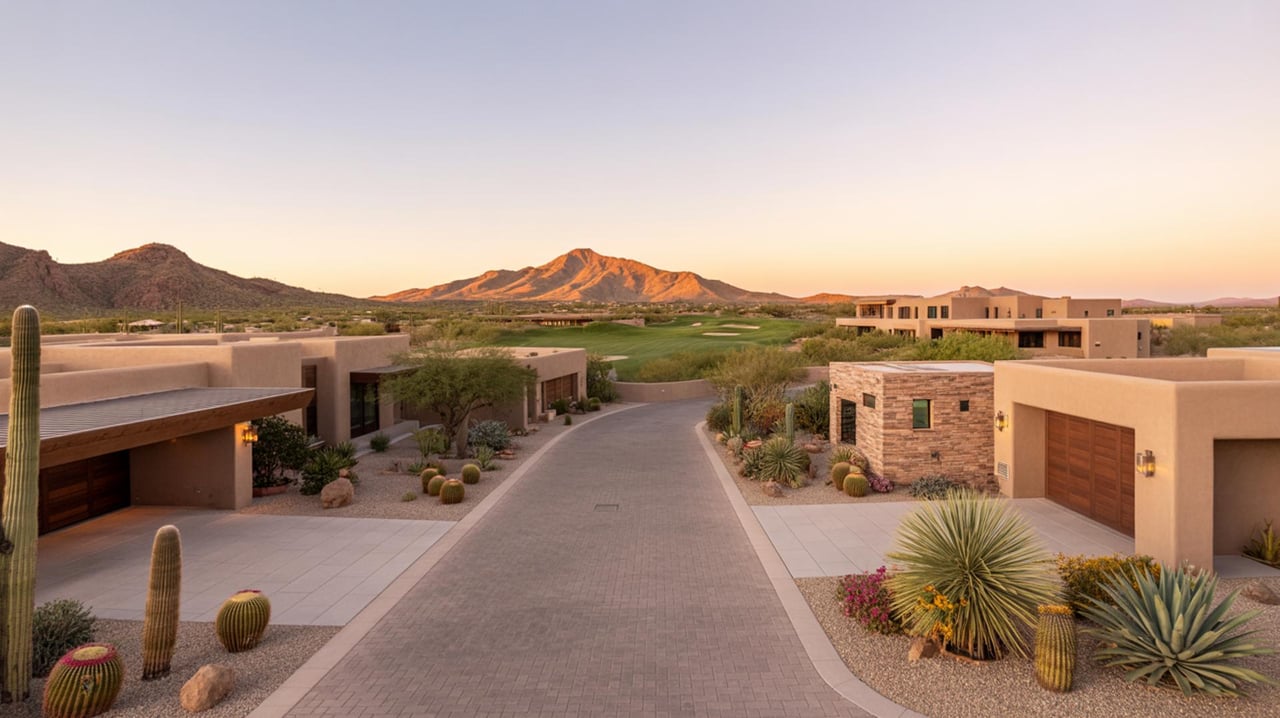
Long before the Catalina Foothills became synonymous with some of Tucson’s most valuable residential real estate, the area represented a new way of thinking about desert living.
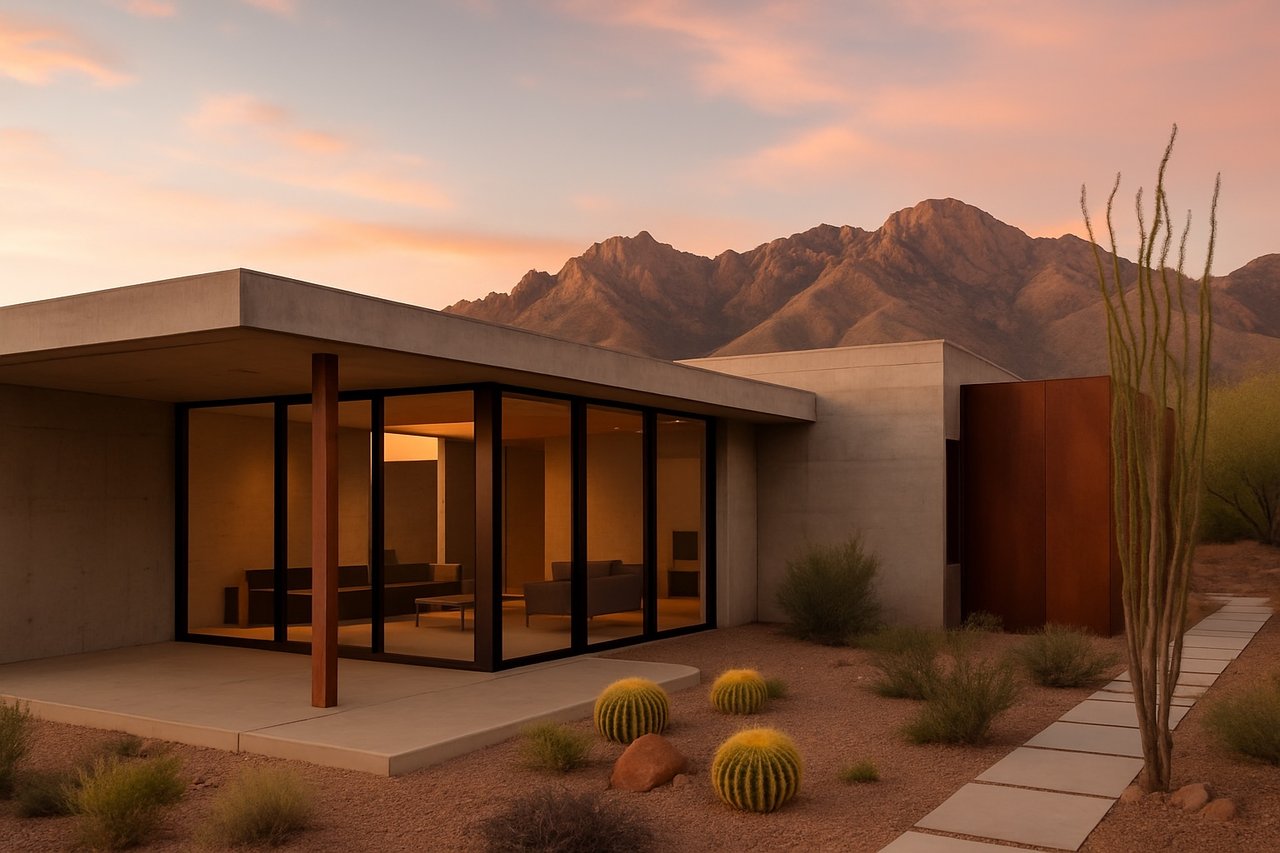
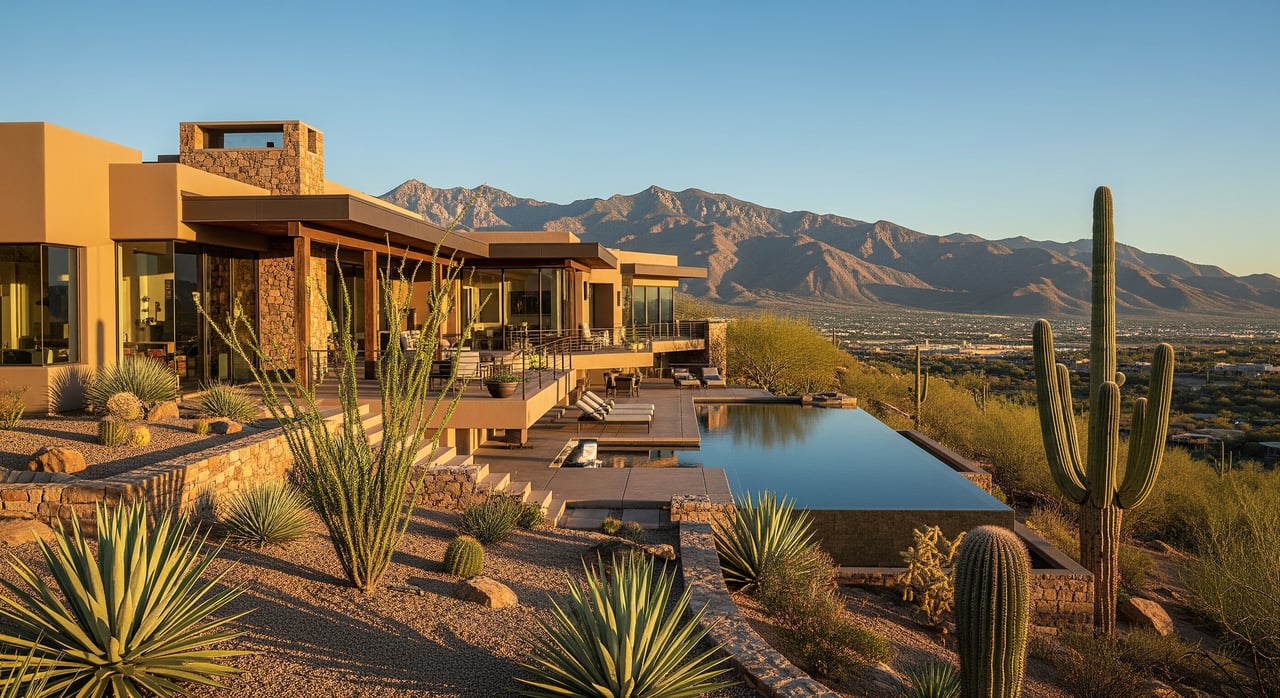
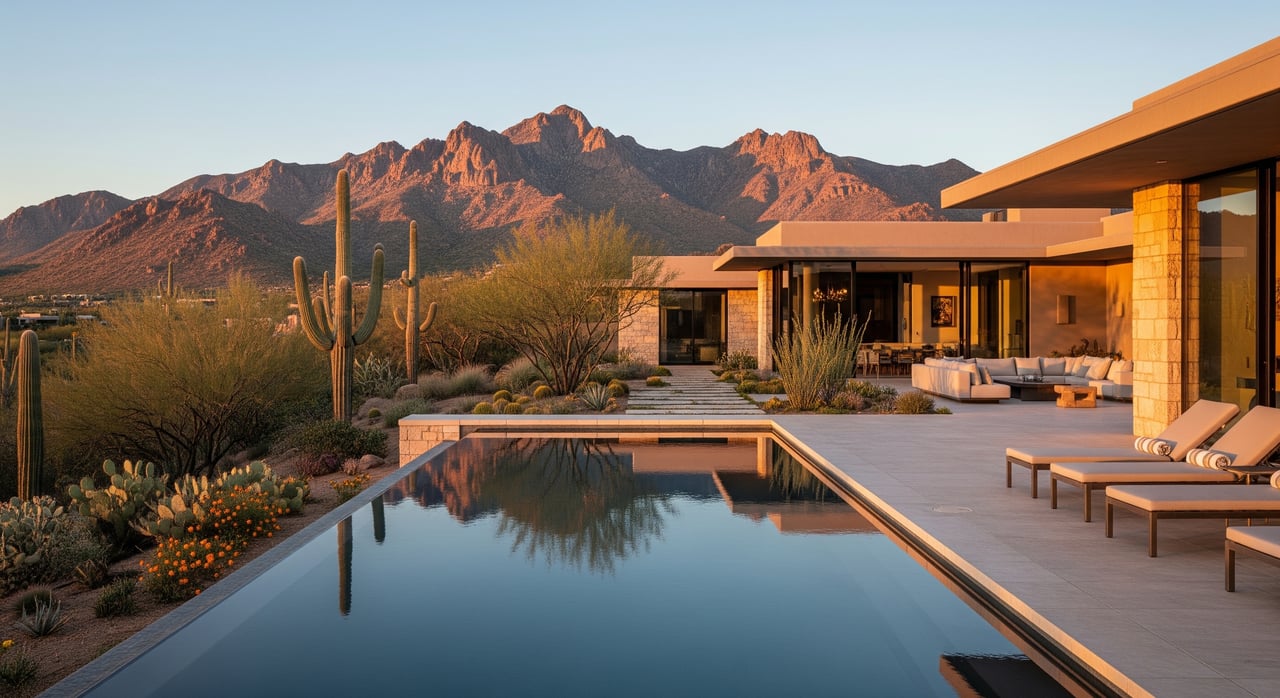
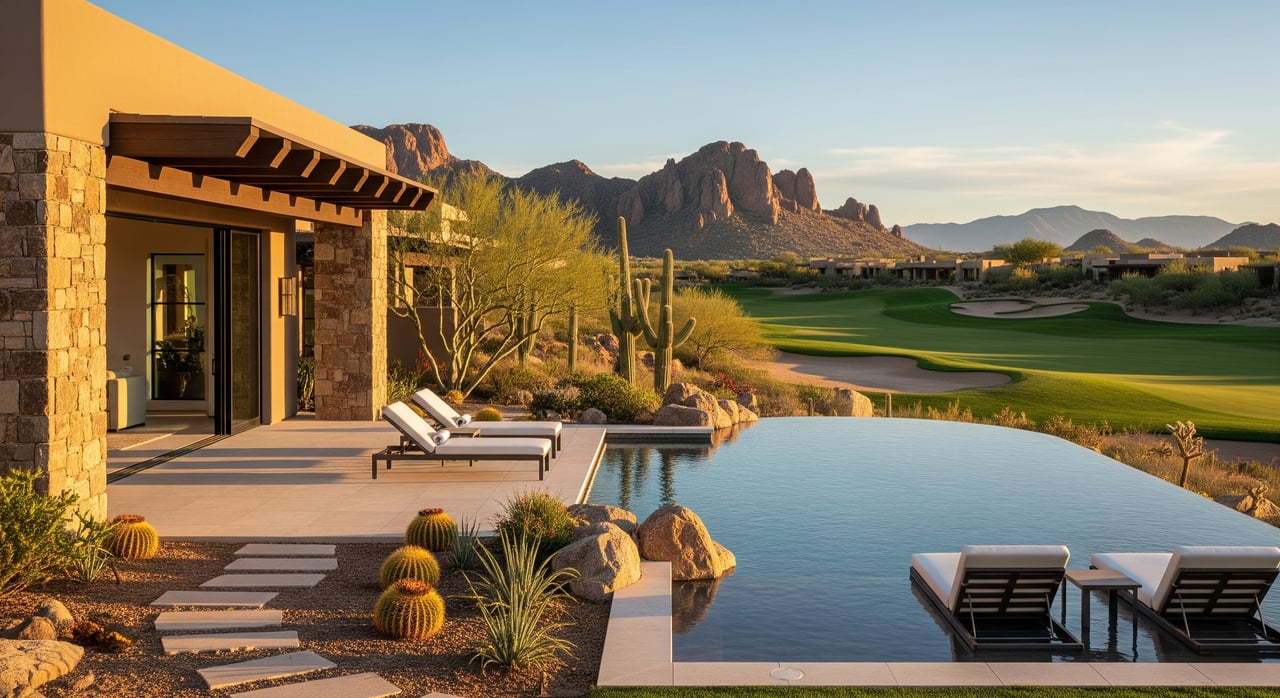
Rather than forcing conventional residential development onto the Sonoran Desert, the early vision for Catalina Foothills Estates emphasized substantial parcels, privacy, native vegetation, mountain views and homes that responded to their surroundings.
Josias Joesler became one of the defining architectural figures of that vision.
Built in 1936, 5055 N Calle La Vela comes from essentially the beginning of that story.
What is remarkable is how contemporary many of those original ideas still feel nearly a century later:
Privacy without isolation.
Generous land.
Connection to nature.
Architecture responsive to climate.
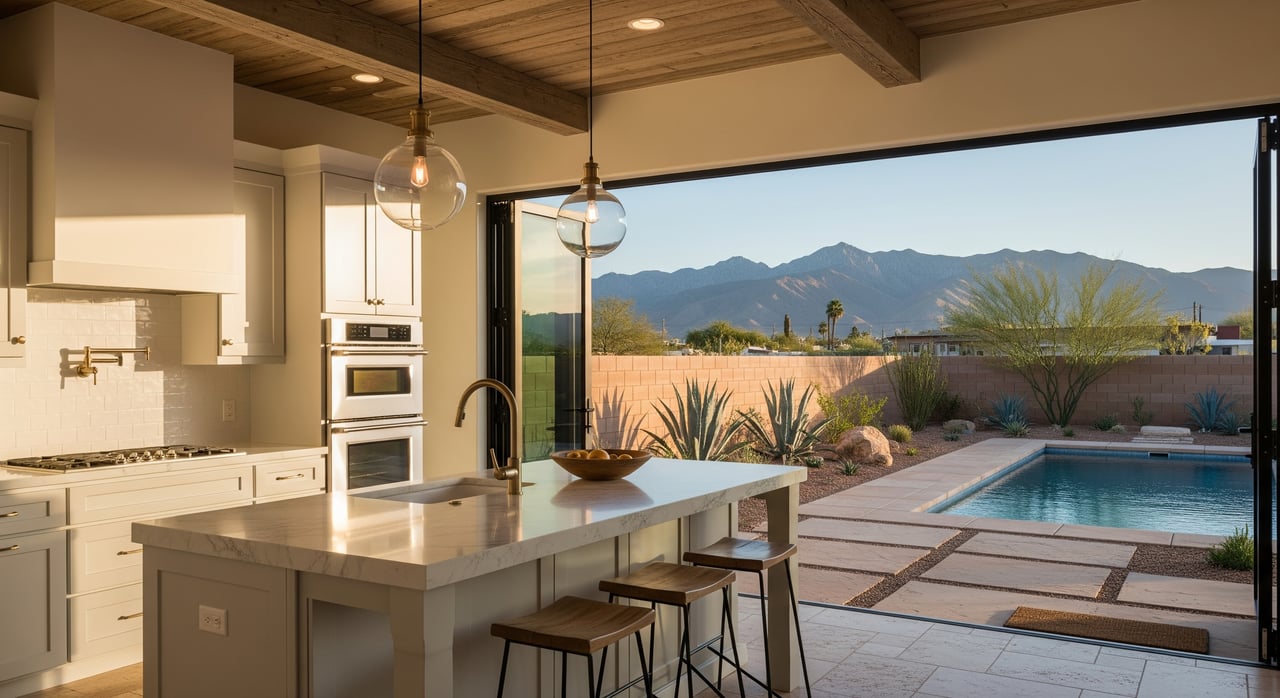
Indoor-outdoor living.
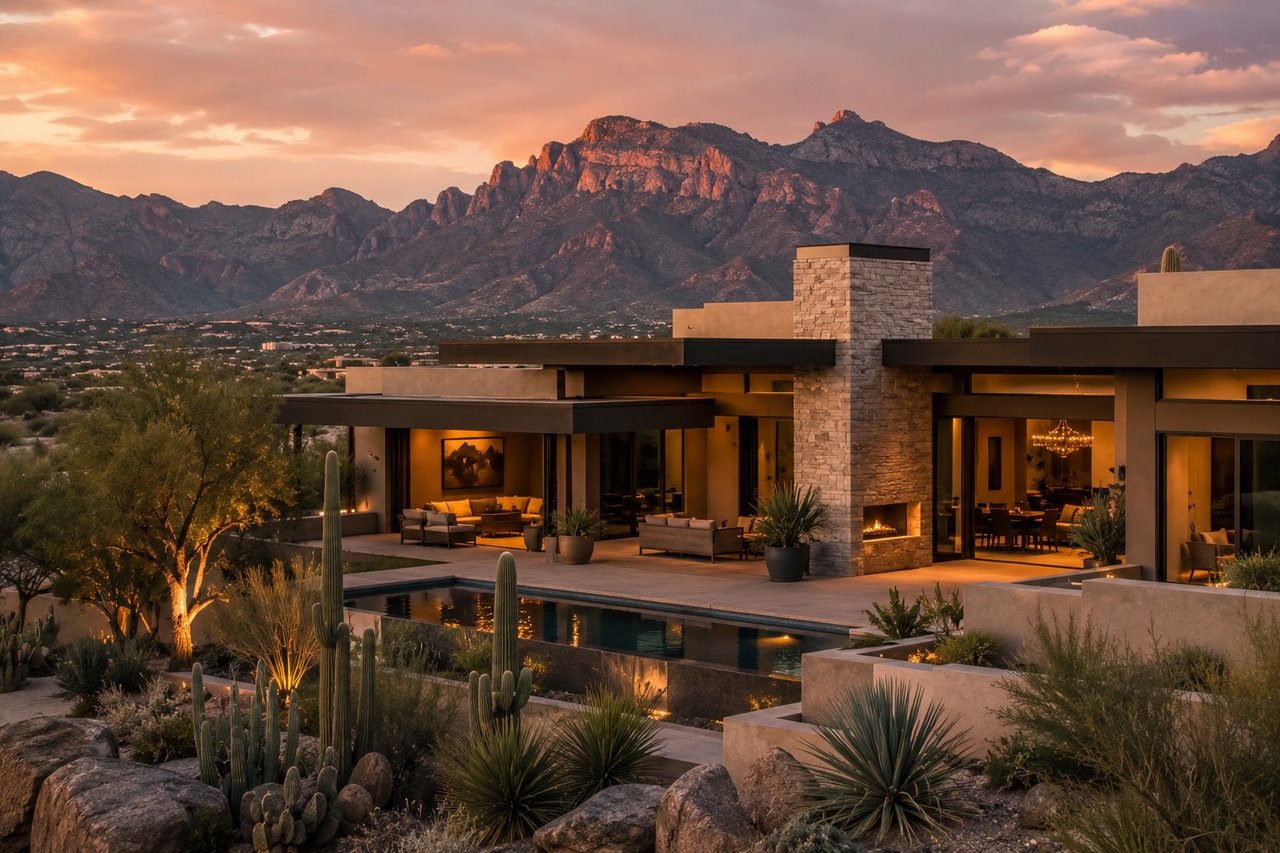
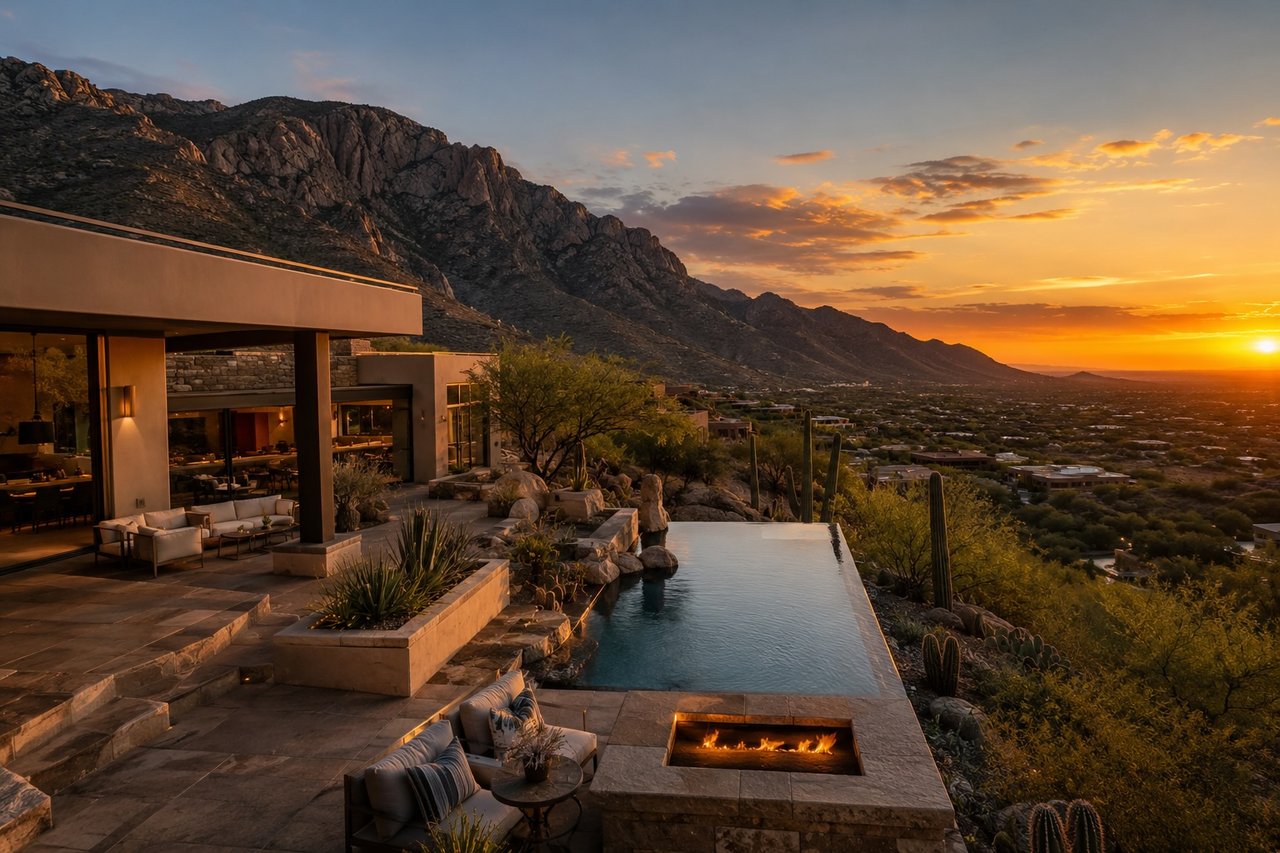
Views that become part of the house itself.
Luxury has changed considerably since 1936.
Those principles have not.
Josias Joesler and an Architecture That Belongs to Tucson
Joesler remains one of the most important names in Tucson architecture.
His work drew from a broad architectural vocabulary, incorporating Spanish Colonial, Mexican, Pueblo and Mediterranean influences while responding directly to Southern Arizona’s climate, landscape and way of life.
The result was not simply another revival style.
It became something distinctly Tucson.
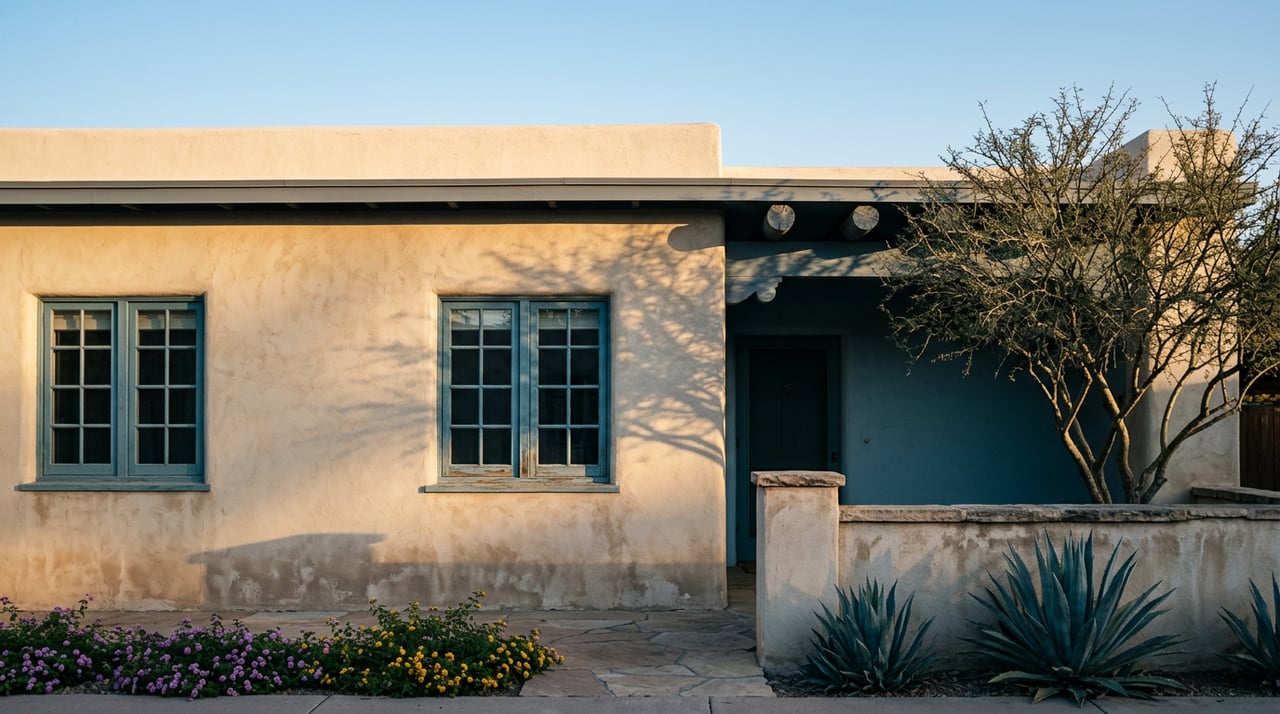
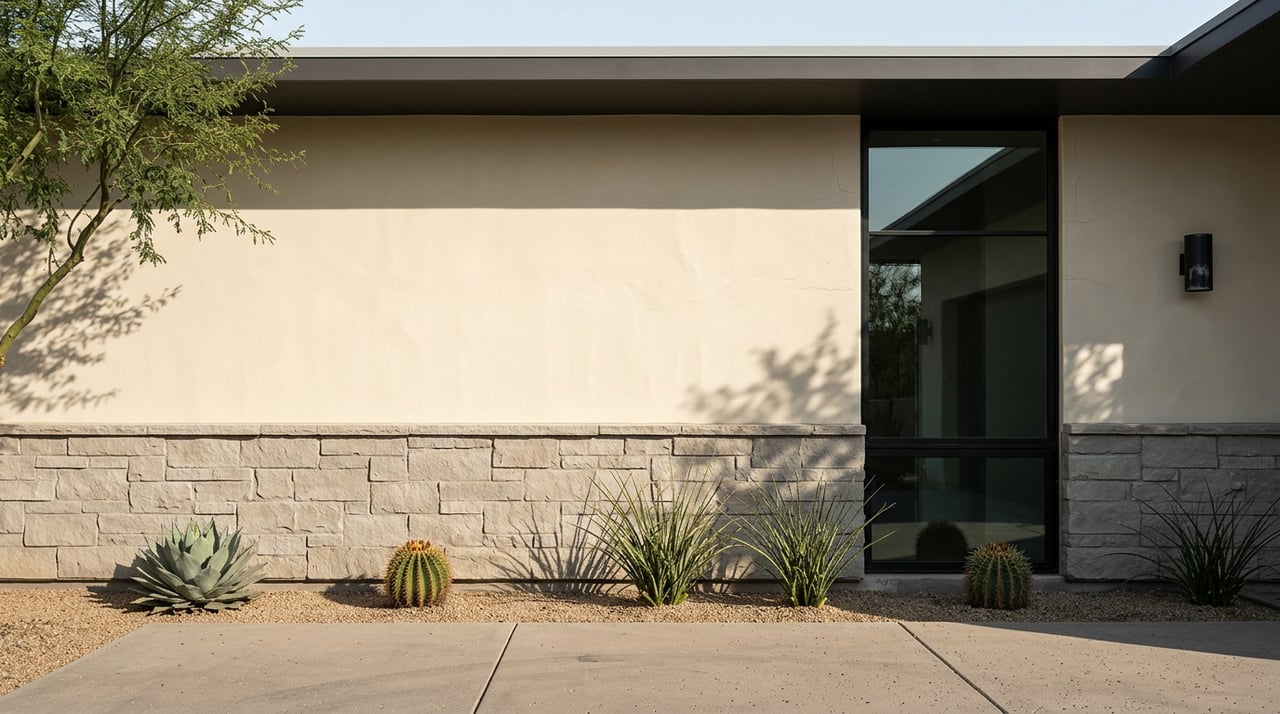
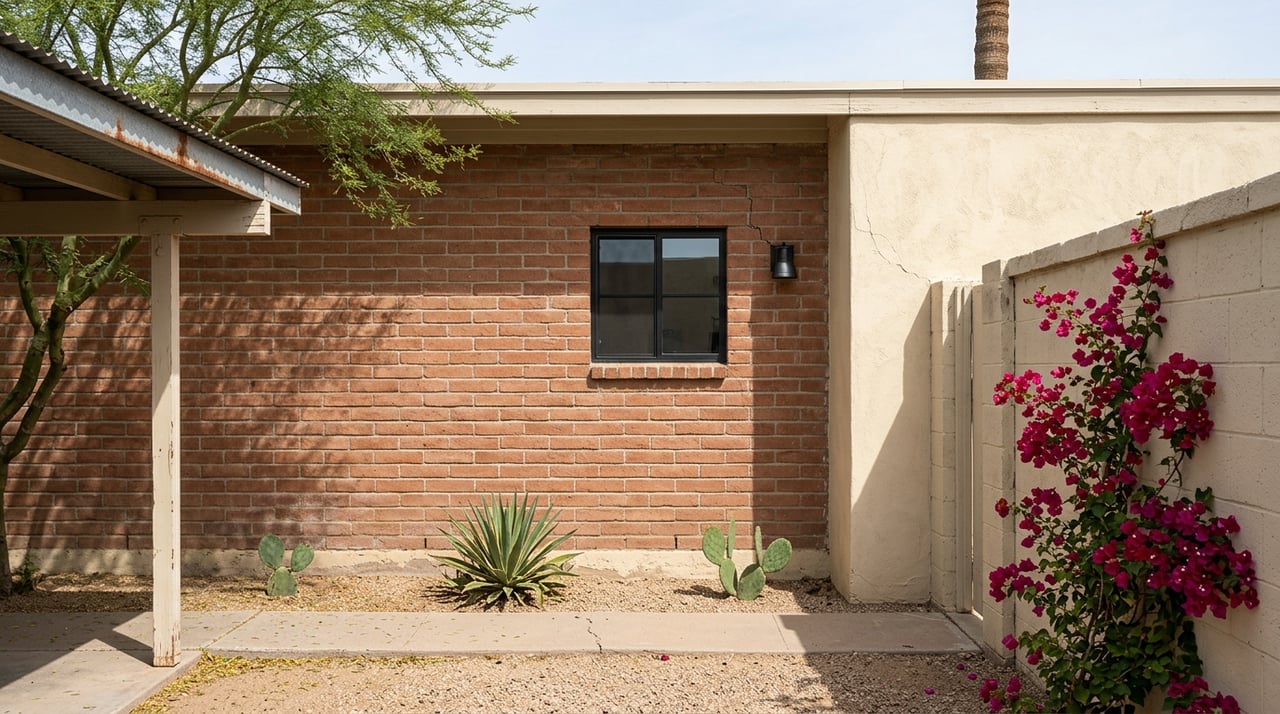
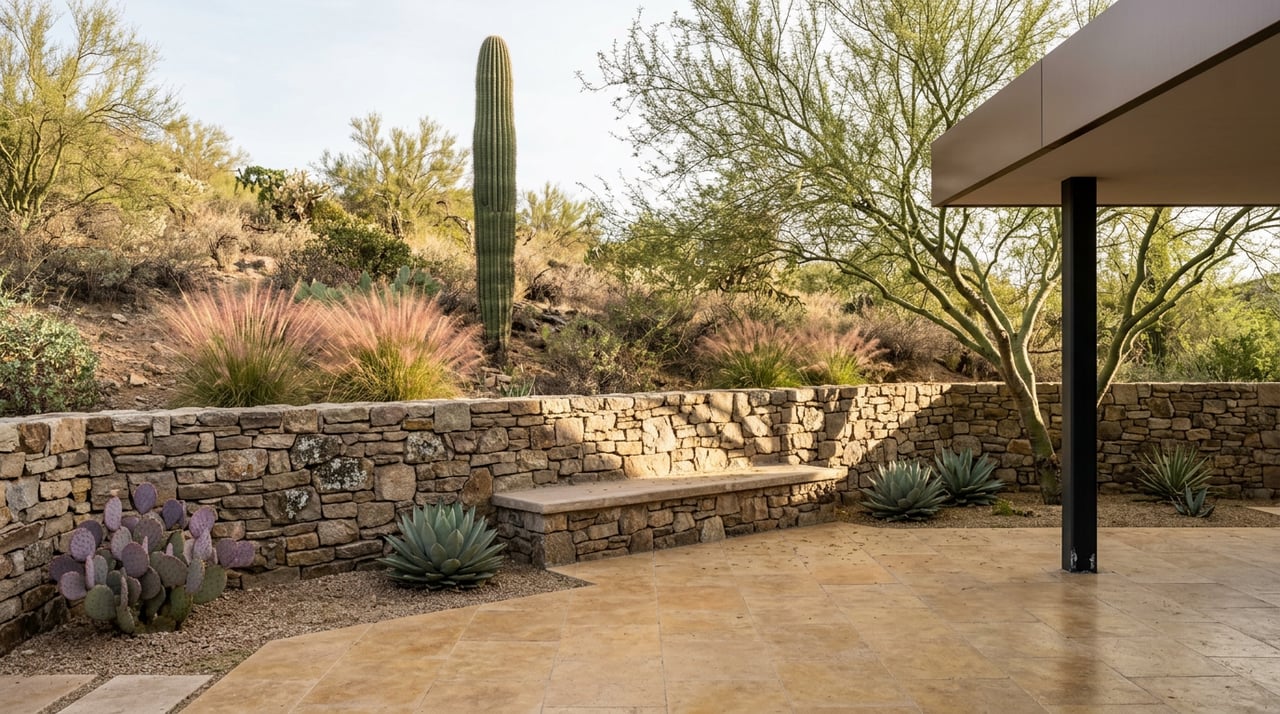
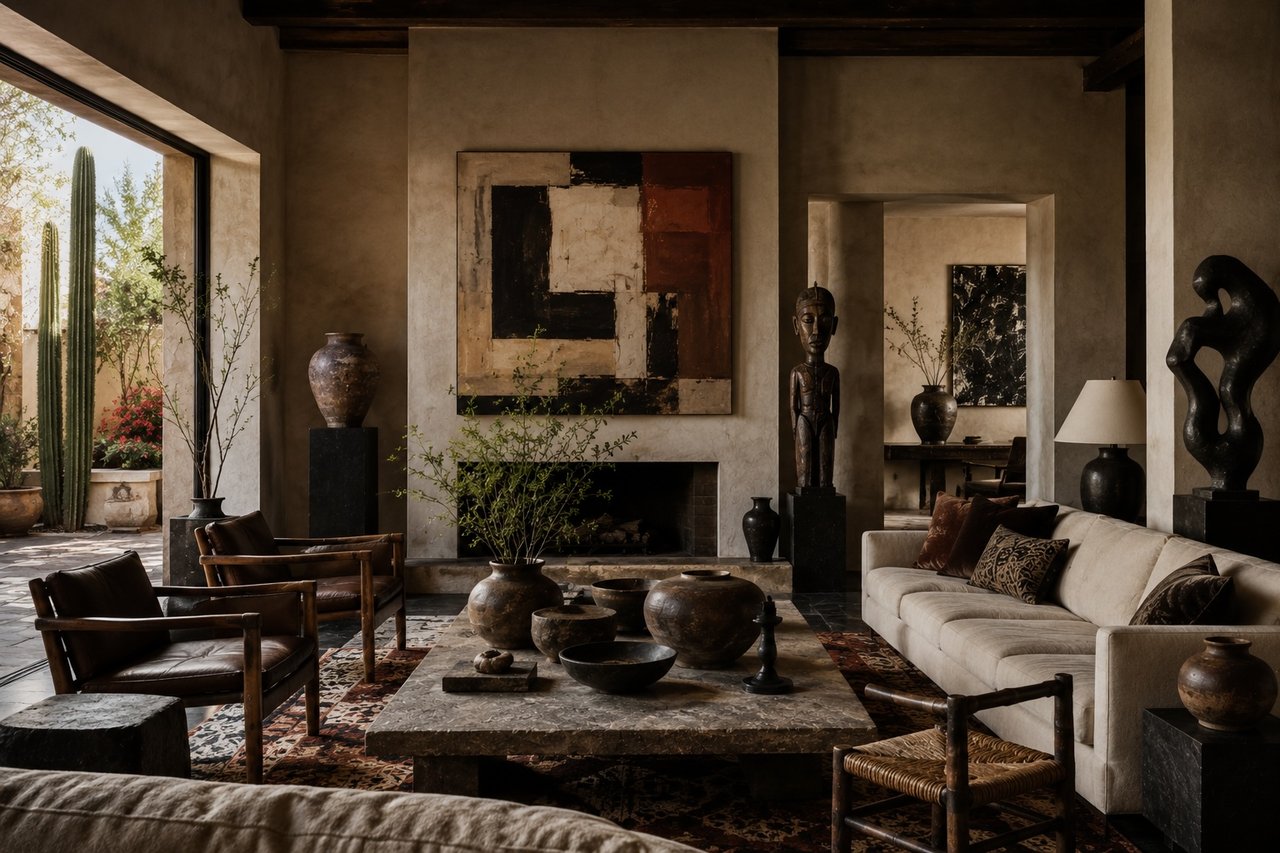
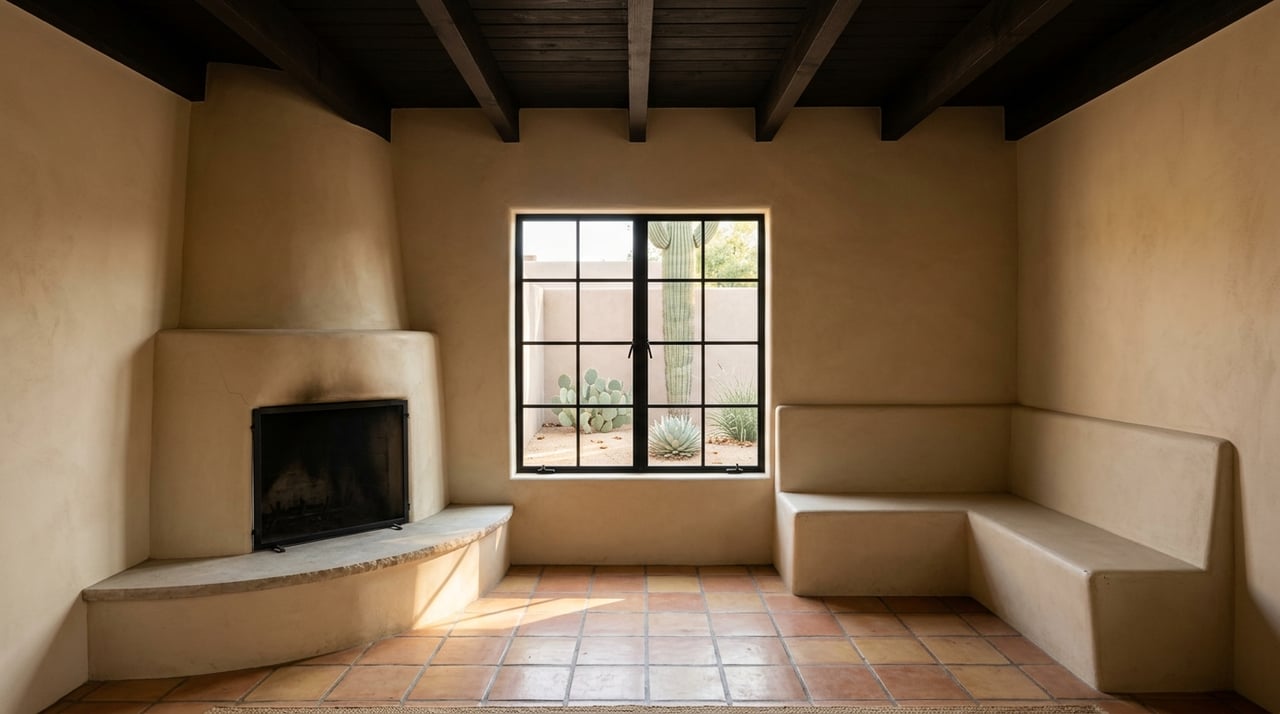
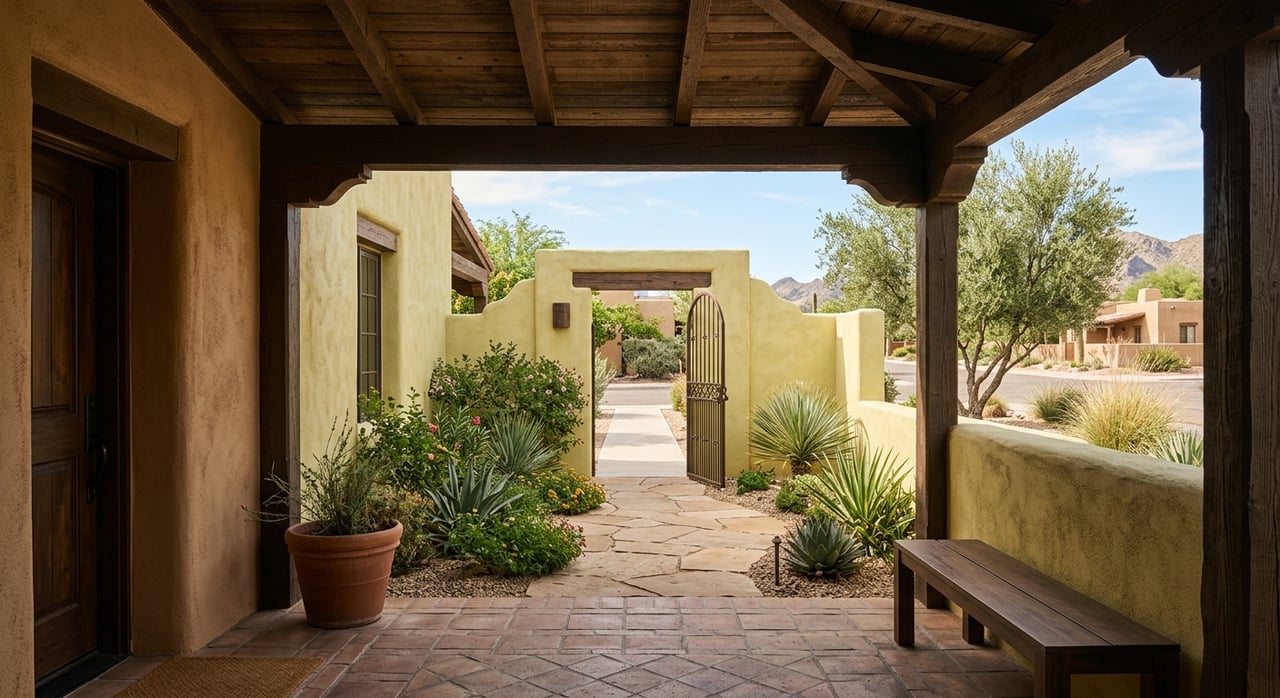
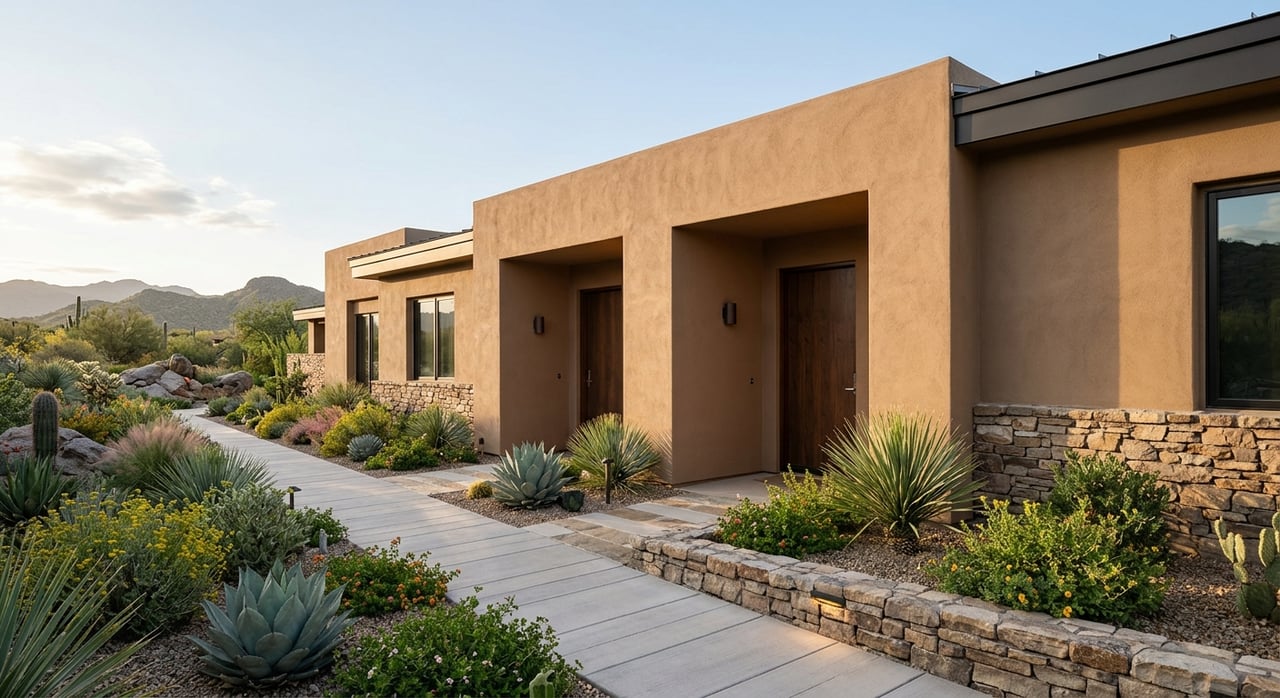
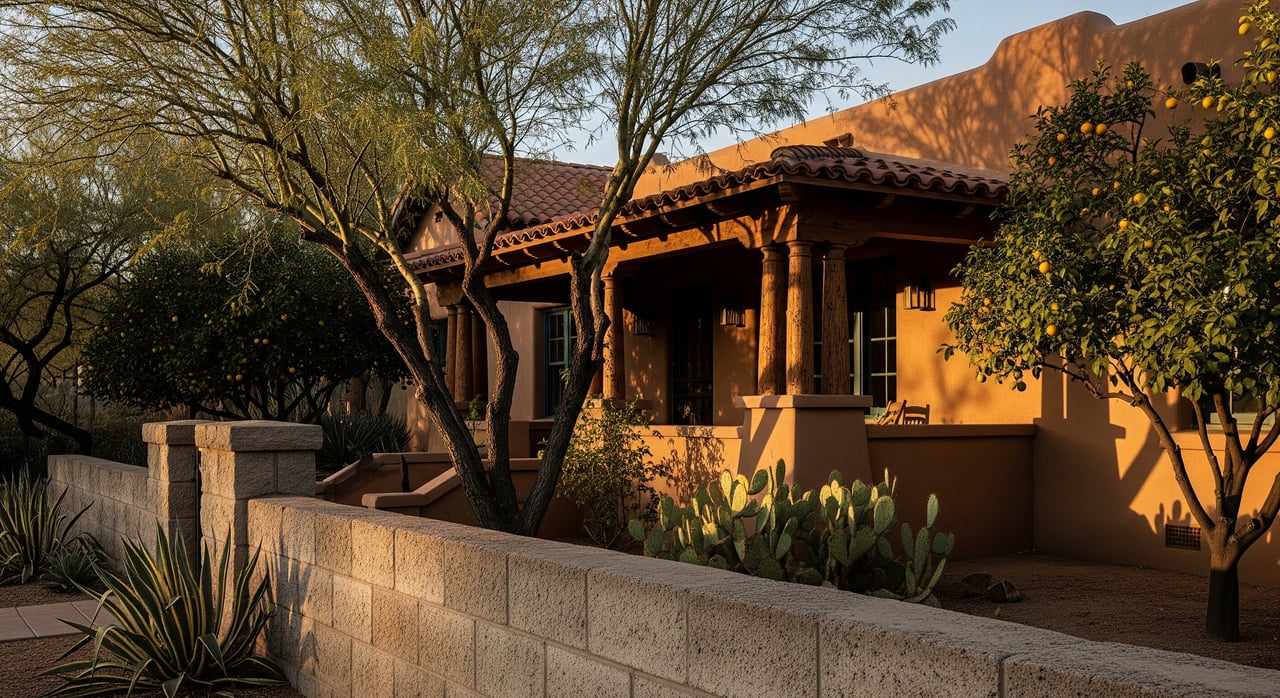
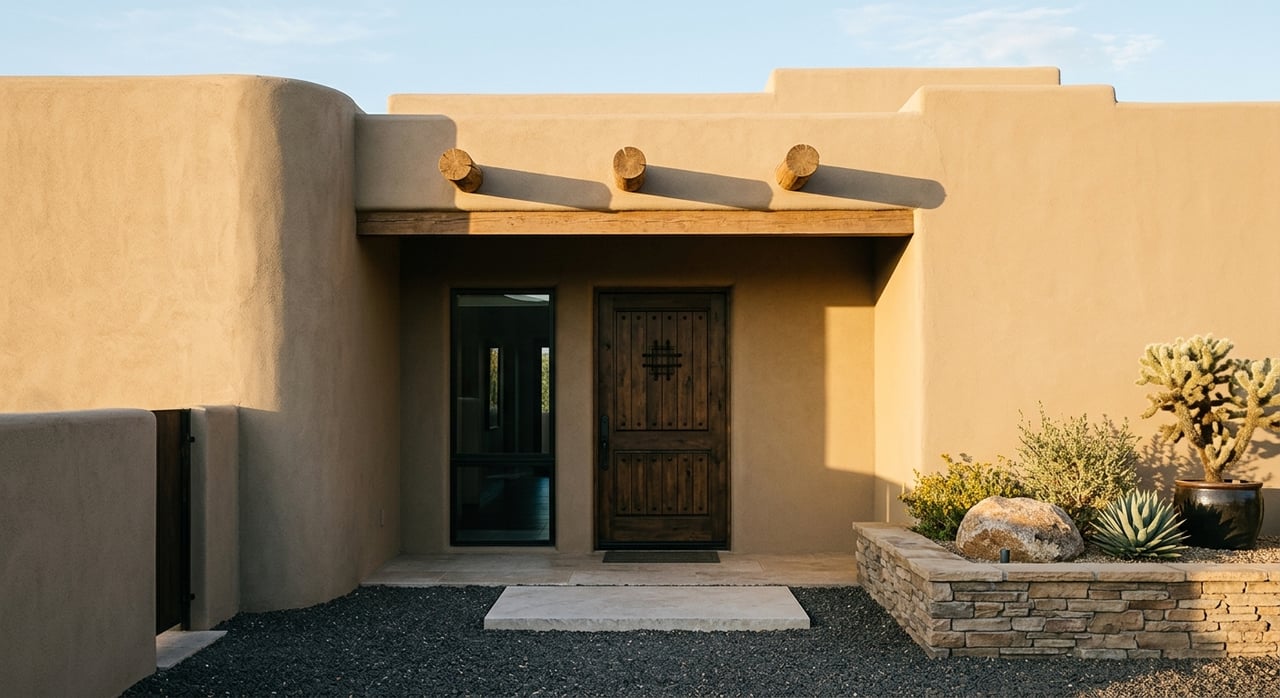
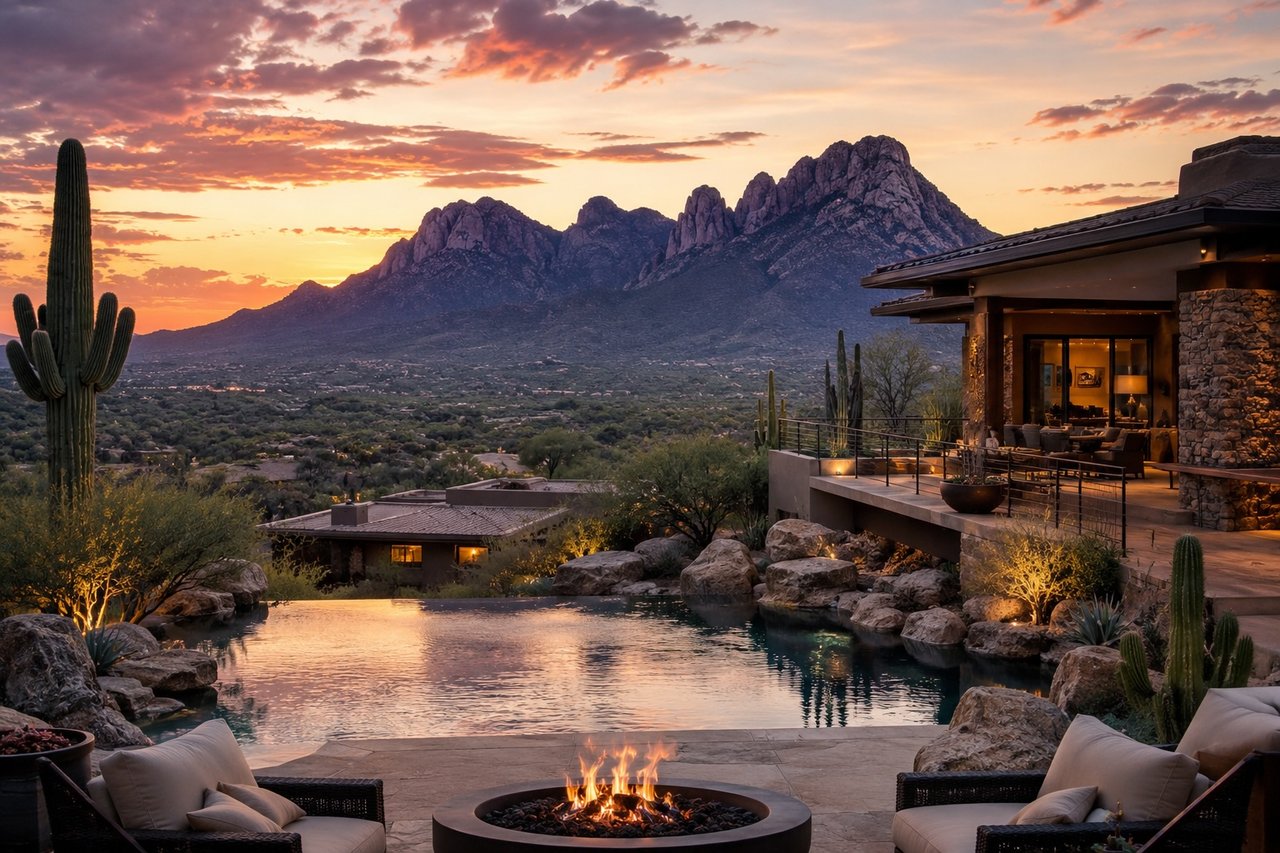
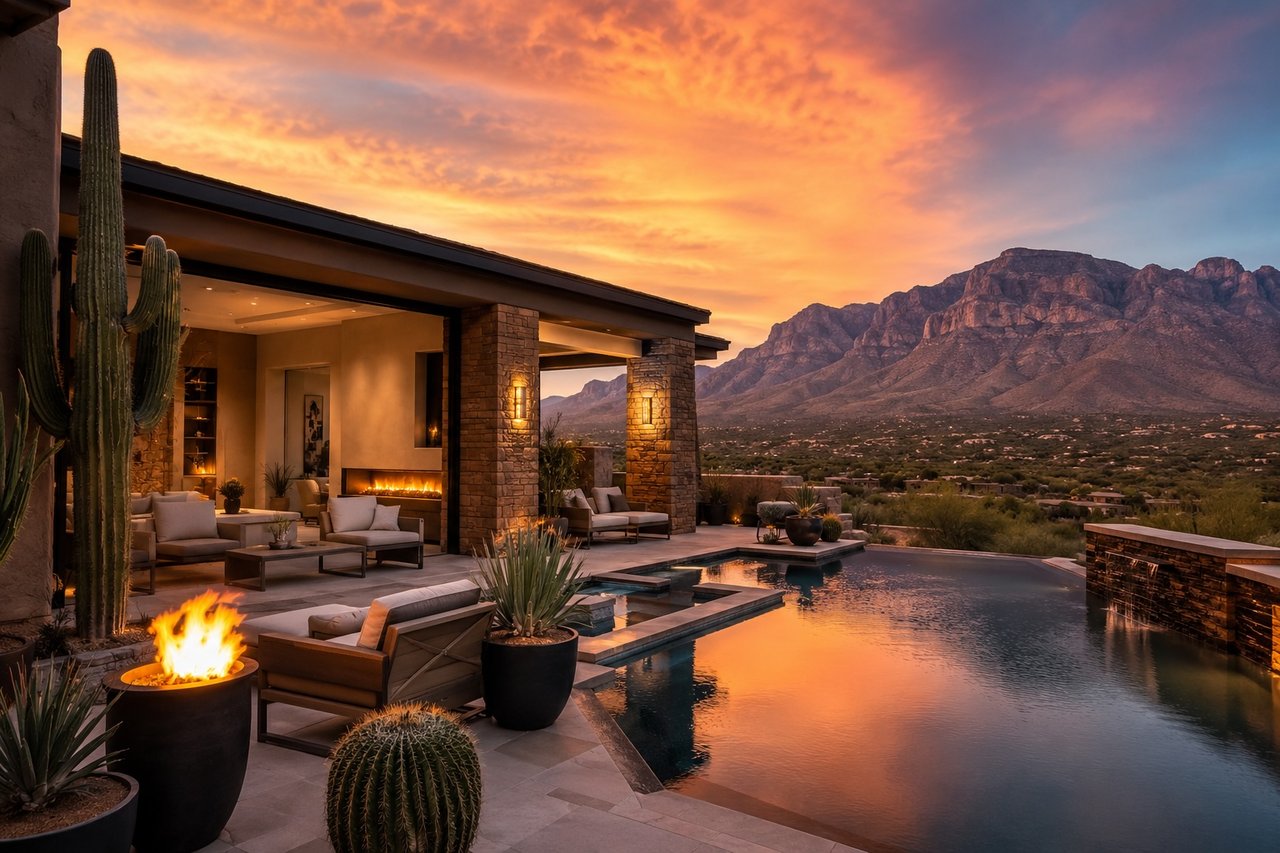
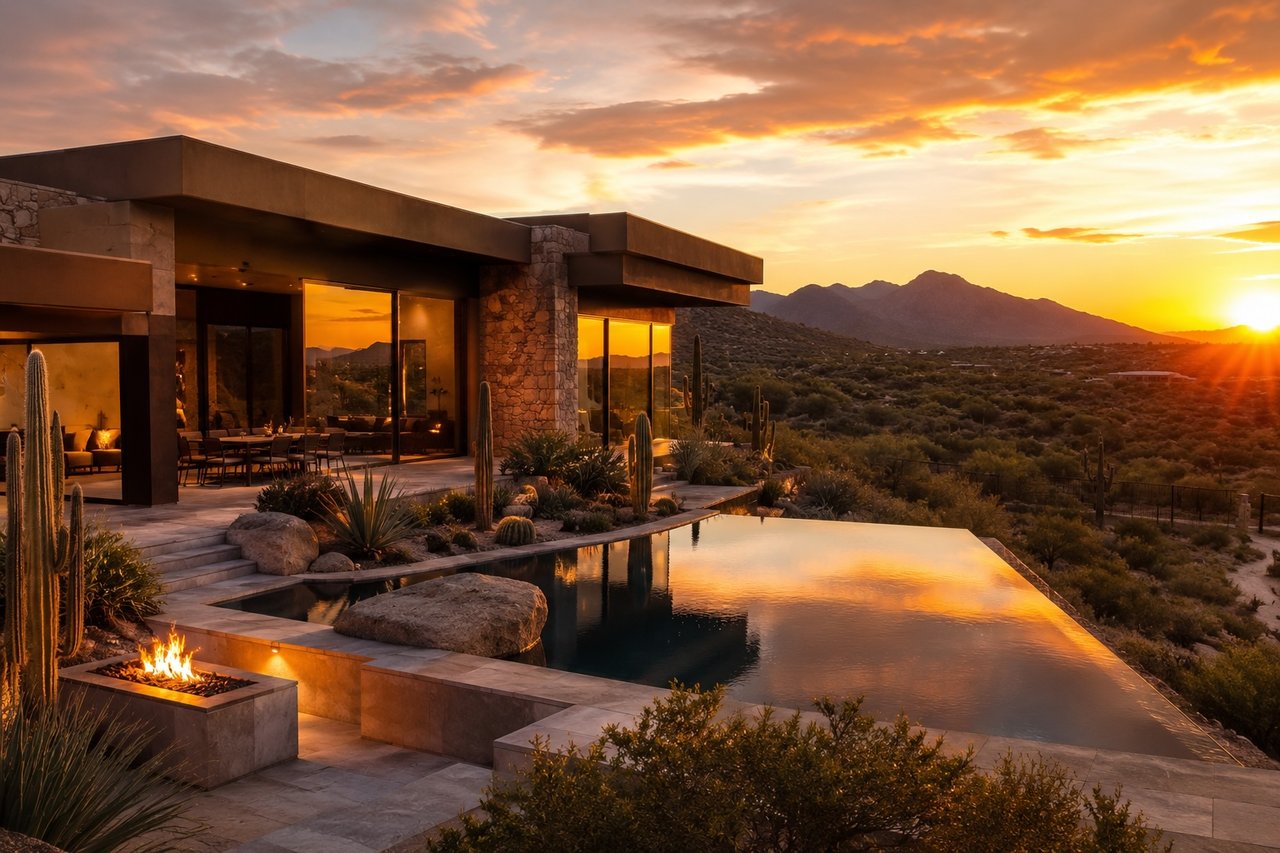
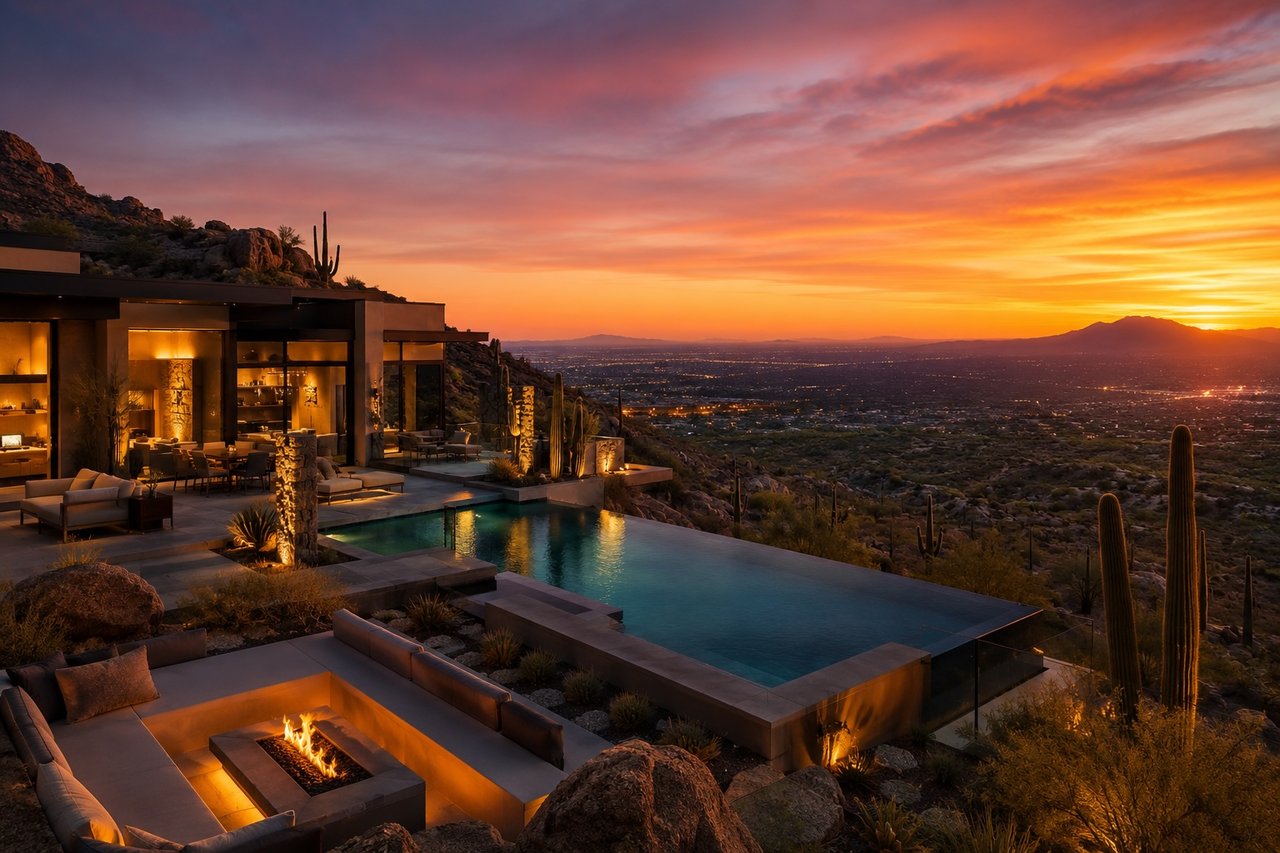
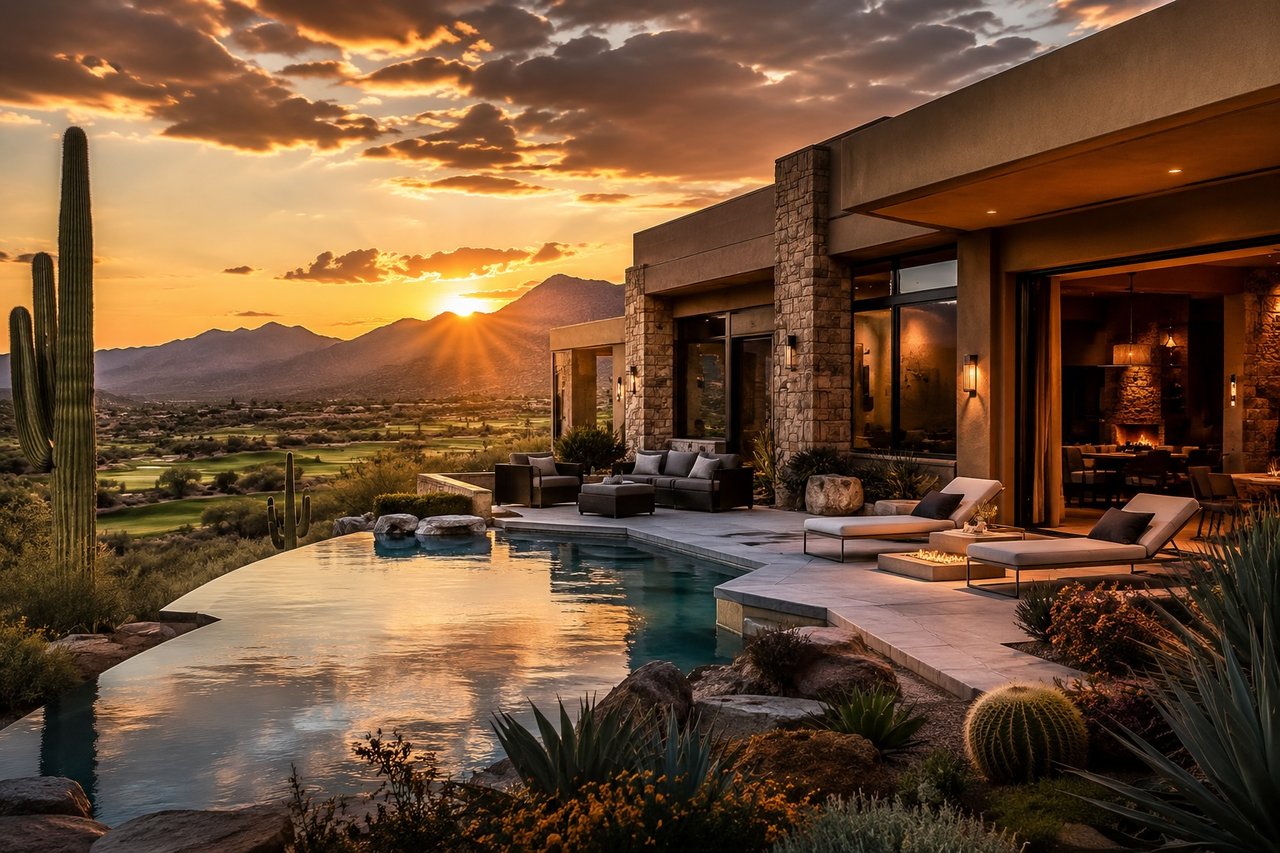
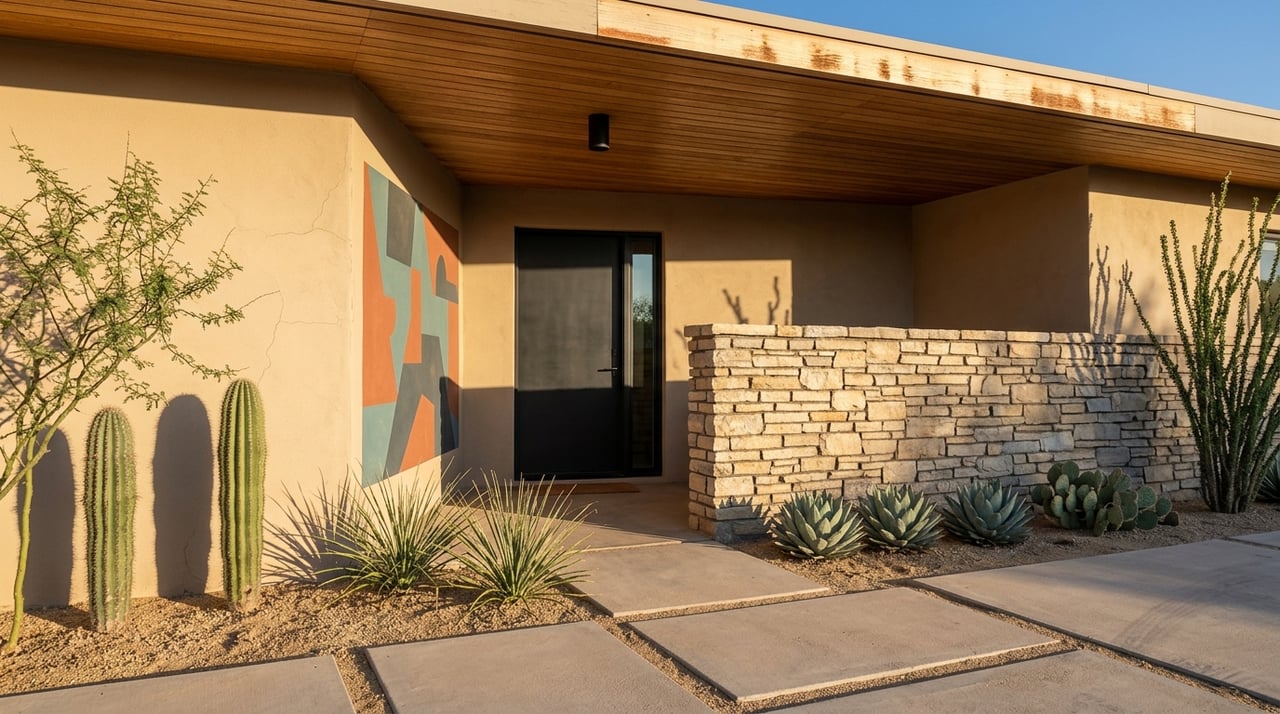
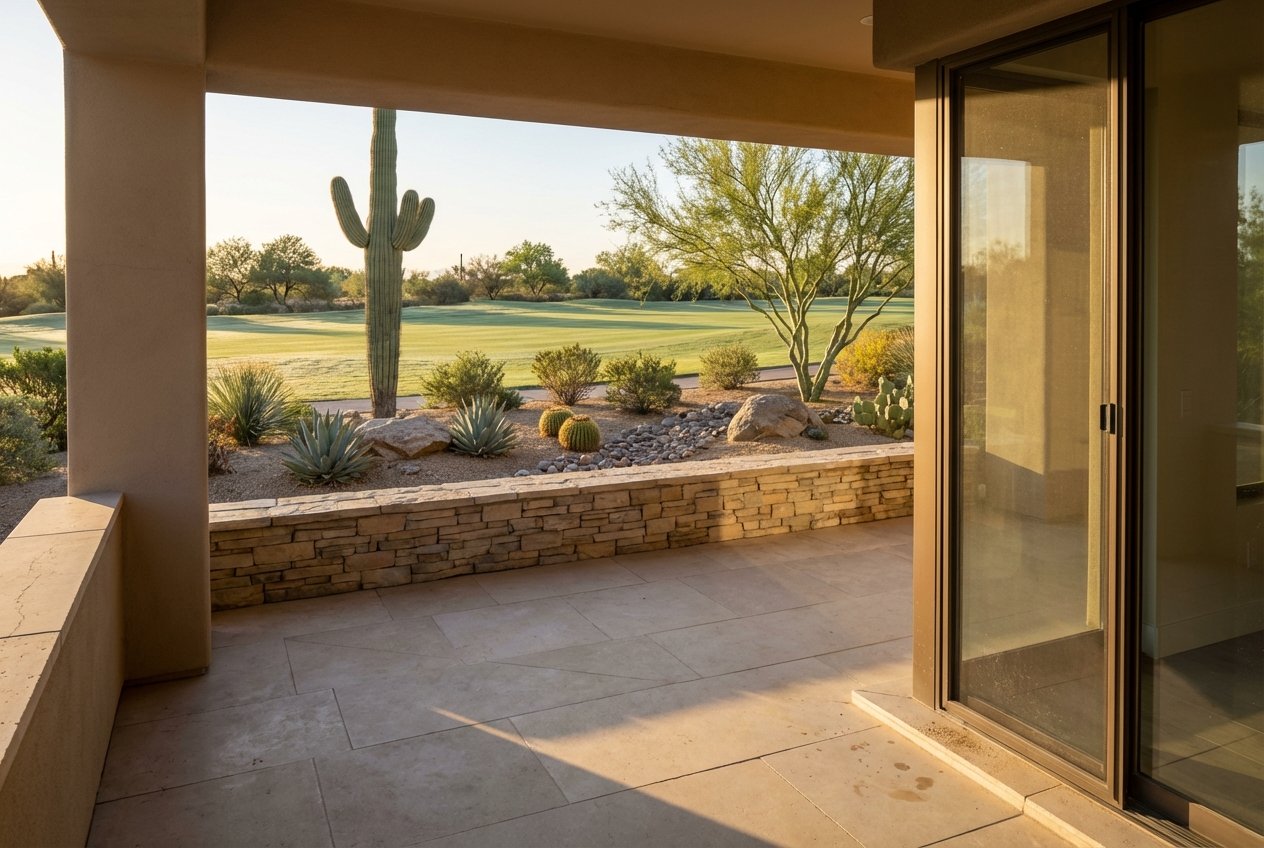
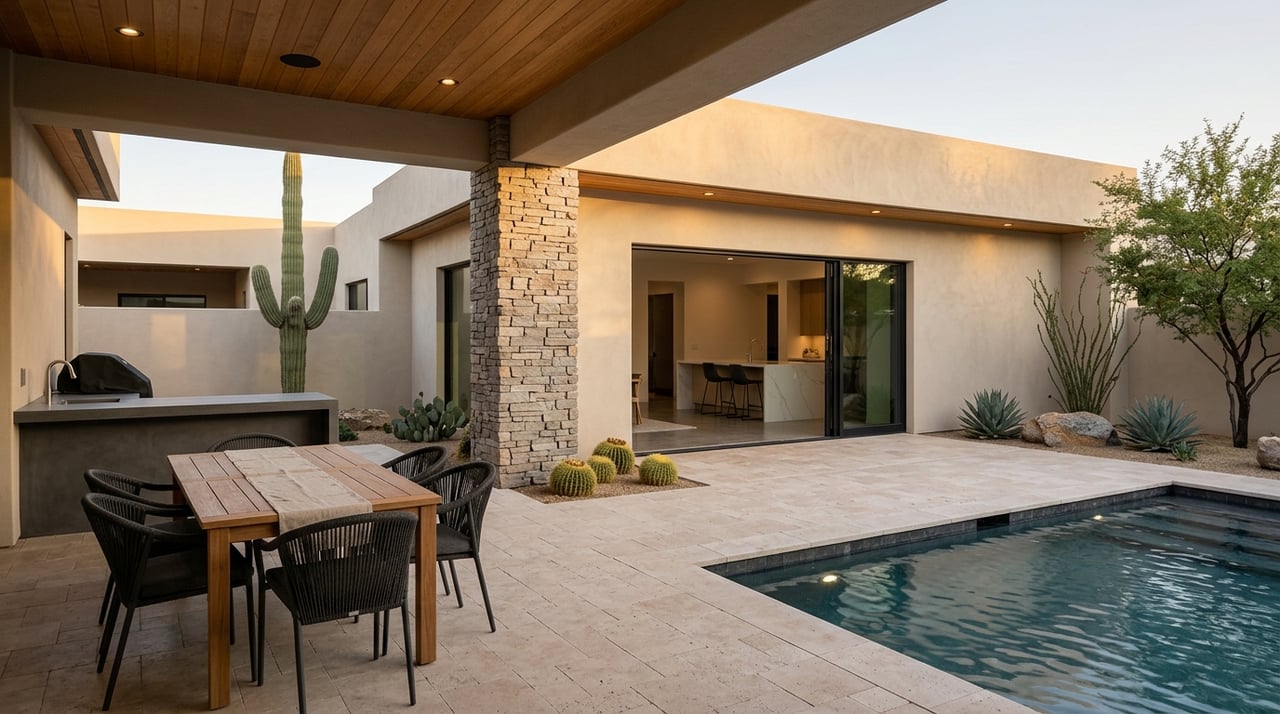
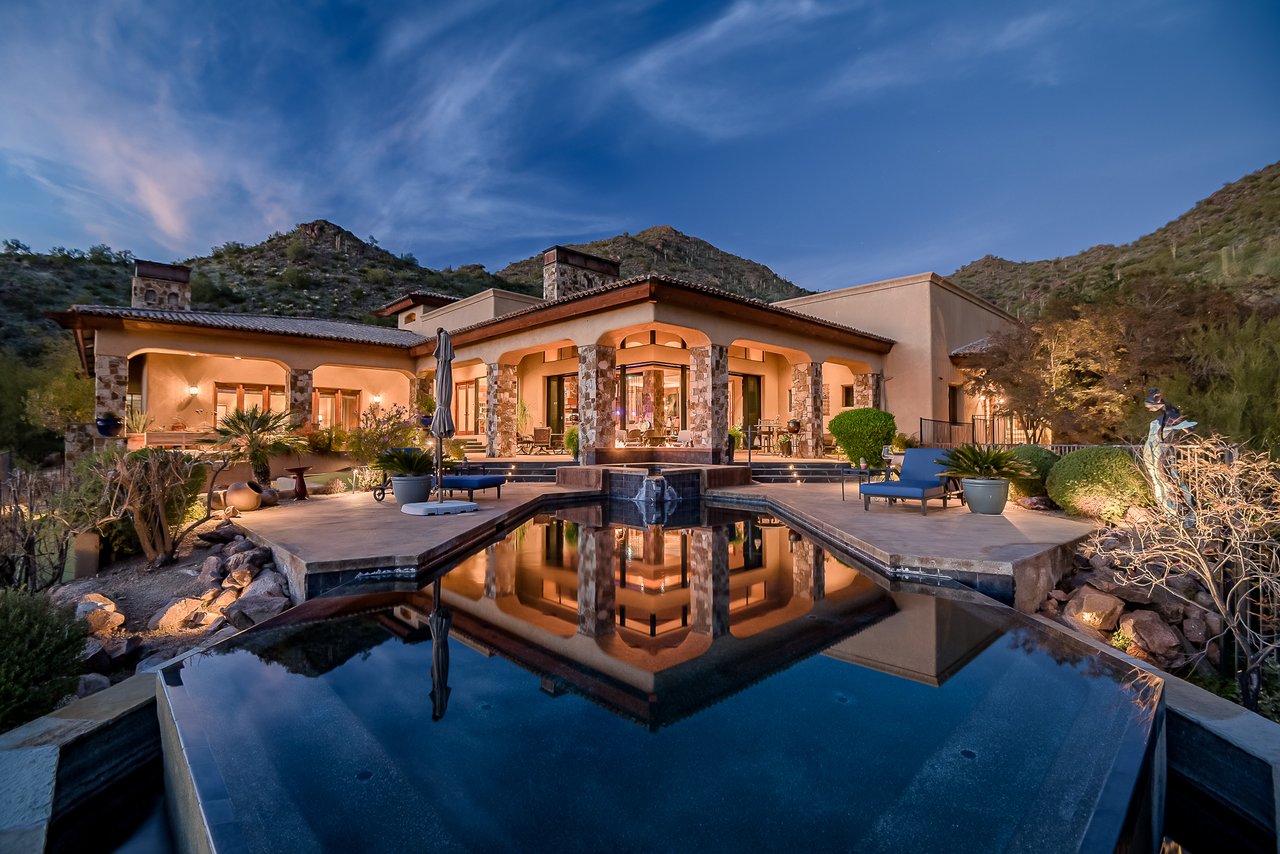
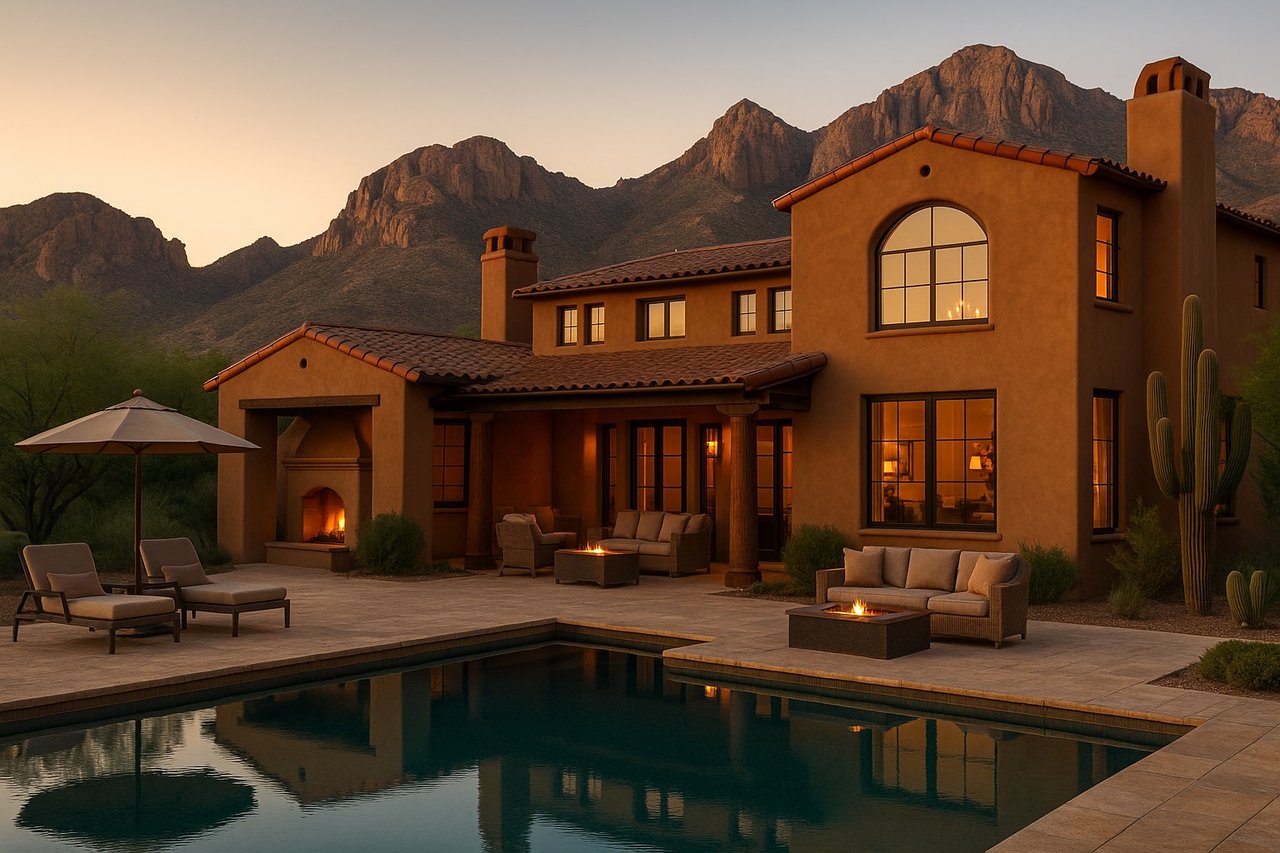
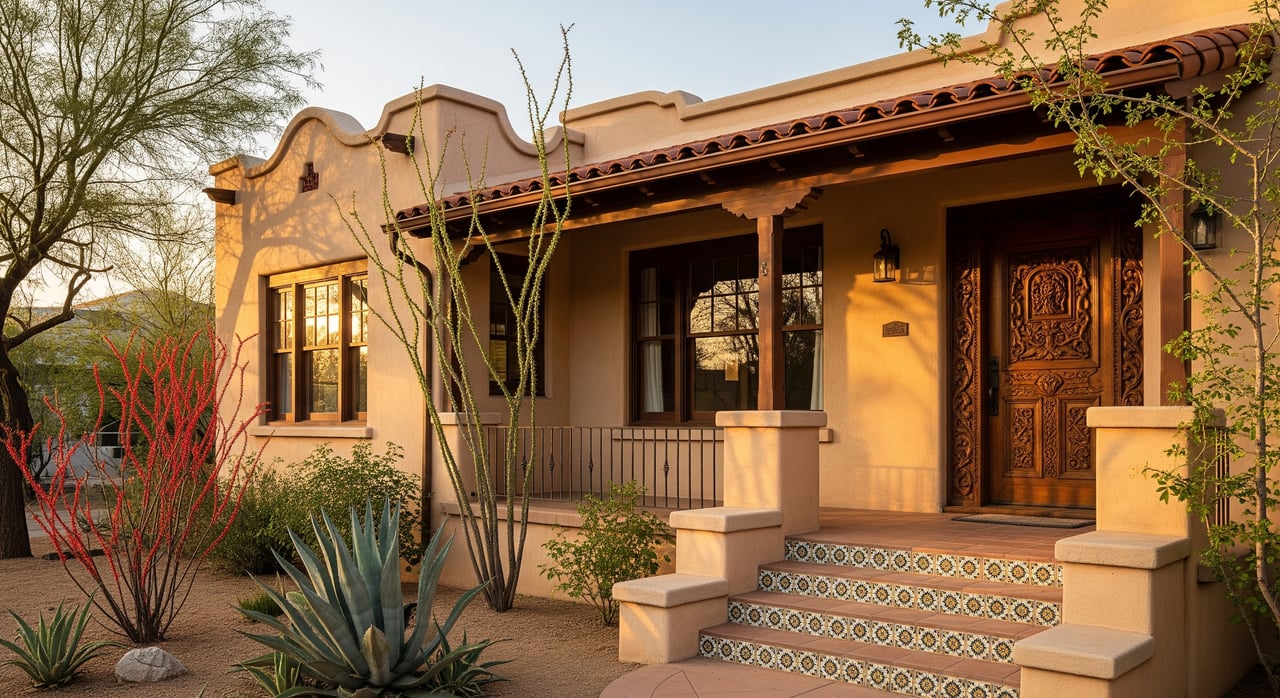
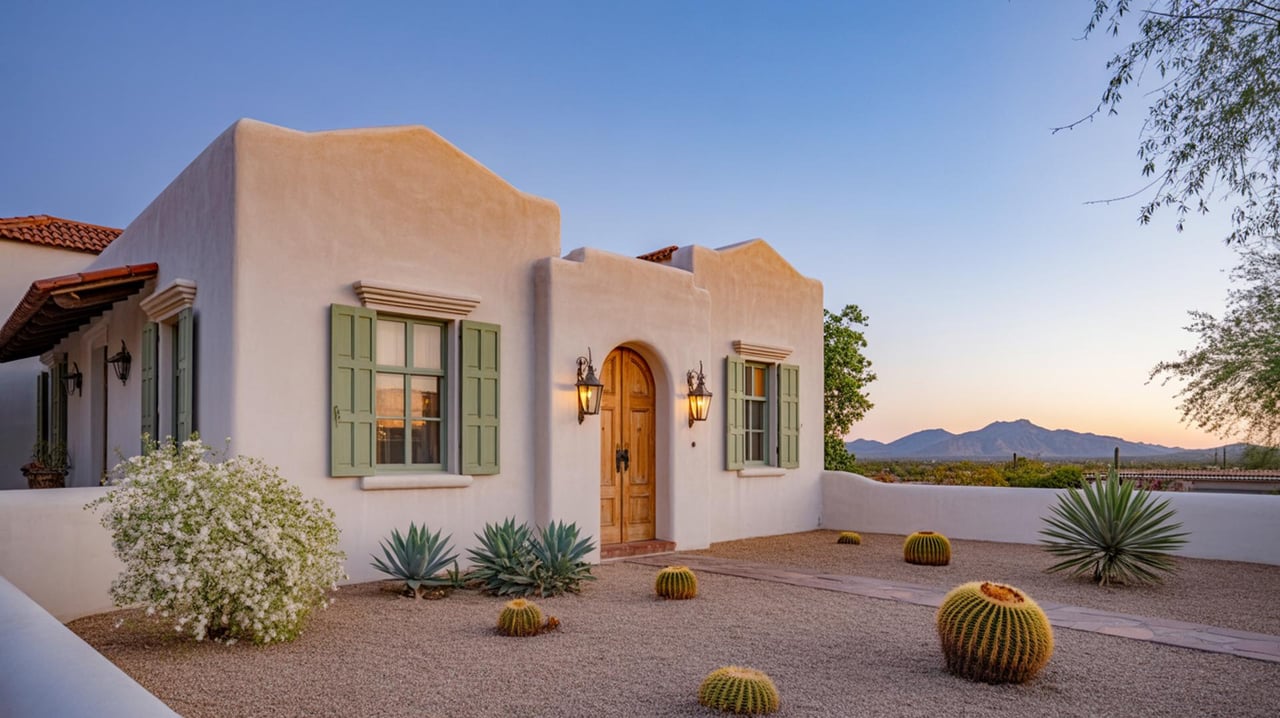
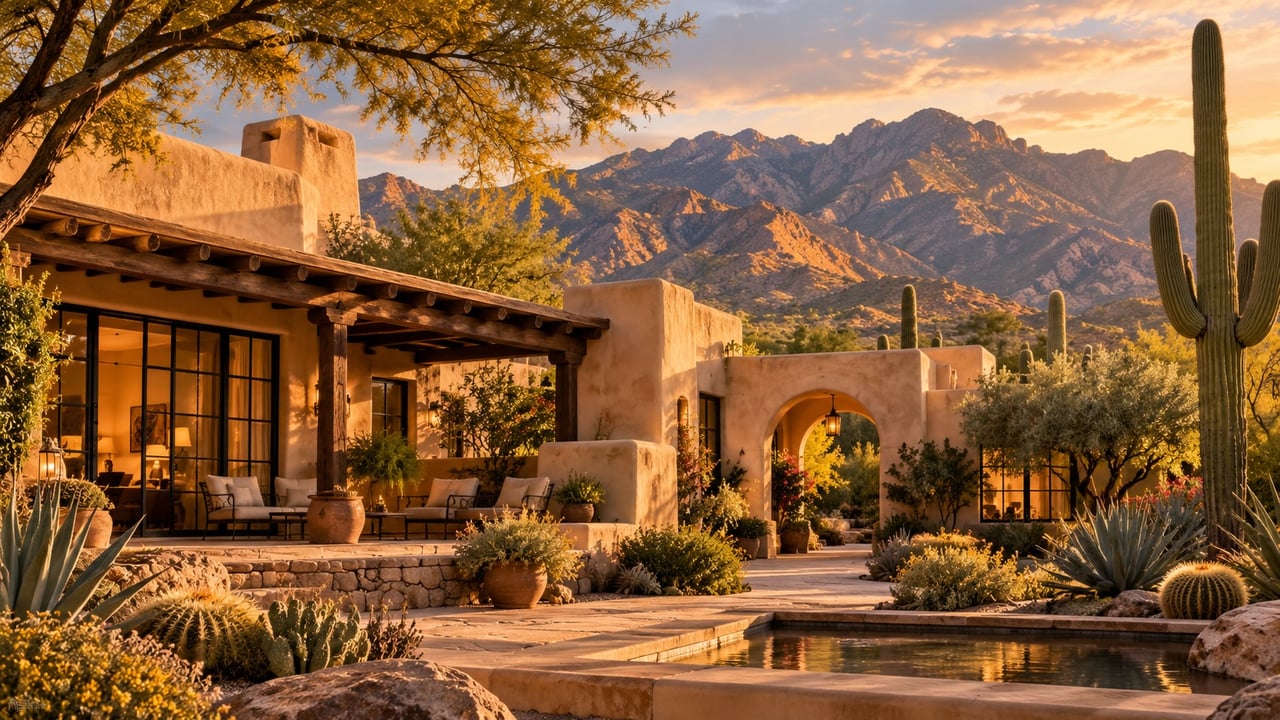
At 5055 N Calle La Vela, many of the characteristics associated with Joesler’s residential work are evident: adobe construction, courtyards, substantial walls, beamed ceilings, sheltered exterior spaces and a strong relationship between interior rooms and the surrounding desert.
These elements are beautiful, but they were never merely decorative.
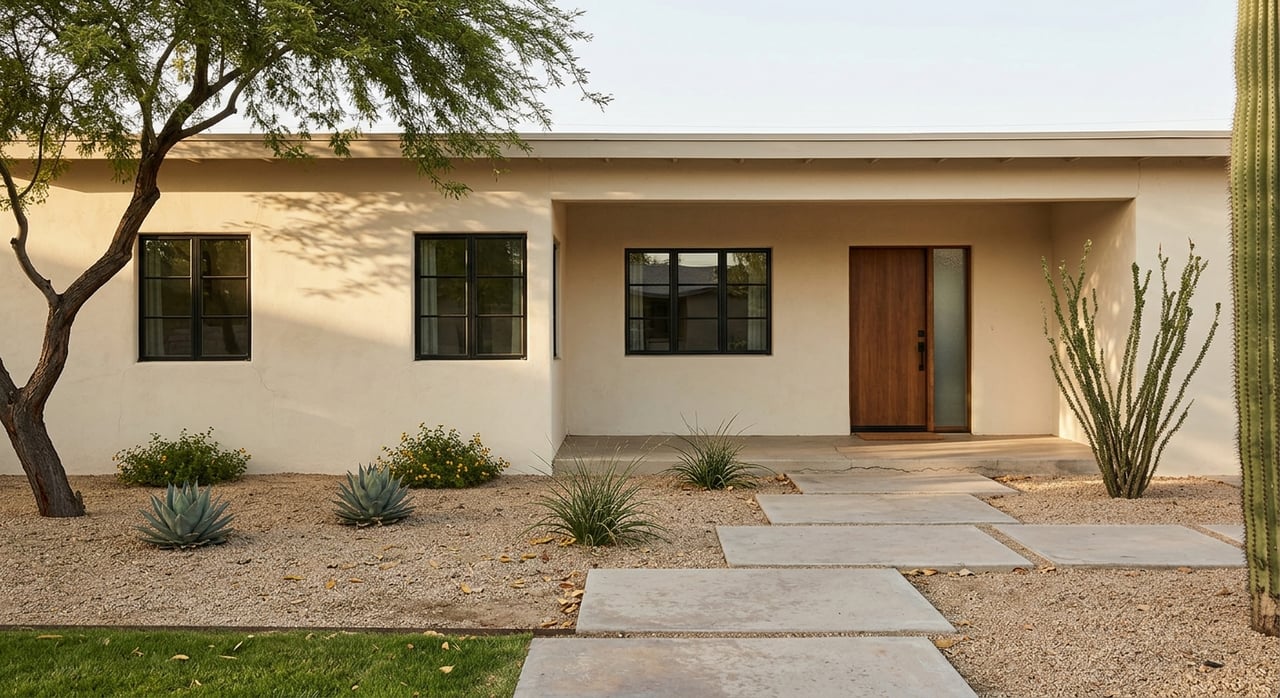
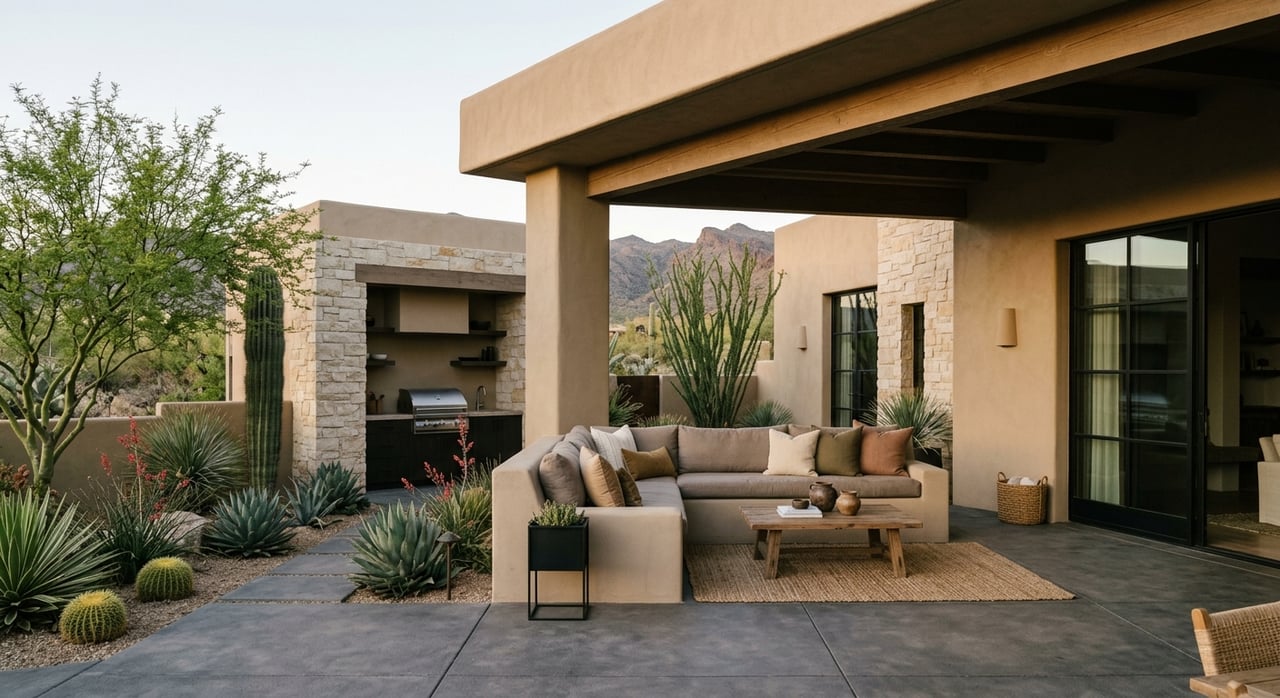
Deep porches create shade.
Thick masonry responds naturally to temperature.
Courtyards become protected outdoor rooms.
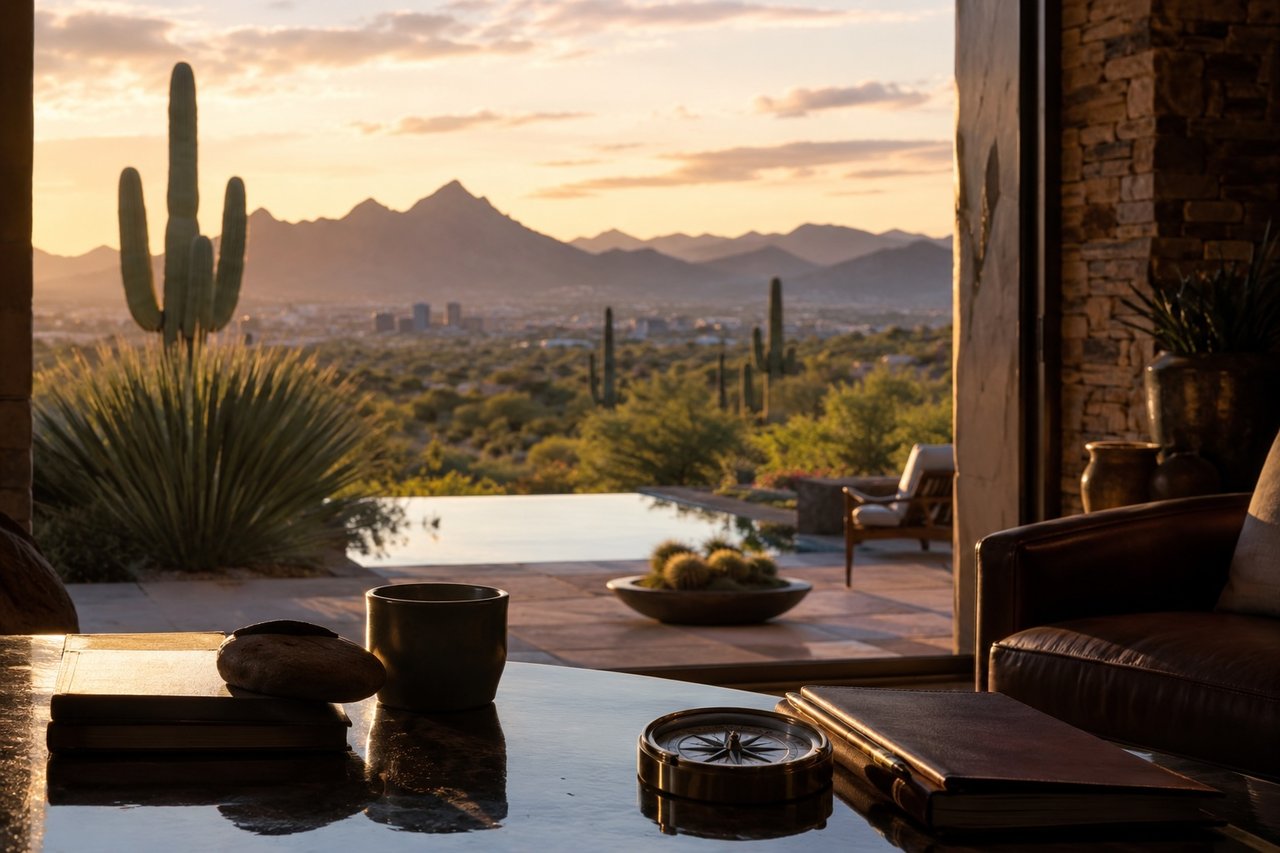
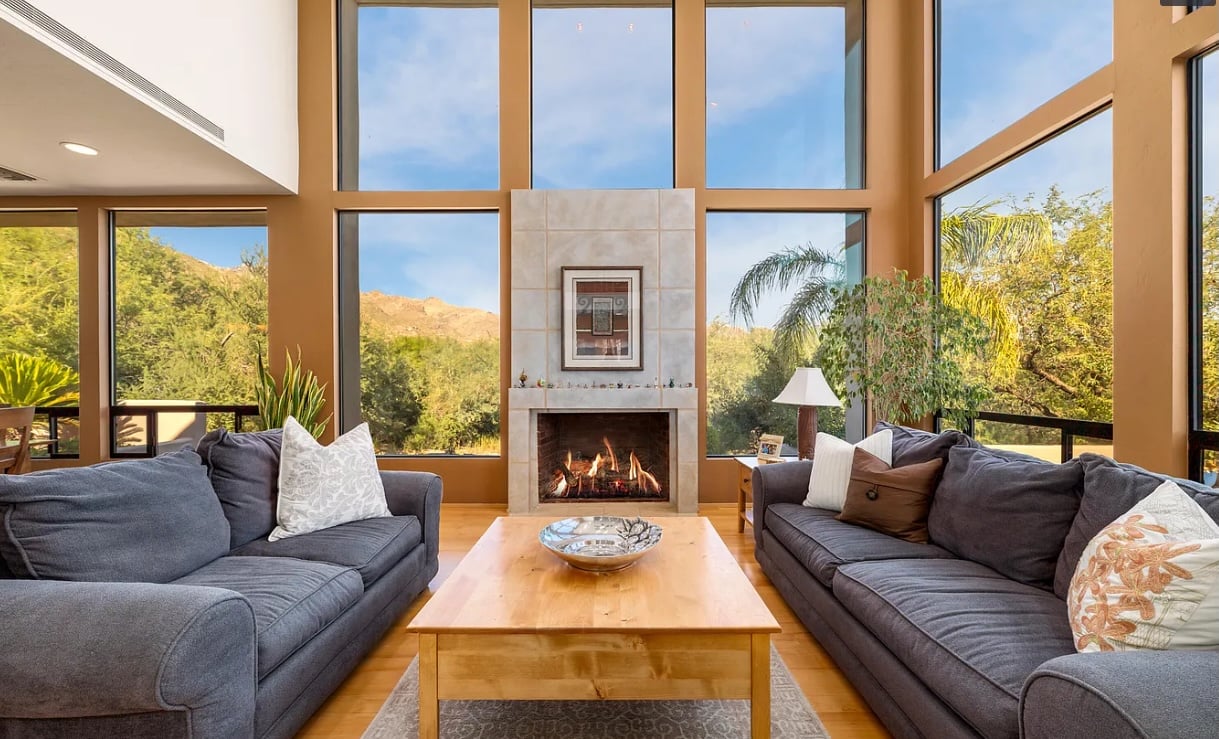
Windows and openings frame mountain, desert and city views.
The architecture recognizes the land rather than treating the property as an empty platform on which to place a house.
That distinction matters.
A great desert house doesn’t simply sit in Tucson. It makes sense because it is in Tucson.
When Hollywood Came to the Catalina Foothills
The home’s architectural story would eventually intersect with Hollywood history.
Lee Marvin and his wife Pamela purchased the Calle La Vela estate in 1975, and Marvin lived there until his death in 1987.
Marvin was one of Hollywood’s most recognizable actors of his generation. He won the Academy Award for Best Actor for Cat Ballou and appeared in films including The Dirty Dozen and The Man Who Shot Liberty Valance.
Yet it is the Tucson chapter of his life that makes the house particularly interesting.
Here was one of Hollywood’s best-known actors choosing a historic adobe residence in the Catalina Foothills as his retreat from the entertainment industry.
There is something almost perfectly Tucson about that.
The house has presence without needing spectacle.
Its appeal comes from land, privacy, architecture, craftsmanship and an unmistakable connection to the desert.
Preservation Without Turning a House Into a Museum
Historic architecture presents an interesting challenge.
A significant house still has to function as a house.
Preserve too rigidly and a property can become frozen in another era.
Renovate too aggressively and the characteristics that made it significant can disappear.
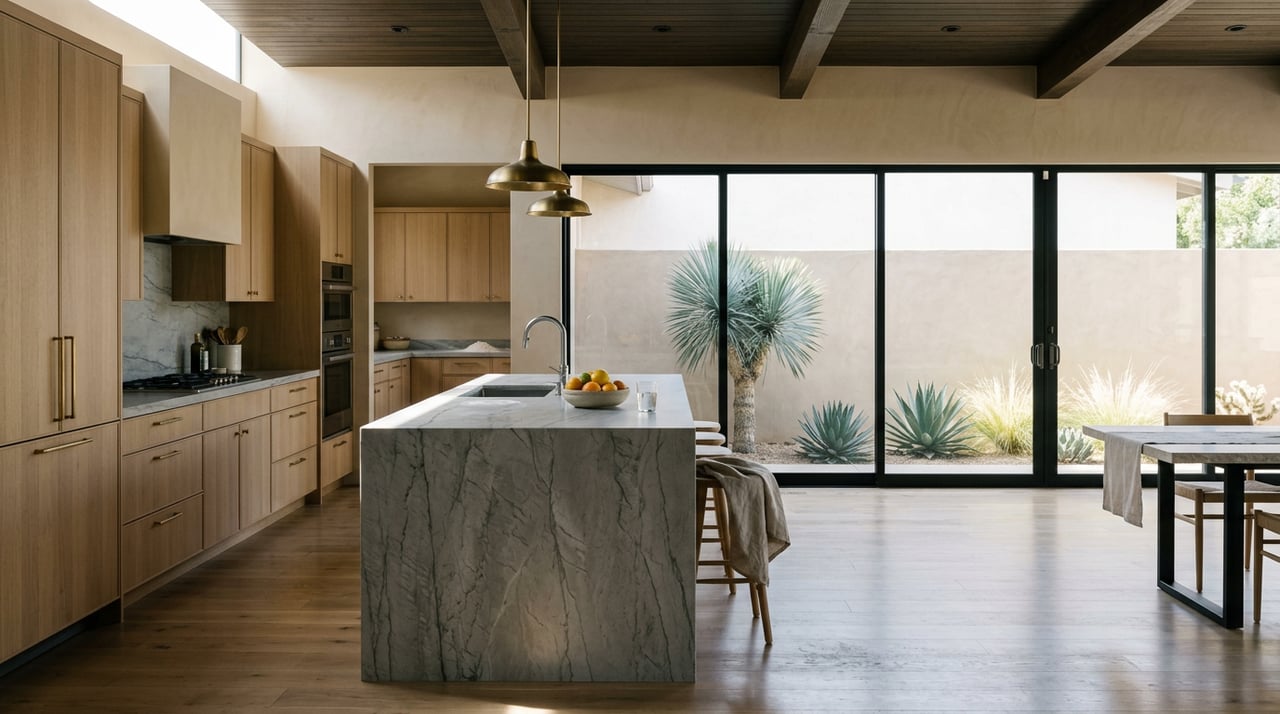
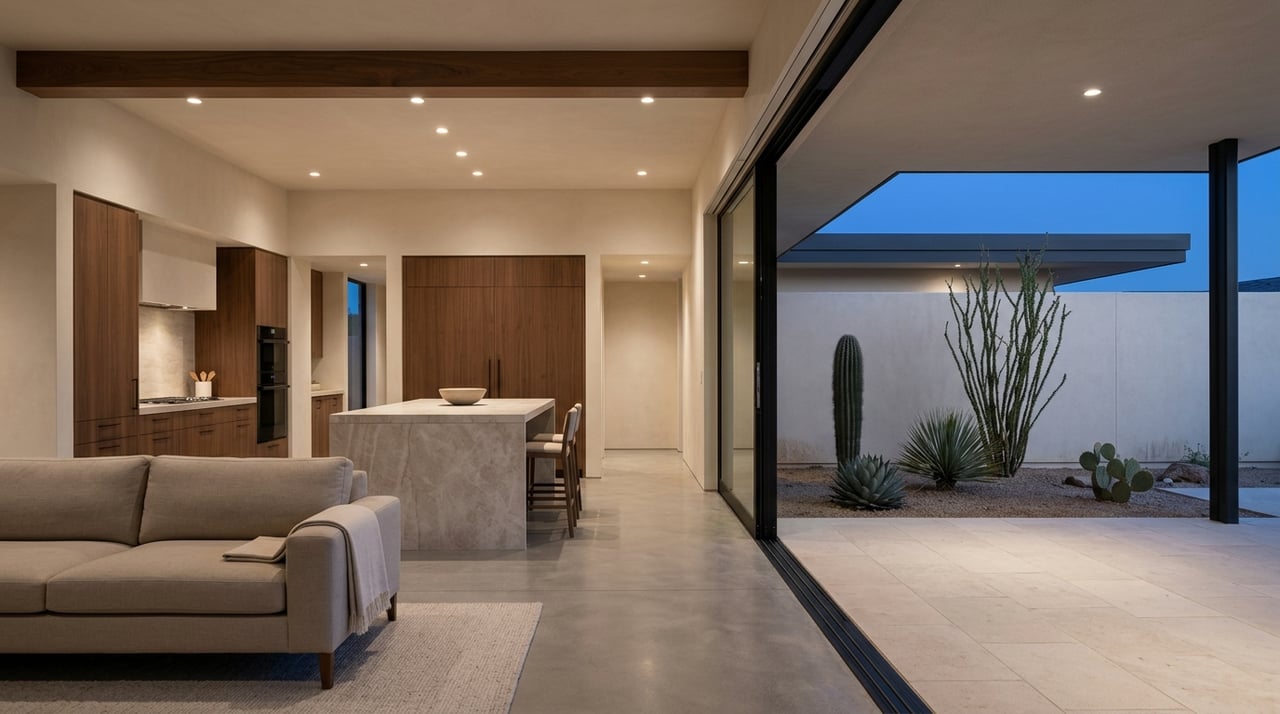
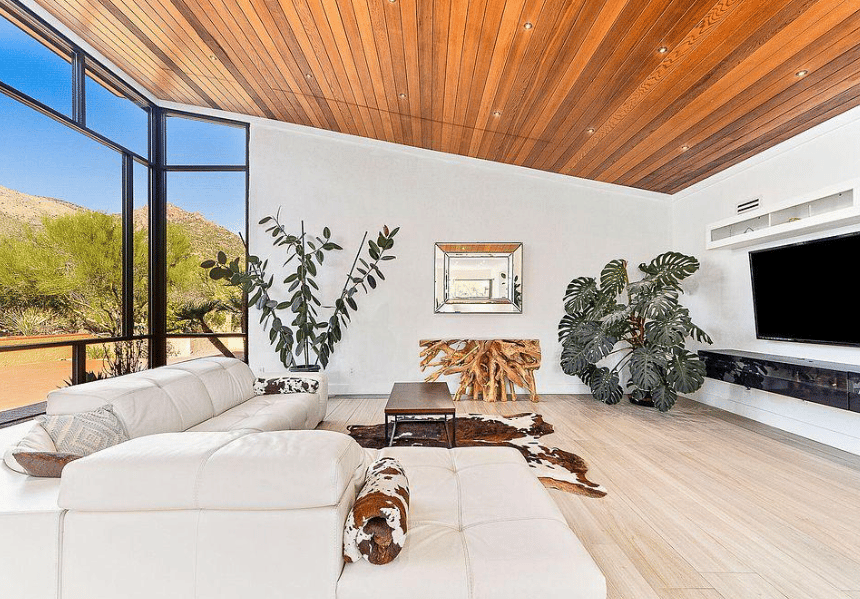
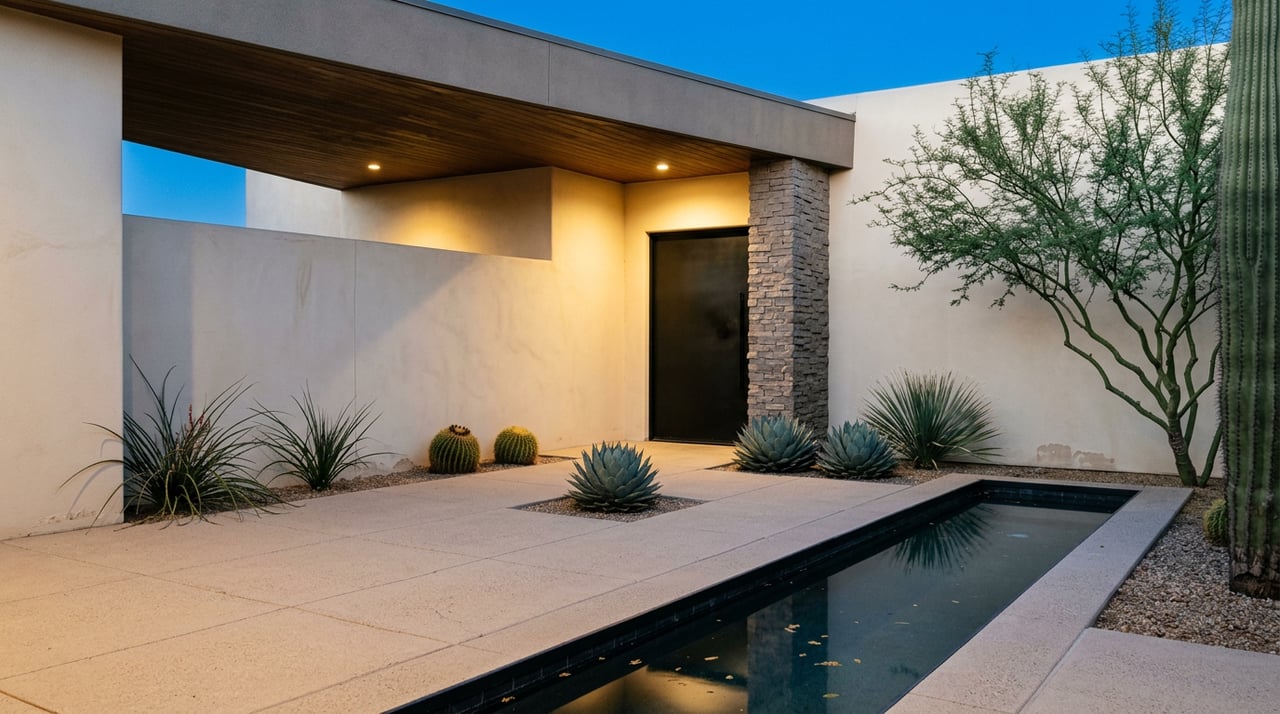
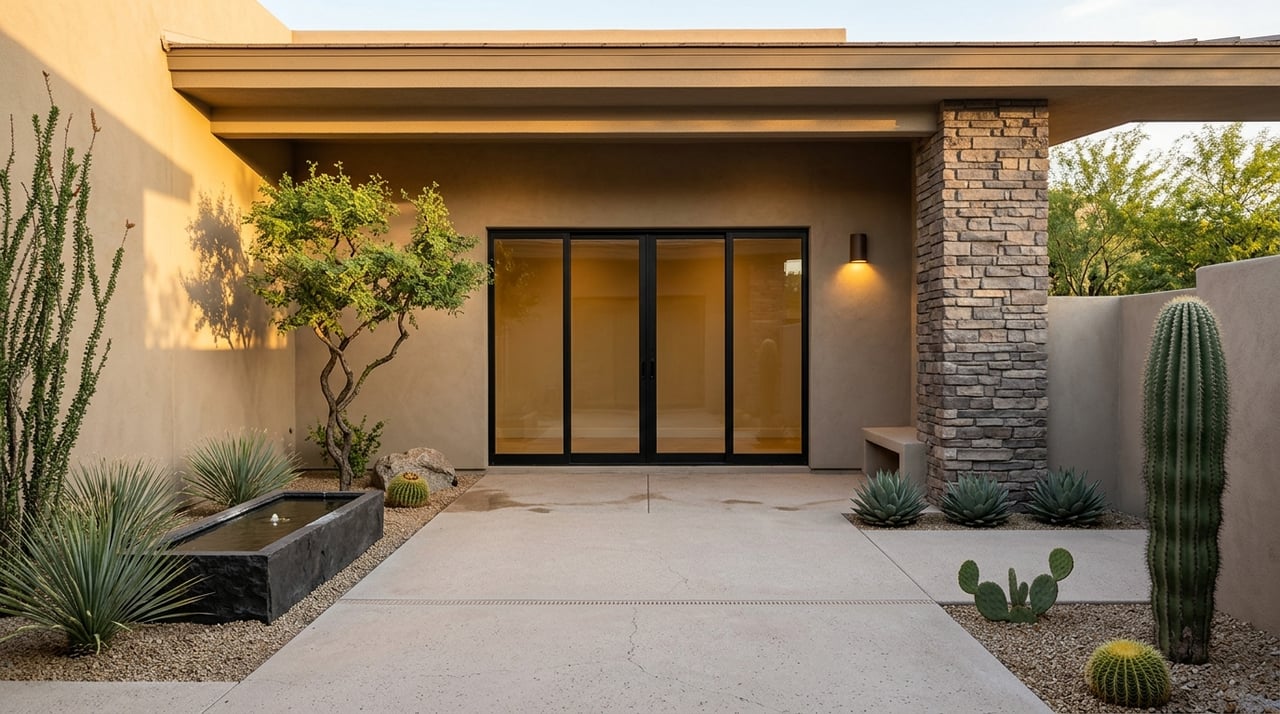
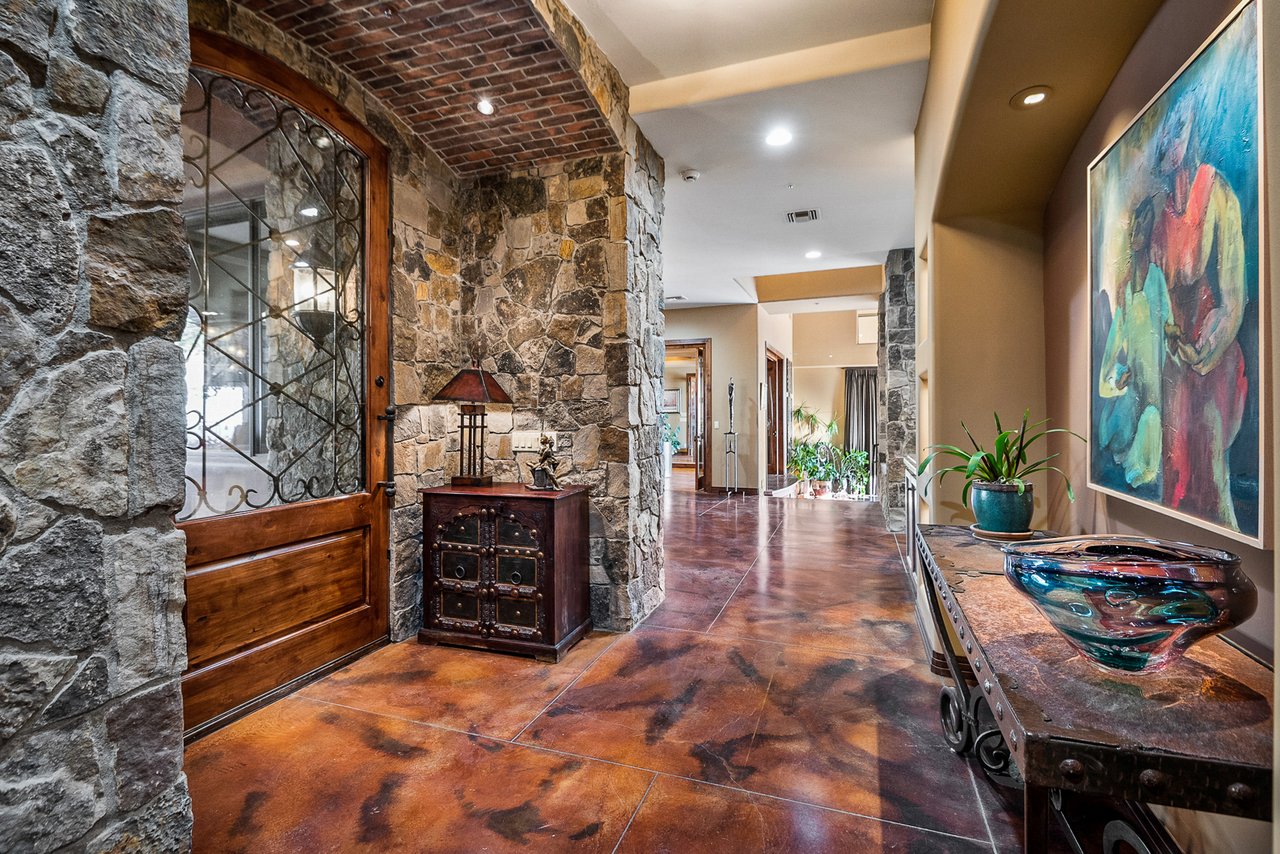
Recent published accounts describe an extensive revitalization of 5055 N Calle La Vela that sought to preserve its architectural identity while introducing modern systems, refreshed living spaces, steel casement windows and doors, and substantial improvements to the outdoor environment.
That balance is especially important with a Joesler residence.
The objective should not be to make a 1936 house look as though it were built yesterday.
The objective is to allow a 1936 house to function beautifully today without losing the reasons it mattered in the first place.
At this level, authenticity becomes a form of luxury.
Why Joesler Homes Remain Important in Tucson Real Estate
Luxury real estate is often discussed in terms of the newest construction, newest finishes, largest glass walls or newest gated development.
There is certainly a market for all of those things.
But Tucson possesses another category of luxury that is fundamentally scarce.
You cannot manufacture another original 1930s Joesler.
You cannot recreate nearly a century of provenance.
And you cannot reproduce the circumstances under which the earliest Catalina Foothills estates were created: expansive desert parcels, comparatively untouched landscape and architecture designed specifically around Southern Arizona.
That scarcity matters.
For an architecture-minded buyer, value is not limited to bedroom count, square footage or the latest kitchen.
The architect matters.
The integrity of the renovation matters.
The original materials matter.
The relationship between the house and the land matters.
And the story matters.
That is why the best historic Tucson homes require a different lens than conventional luxury real estate.
What 5055 N Calle La Vela Says About Tucson Luxury
As a Tucson native and real estate advisor, I have always found the most interesting homes here to be the ones that could not simply be picked up and moved to another luxury market.
A beautiful contemporary residence might feel equally at home in Scottsdale, Palm Springs or Los Angeles.
The great Tucson houses are different.
The desert shaped them.
The mountains determined their orientation.
Materials responded to climate.
Courtyards provided shade and privacy.
Architecture borrowed from centuries of Spanish, Mexican and Southwestern building traditions and interpreted those traditions for Southern Arizona.
5055 N Calle La Vela belongs to Tucson.
That, even more than the celebrity who once lived there, is what makes the house fascinating.
The Enduring Appeal of the Old Foothills
Nearly ninety years after 5055 N Calle La Vela was built, many of the characteristics associated with Tucson’s earliest foothills estates remain among the most desirable qualities in the luxury market:
Privacy.
Land.
Architecture.
Mountain views.
Connection to the Sonoran Desert.
Indoor-outdoor living.
A sense of place.
Technology changes.
Kitchens change.
Definitions of luxury change.
Exceptional land and thoughtful architecture have remarkably long lives.
More Than the Lee Marvin House
Calling 5055 N Calle La Vela simply “Lee Marvin’s Tucson house” undersells it.
Marvin’s story makes the property fascinating.
Joesler makes it architecturally significant.
Its location places it within an important chapter in the development of the Catalina Foothills.
And its continued preservation provides an opportunity to understand something larger about Tucson’s residential identity.
The best Tucson homes are not always the ones that announce themselves most loudly.
Sometimes their importance accumulates quietly over generations.
That is the story of 5055 N Calle La Vela.
And it is exactly the kind of house that makes Tucson architecture worth paying attention to.
Quick Answers About 5055 N Calle La Vela
Who designed 5055 N Calle La Vela in Tucson?
5055 N Calle La Vela was designed by Josias Joesler and built in 1936. Joesler was one of the defining architects of early Catalina Foothills residential architecture and remains one of the most recognizable names associated with historic Tucson homes.
Did Lee Marvin live in Tucson?
Yes. Lee Marvin and his wife Pamela purchased 5055 N Calle La Vela in 1975, and Marvin lived at the Tucson residence until his death in 1987.
Where is 5055 N Calle La Vela?
The property is located at 5055 N Calle La Vela, Tucson, Arizona 85718, in the Catalina Foothills area.
Why are Josias Joesler homes significant in Tucson?
Joesler helped establish an architectural language particularly suited to Southern Arizona, blending regional and international influences with practical responses to climate, views and the desert landscape. Historic examples of his work are valued not simply as residences, but as part of Tucson’s architectural heritage.
What makes historic luxury homes different from conventional luxury properties?
Architecturally significant homes often derive part of their value from qualities that cannot easily be reproduced: provenance, original materials, architectural authorship, exceptional land, historic context and the integrity of later renovations.
Great Houses of Tucson
Great Houses of Tucson is an ongoing series by Daniel Sotelo exploring the architecture, history and distinctive residences that have shaped Tucson and Southern Arizona.
From early Catalina Foothills estates and important works by Josias Joesler to modern desert architecture and exceptional contemporary residences, the series looks beyond square footage to understand why certain homes matter.
The goal is not simply to showcase expensive real estate. It is to document the houses, architects, neighborhoods and ideas that have helped define how Tucson lives.
About Daniel Sotelo
Daniel Sotelo is a Tucson native and luxury real estate advisor with Russ Lyon Sotheby’s International Realty, representing buyers and sellers throughout Tucson and Southern Arizona with a particular appreciation for distinctive, architecturally significant and lifestyle-driven properties.
His approach combines local market knowledge with an interest in architecture, design, history and the Sonoran Desert—because exceptional real estate is rarely understood through square footage and comparable sales alone.
Daniel advises clients throughout Catalina Foothills, Pima Canyon, Ventana Canyon, Starr Pass, Sam Hughes and the greater Tucson luxury market.
Considering the purchase or sale of a distinctive Tucson property?
Contact Daniel Sotelo to discuss Tucson luxury real estate, architecturally significant homes and private buying or selling opportunities throughout Southern Arizona.
Editorial Disclosure: This article is an independent editorial and architectural profile prepared by Daniel Sotelo. 5055 N Calle La Vela is not represented for sale by Daniel Sotelo or Russ Lyon Sotheby’s International Realty. Property information and historical details should be independently verified. This article is intended for informational and editorial purposes and should not be construed as an advertisement of another broker’s listing.