By Daniel Sotelo · Russ Lyon Sotheby’s International Realty
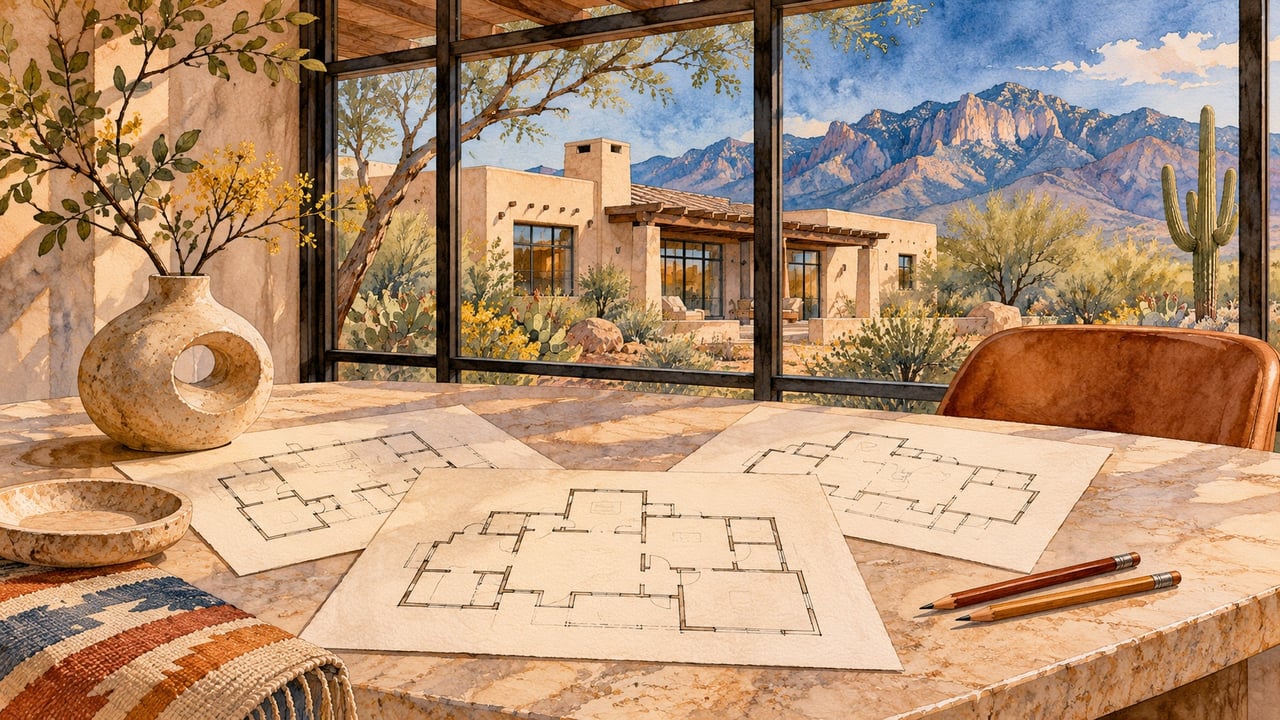
A collected Tucson home begins with a practical question: can this house make room for the things that matter to you? Look beyond square footage to usable art walls, controllable daylight, comfortable circulation, and the relationship between interior rooms and the desert. Those qualities determine whether a collection can become part of everyday life.
Imagine unpacking a small painting after a move to Tucson. It has lived in three different homes. You remember where you found it and why you have never replaced its slightly unfashionable frame. Now it is leaning against a plaster wall, in light unlike the light of its previous rooms.
Where does it belong?
That question brings together the object, the architecture, and the life beginning around them. It is also a useful next step in my exploration of Intellectual Maximalism: moving from a philosophy of meaningful spaces to the decisions that make one possible.
Explore Tucson-area homes for sale
Tucson offers more than one architectural language
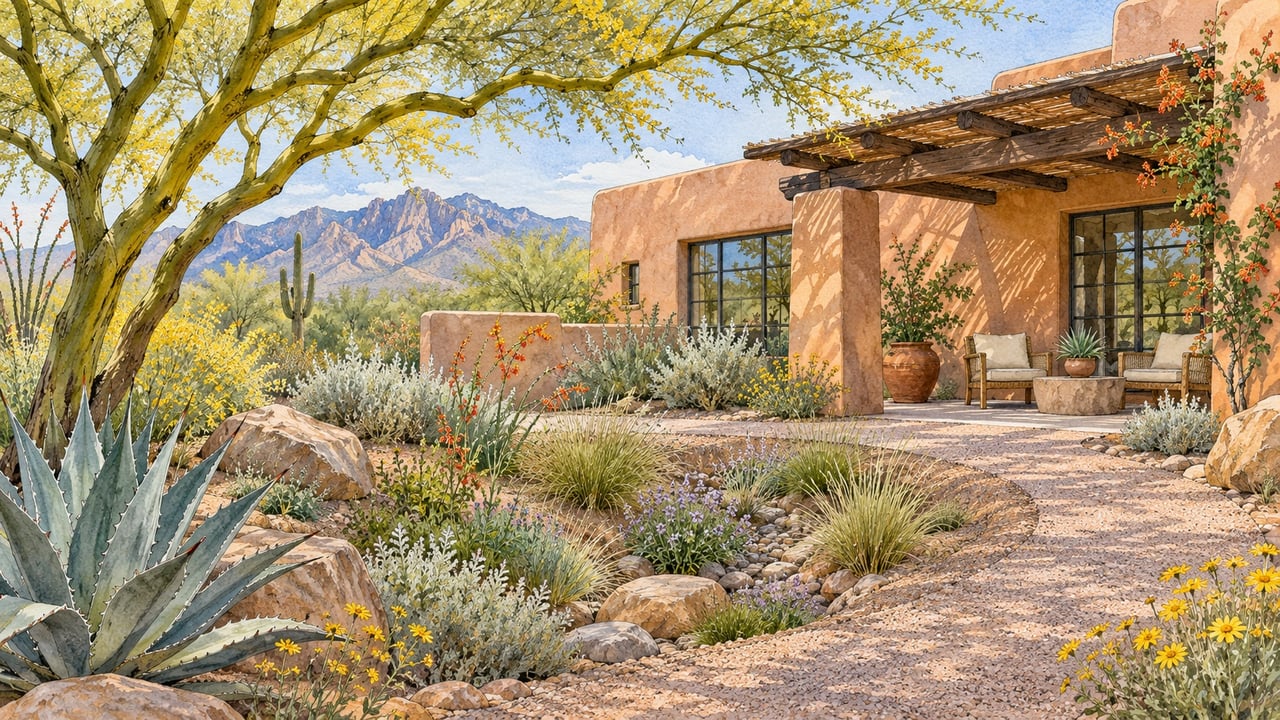
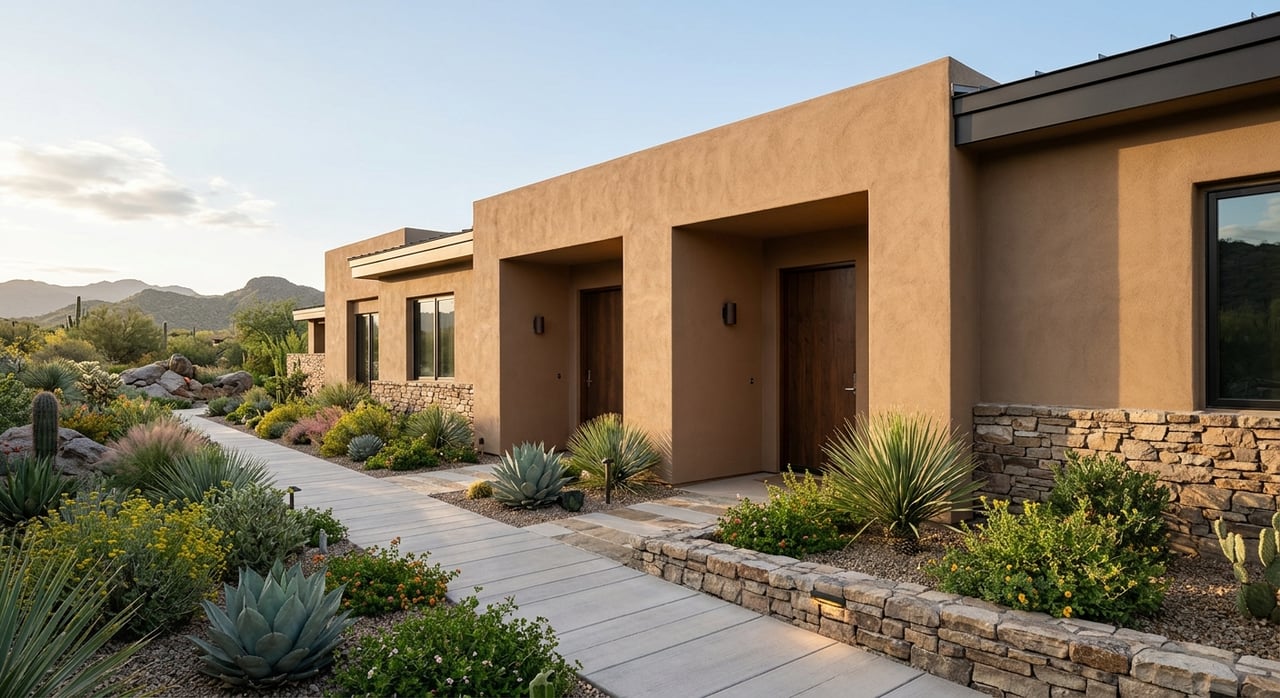
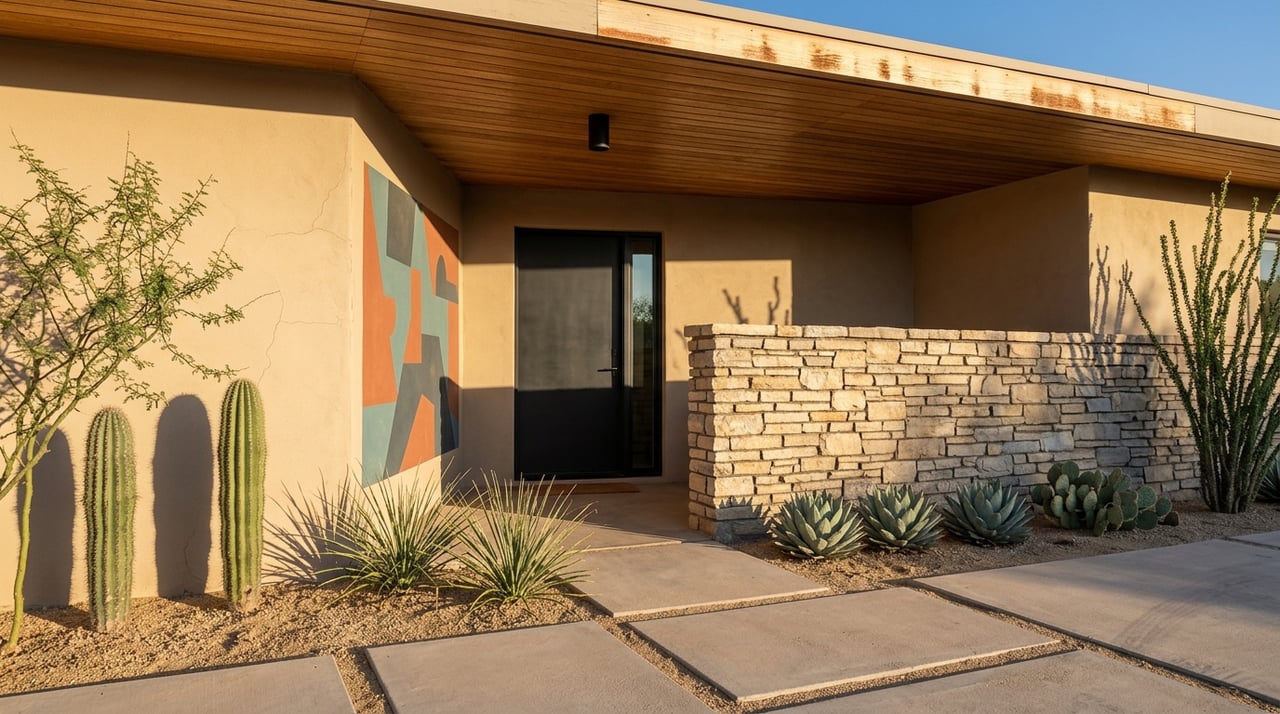
It is tempting to reduce a Tucson interior to a familiar palette: earth-colored walls, a woven textile, perhaps a piece of pottery. But a regional label is only the beginning of understanding a place.
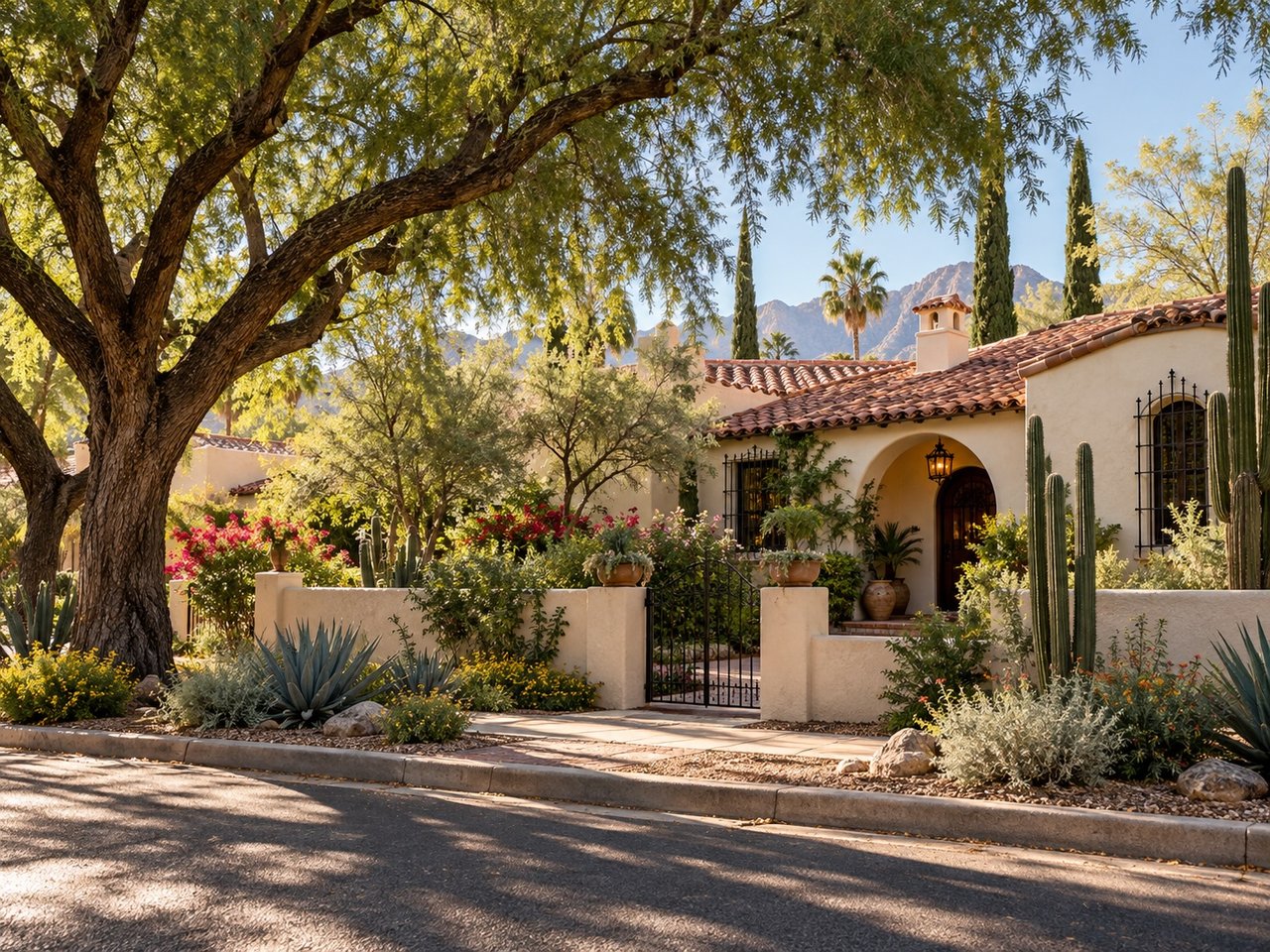
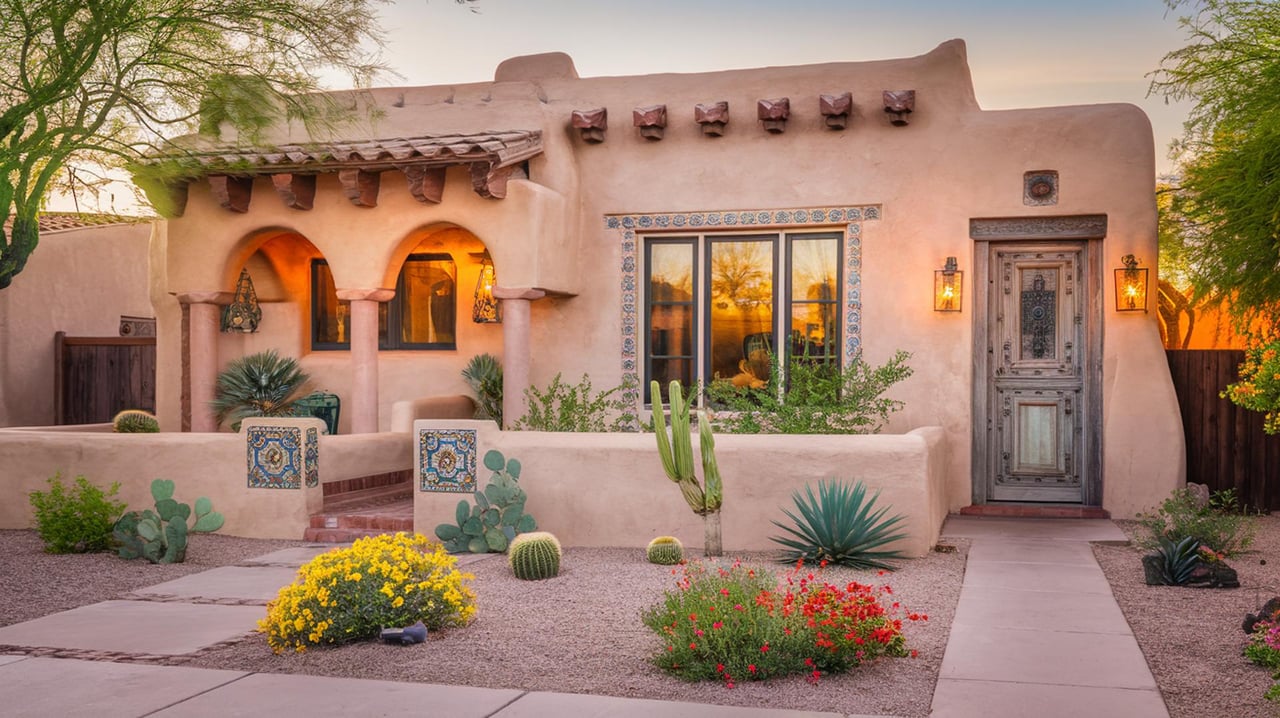
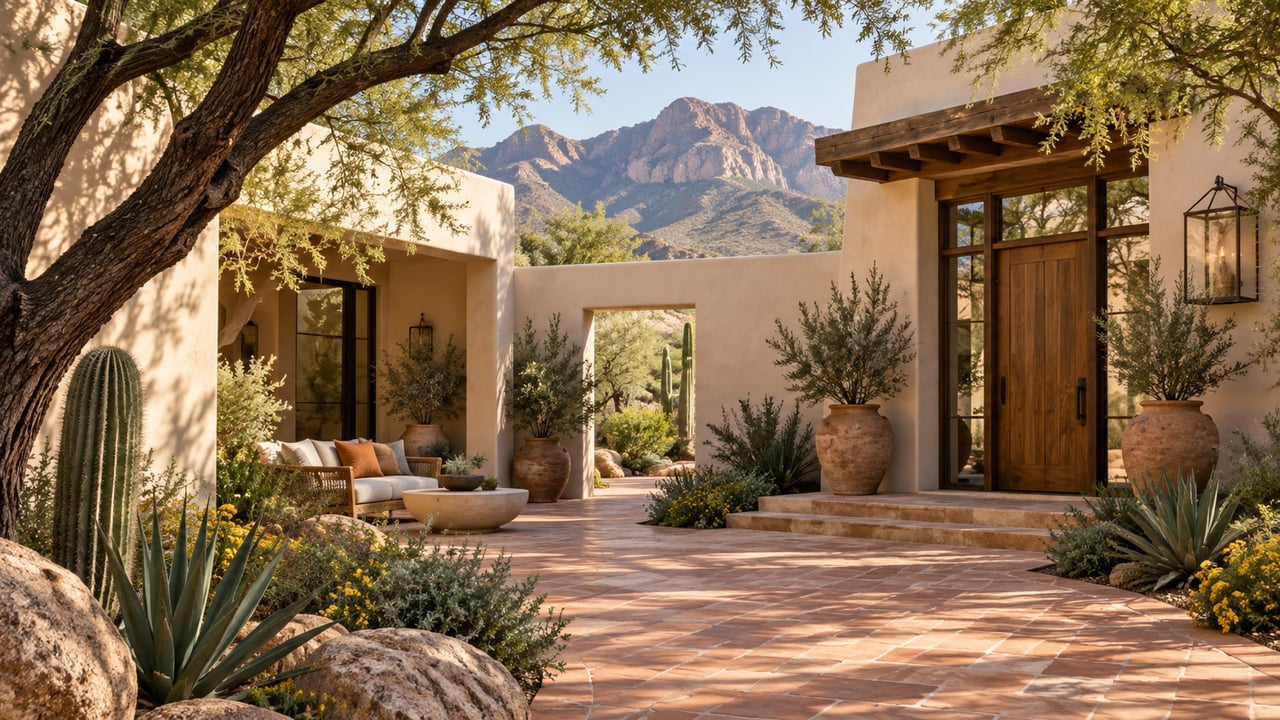
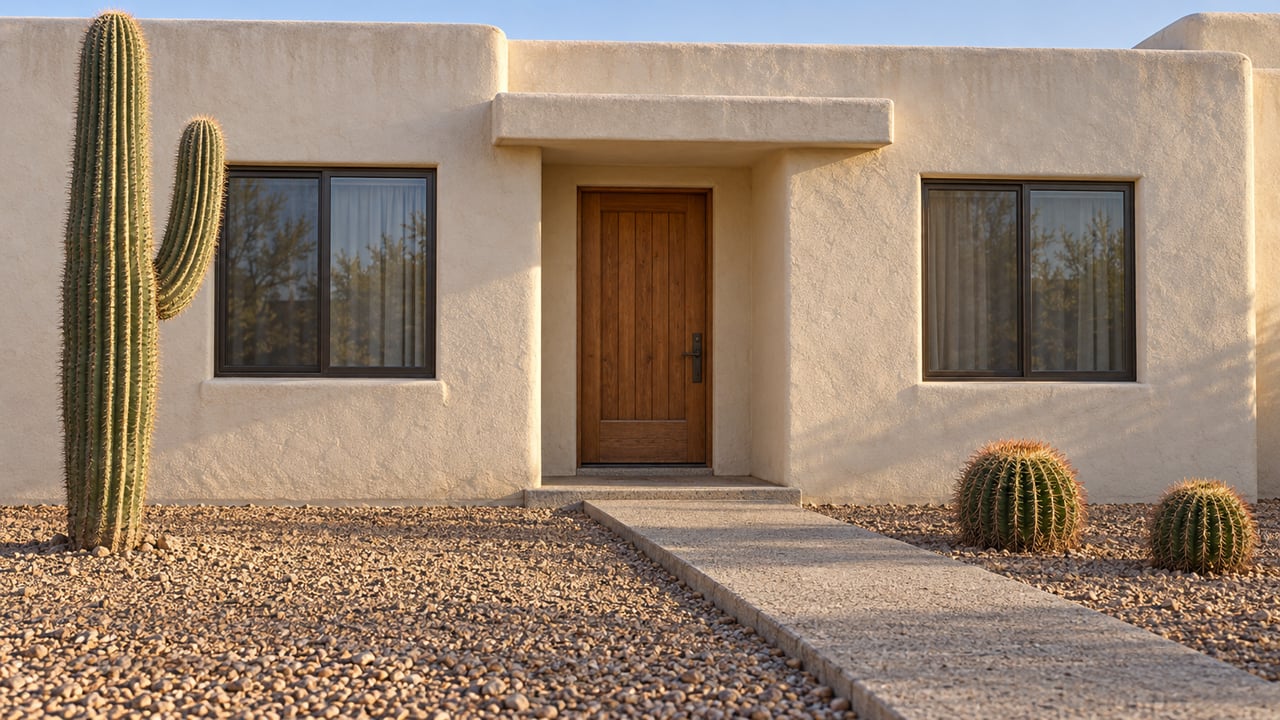
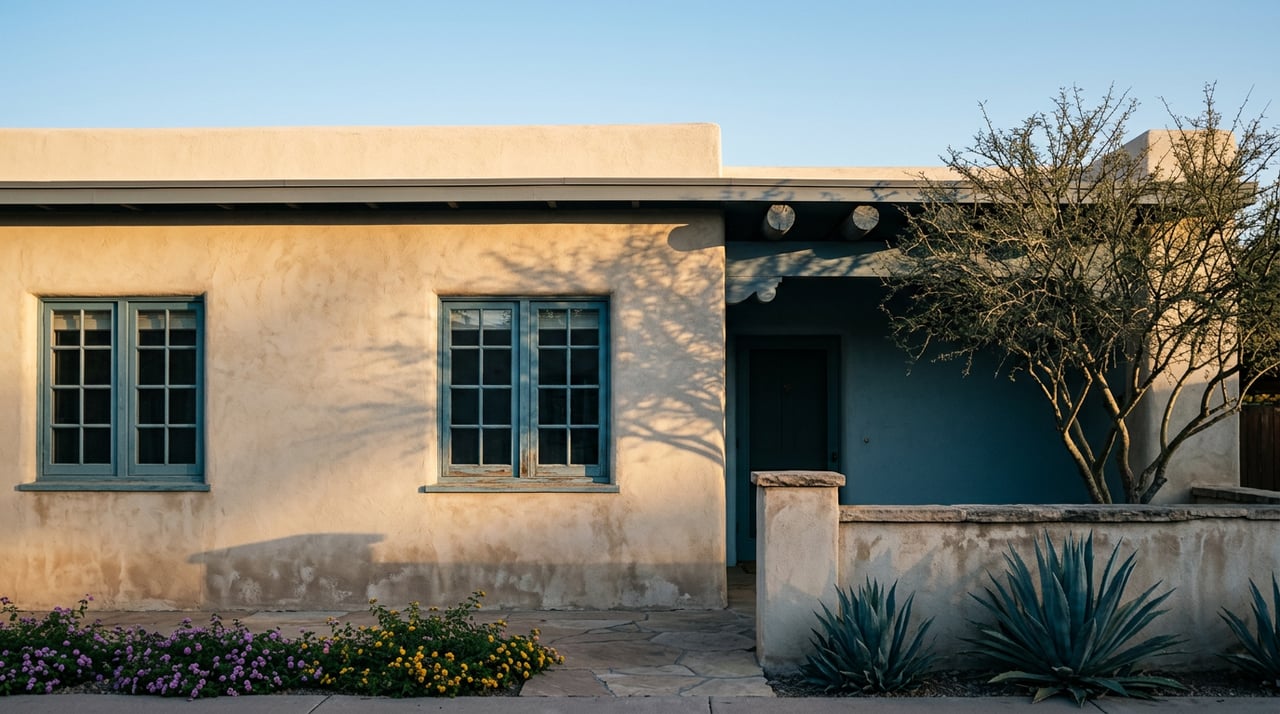
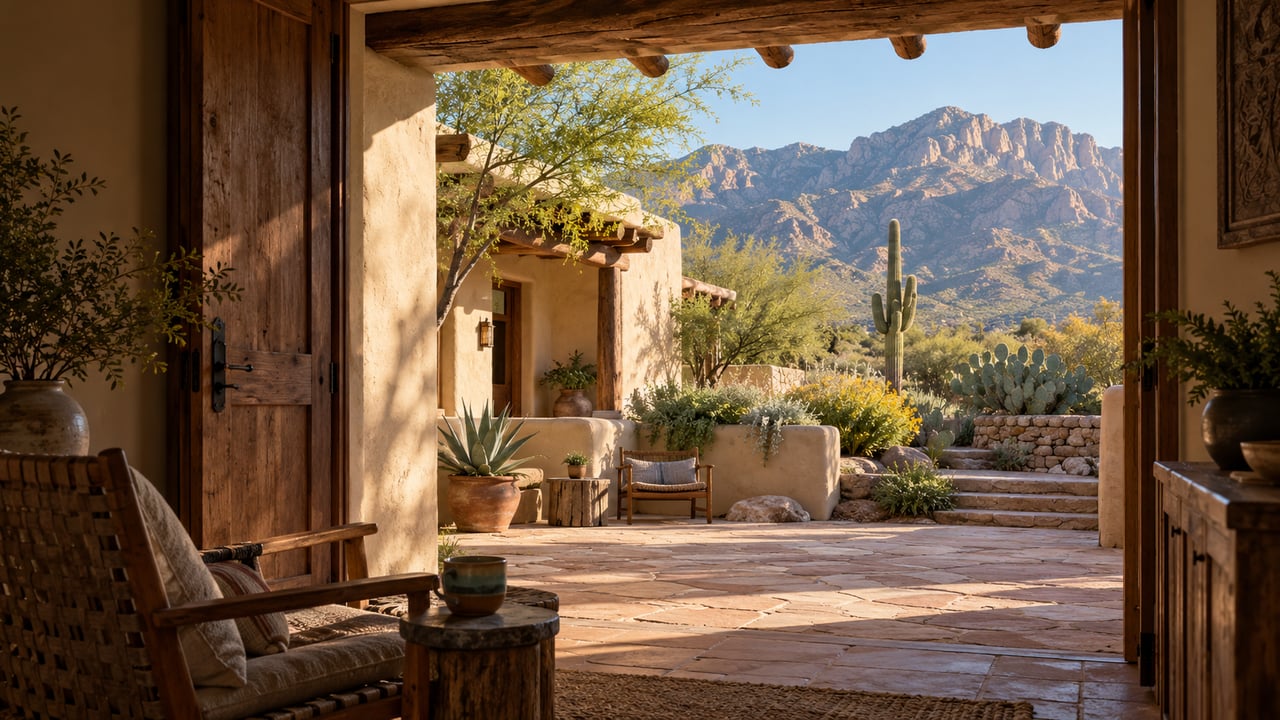
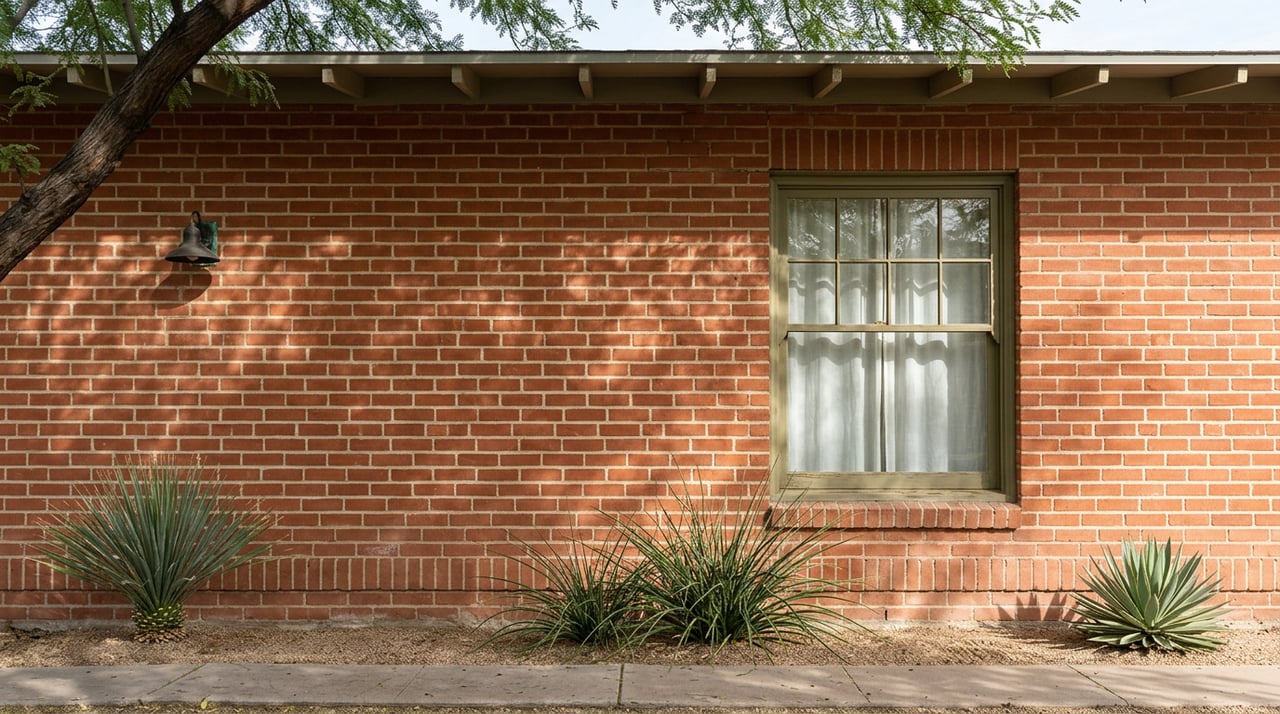
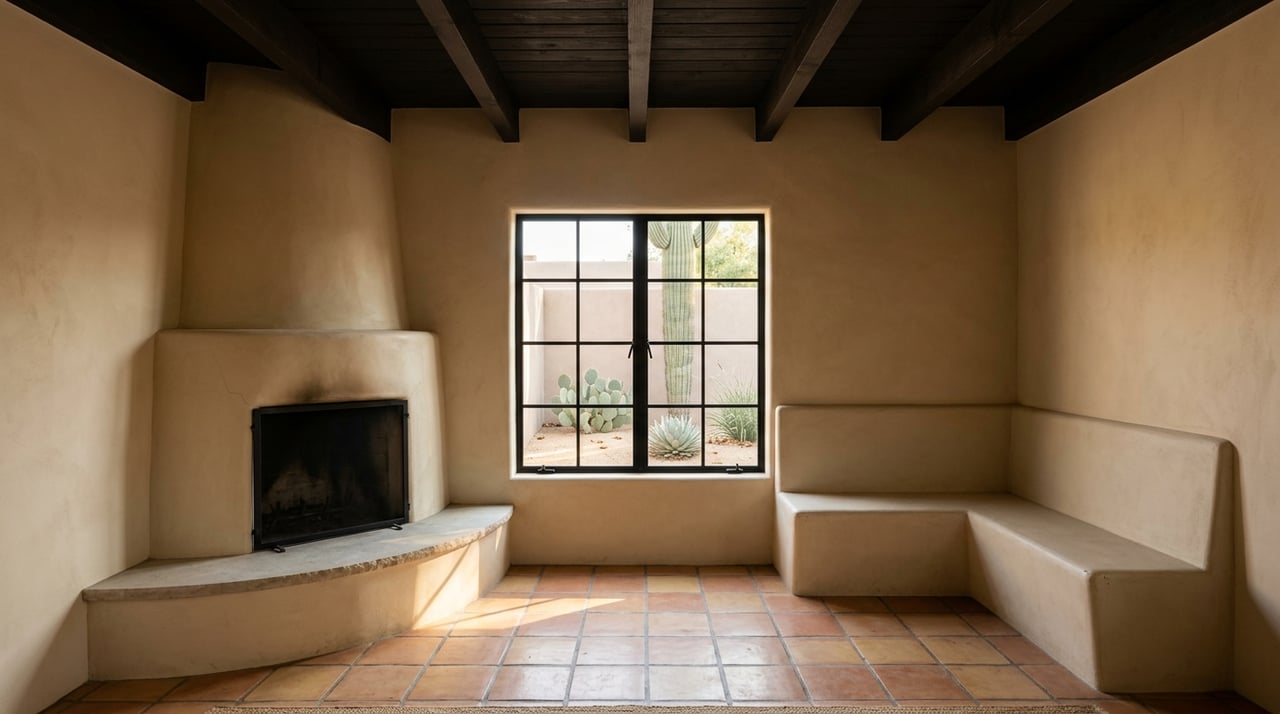
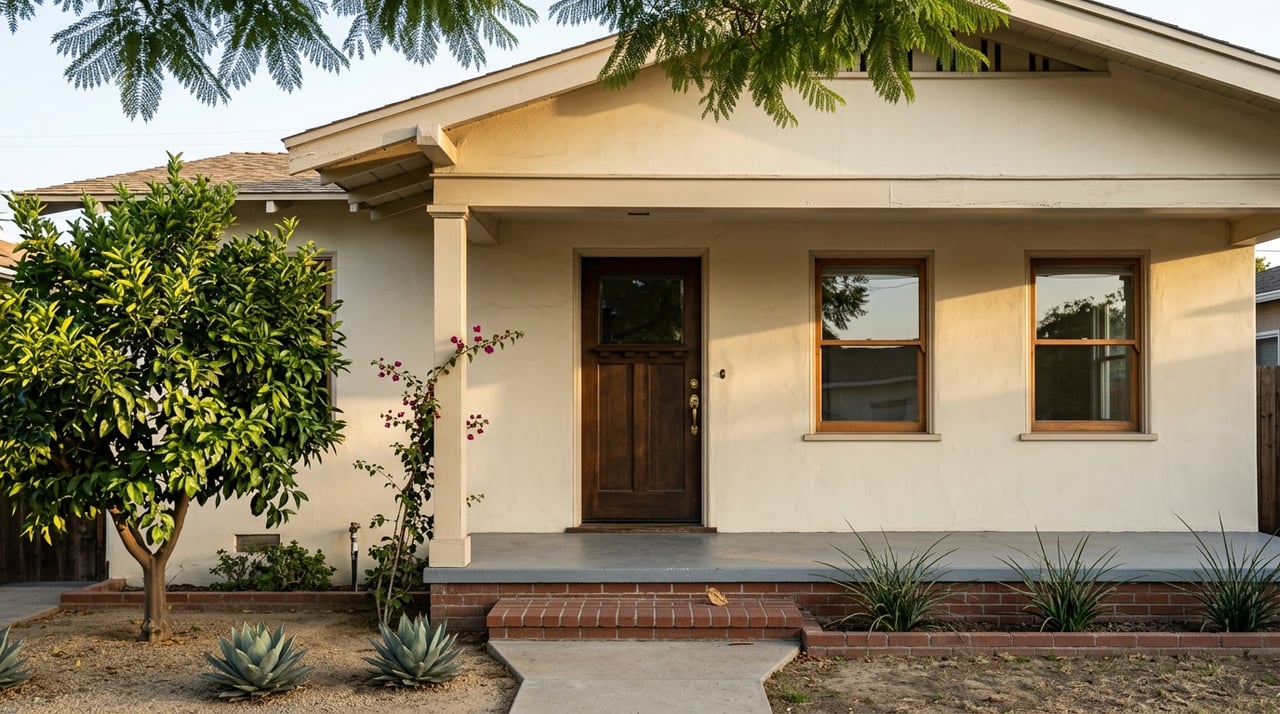
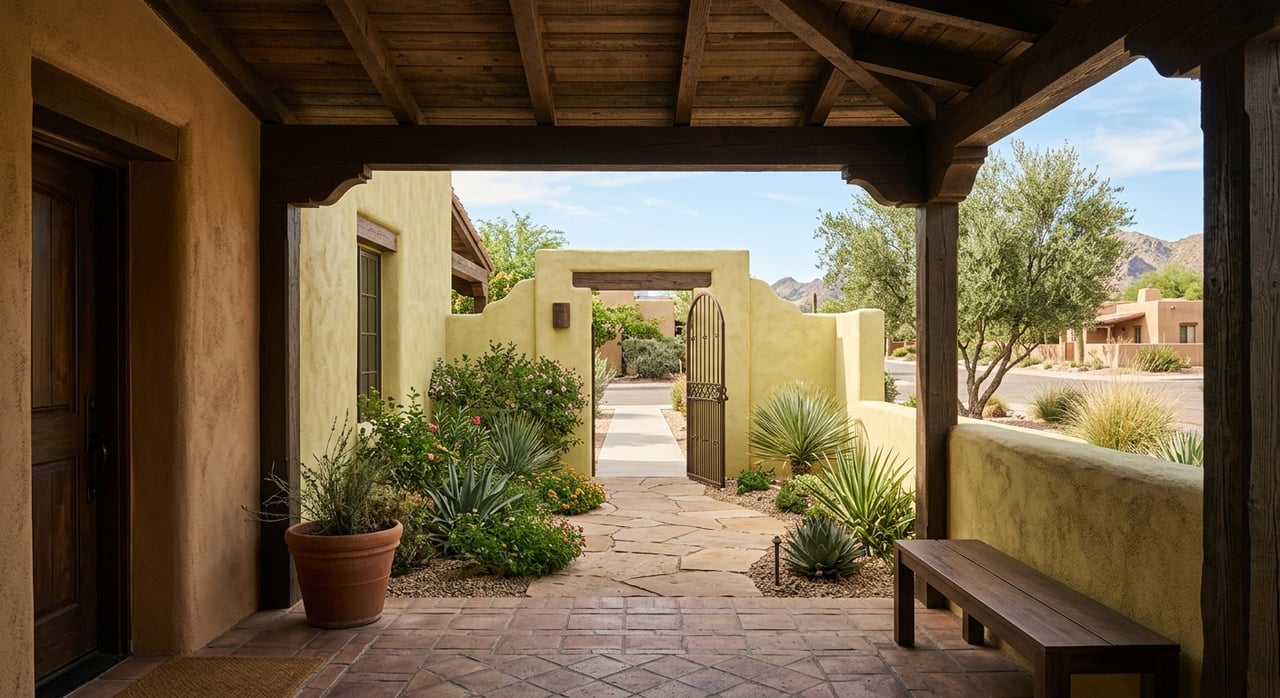
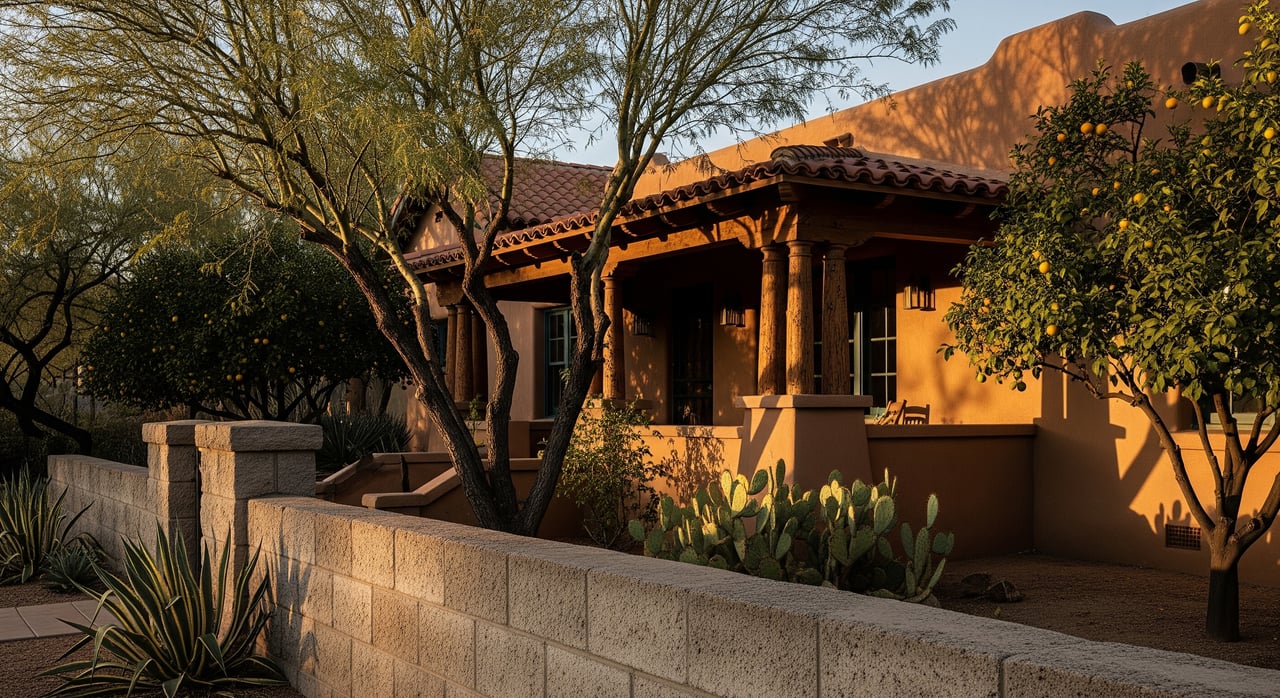
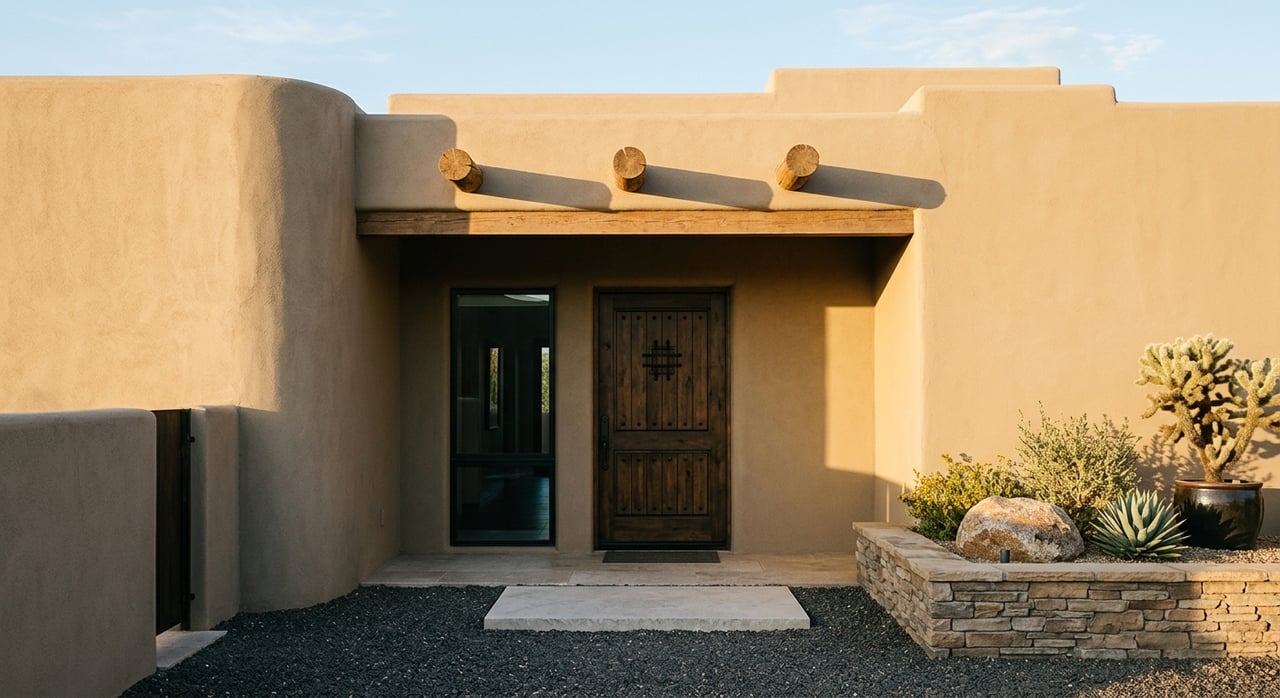
The Tucson Museum of Art’s Historic Block offers a more specific starting point. La Casa Cordova is an adobe Sonoran row house. Nearby, the J. Knox Corbett House is a two-story Mission Revival residence completed in 1907, built of brick beneath its stucco. These buildings belong to the same downtown setting while expressing different histories and ways of making a home.
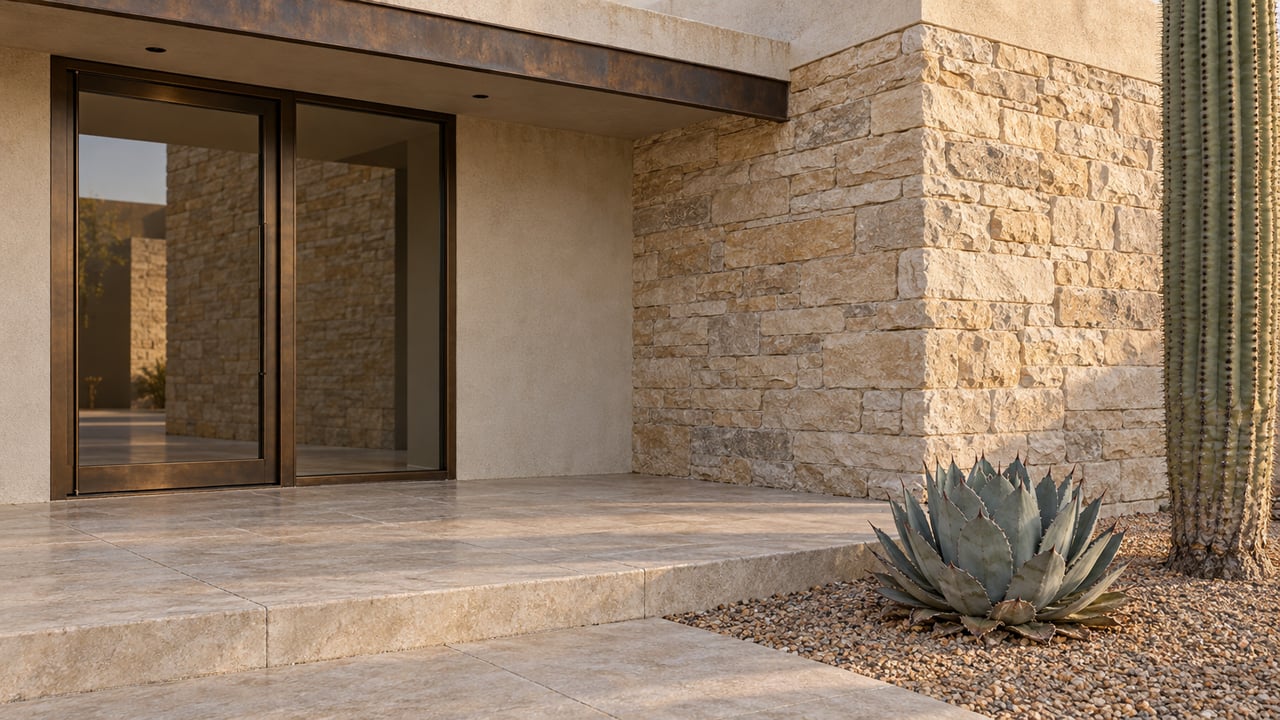
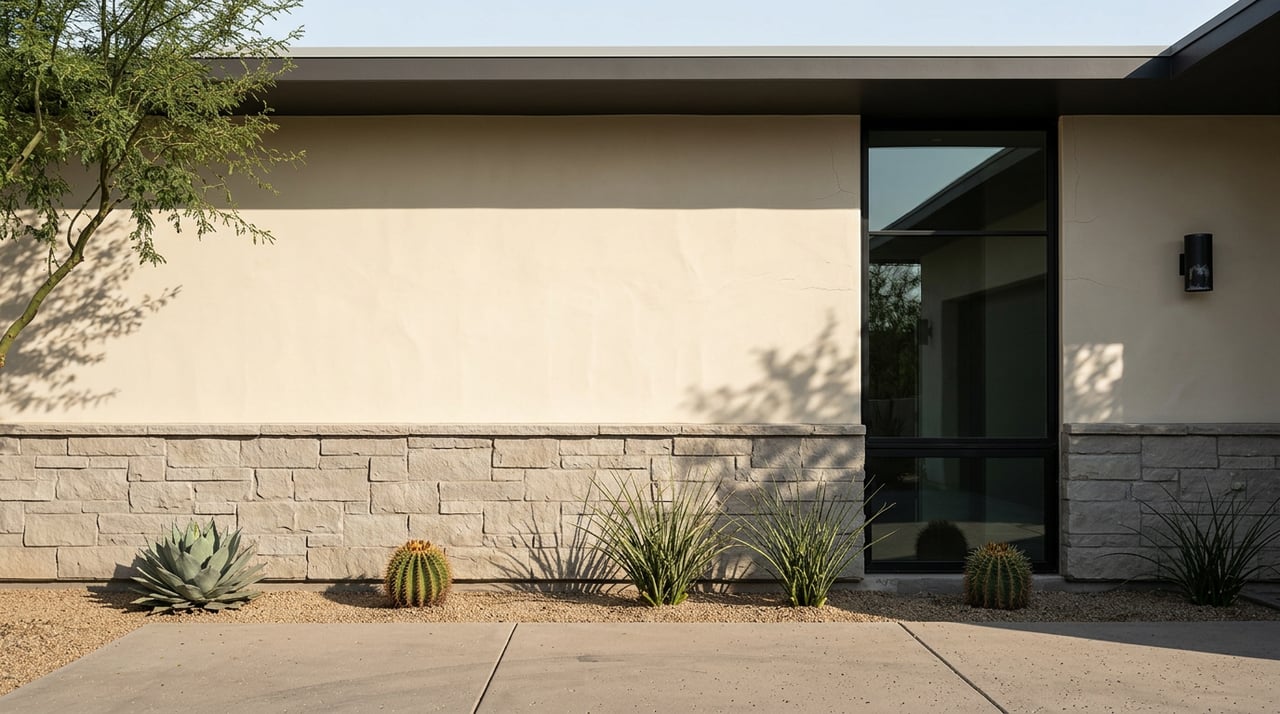
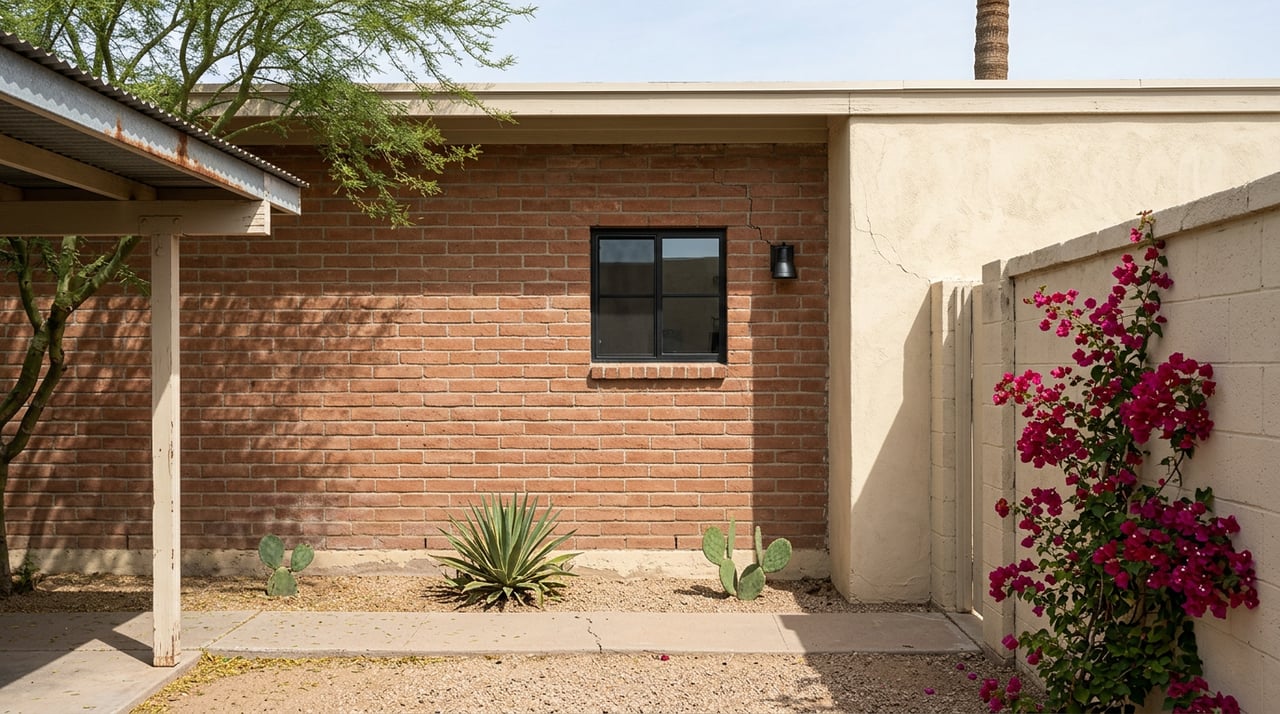
That distinction matters when looking at property. A plaster finish alone does not tell you whether a wall is adobe, brick, or framed construction. An architectural reference is not the same thing as an original building. Ask what the house is made of, when its different parts were built, and what documentation supports its story.
My interpretation is that Tucson’s richness comes partly from allowing those differences to remain legible. A collected interior can do the same. The contemporary painting does not need to pretend it is as old as the cabinet beneath it. Each can have its own identity.
Courtyard intimacy or a Catalina mountain view?
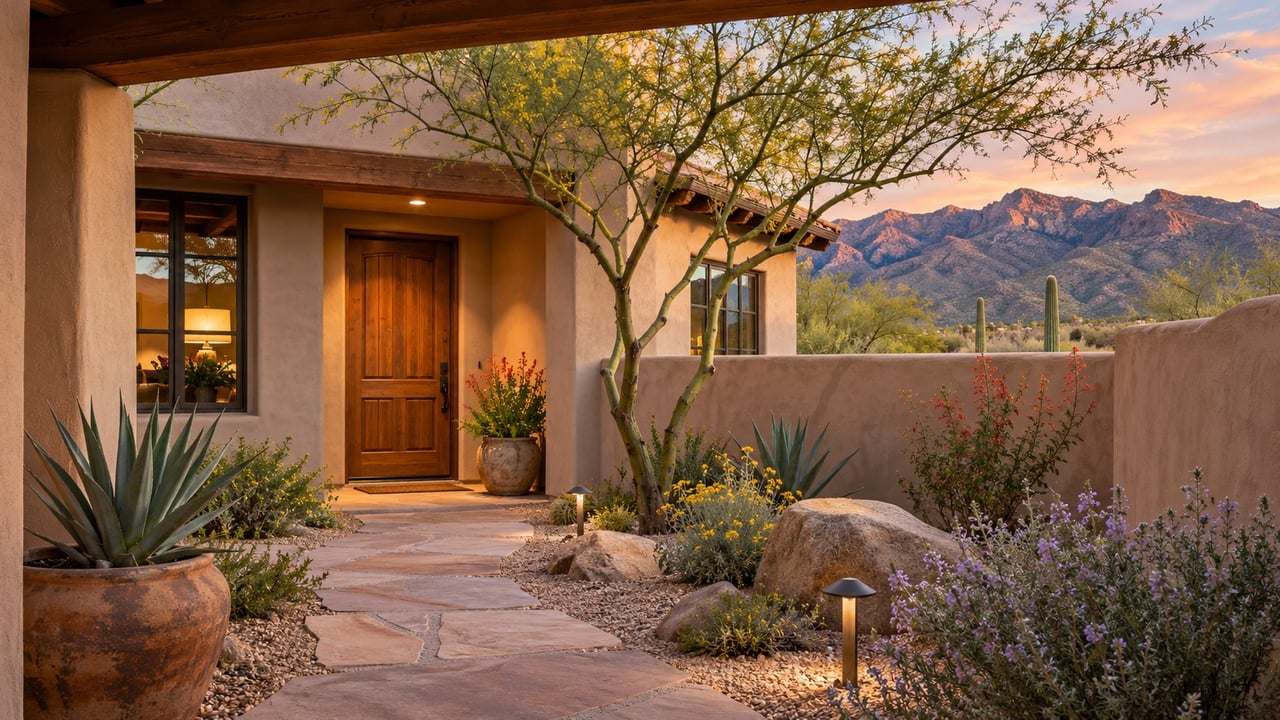
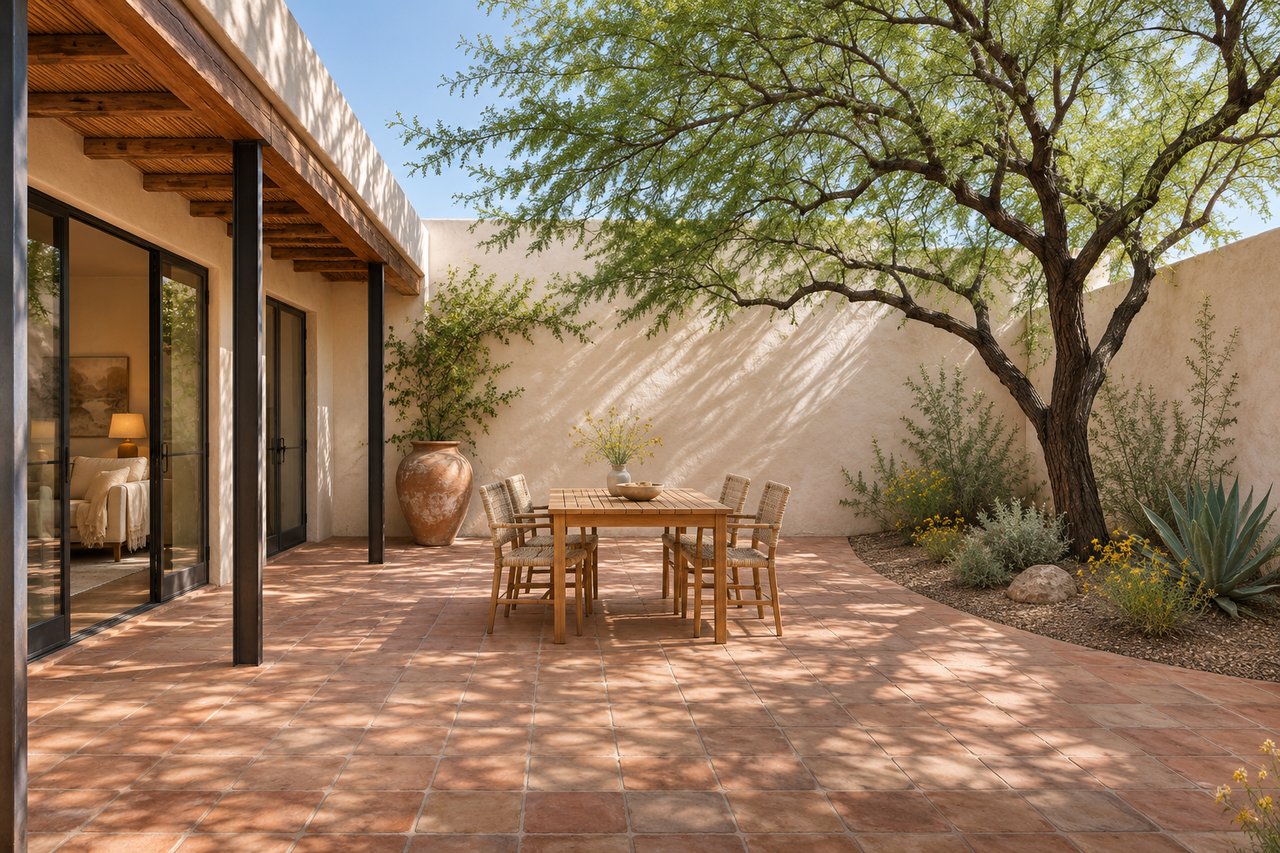
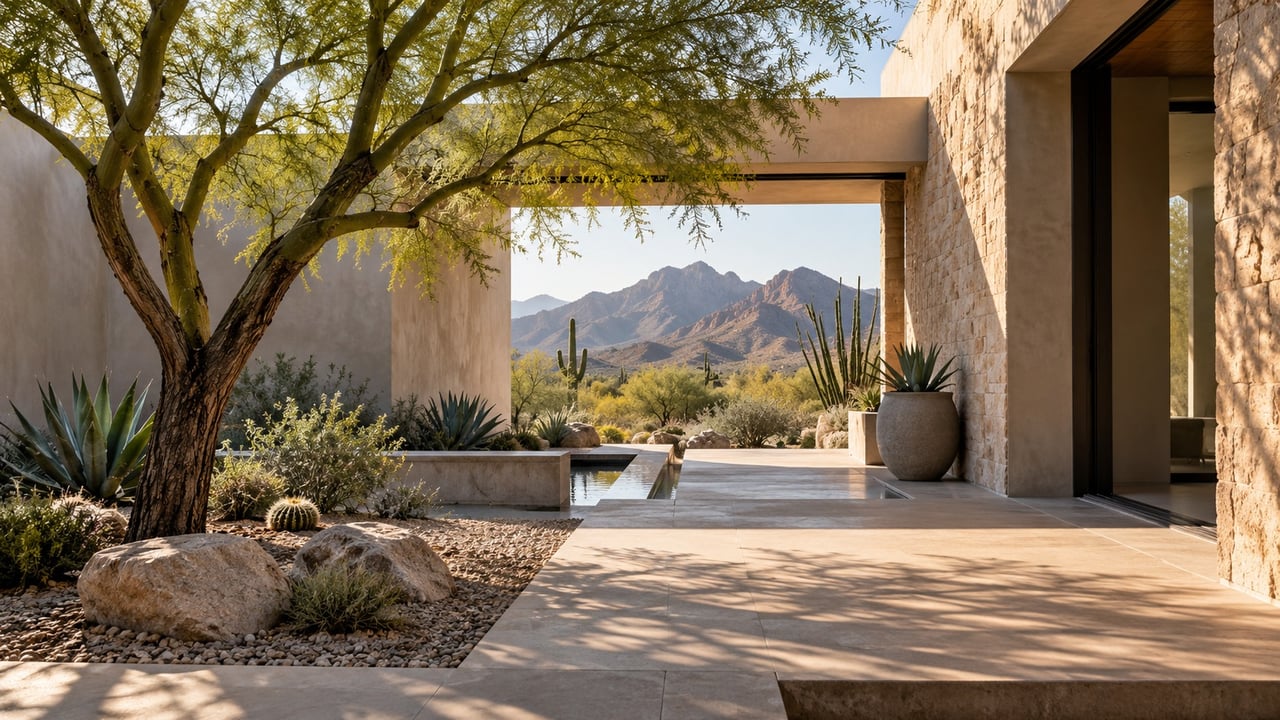
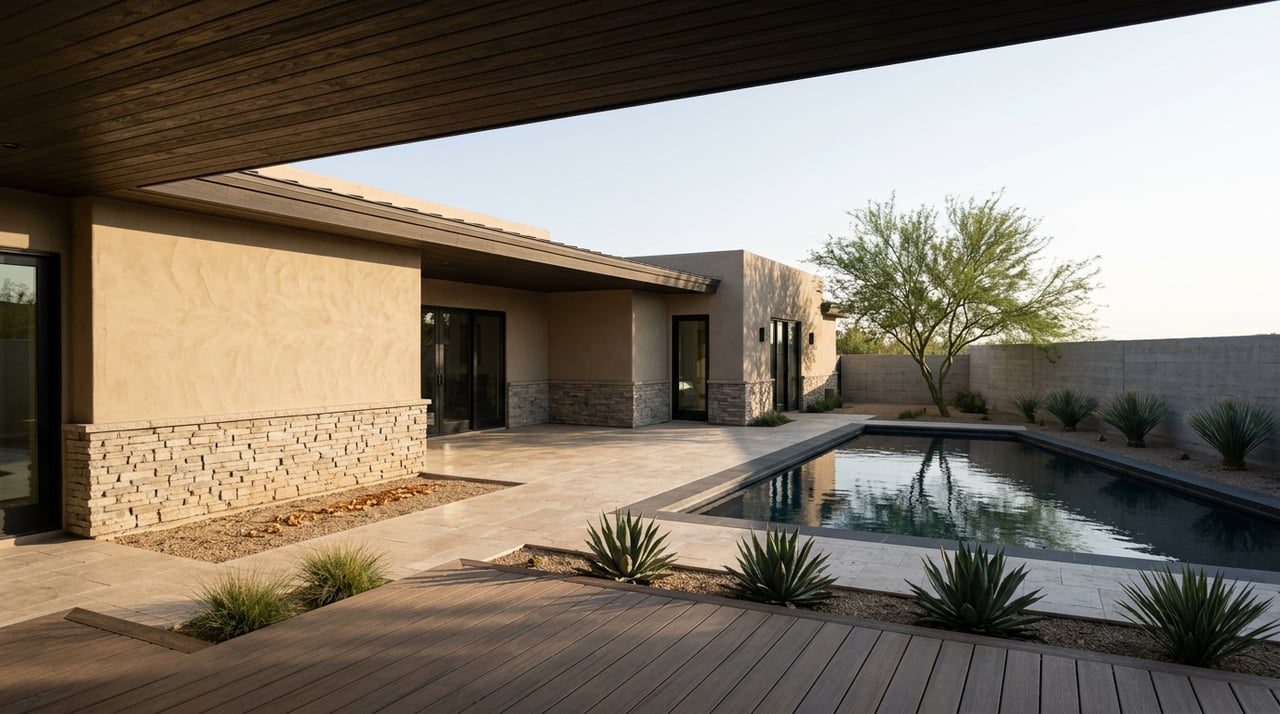
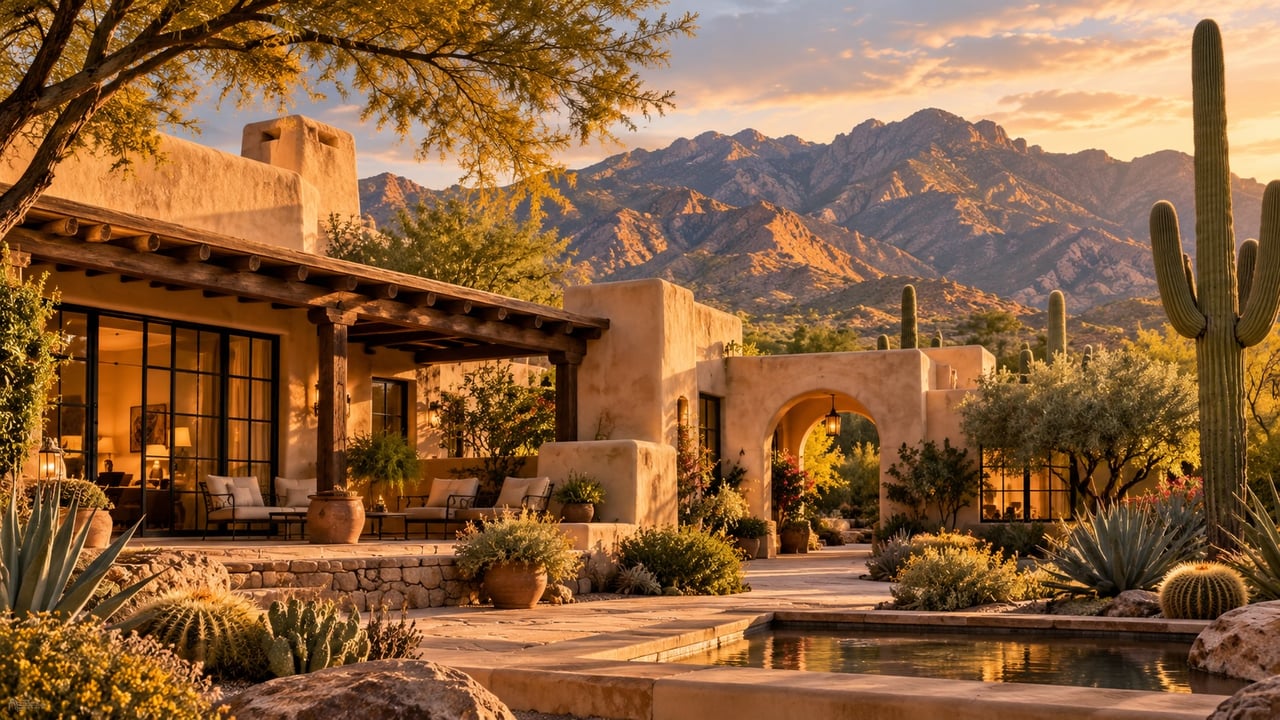
The Presidio Museum introduces visitors to Tucson’s past through an 1860s Sonoran row house. For someone thinking about a home, that kind of architecture invites attention to the sequence of rooms, thresholds, and the spaces revealed beyond the street.
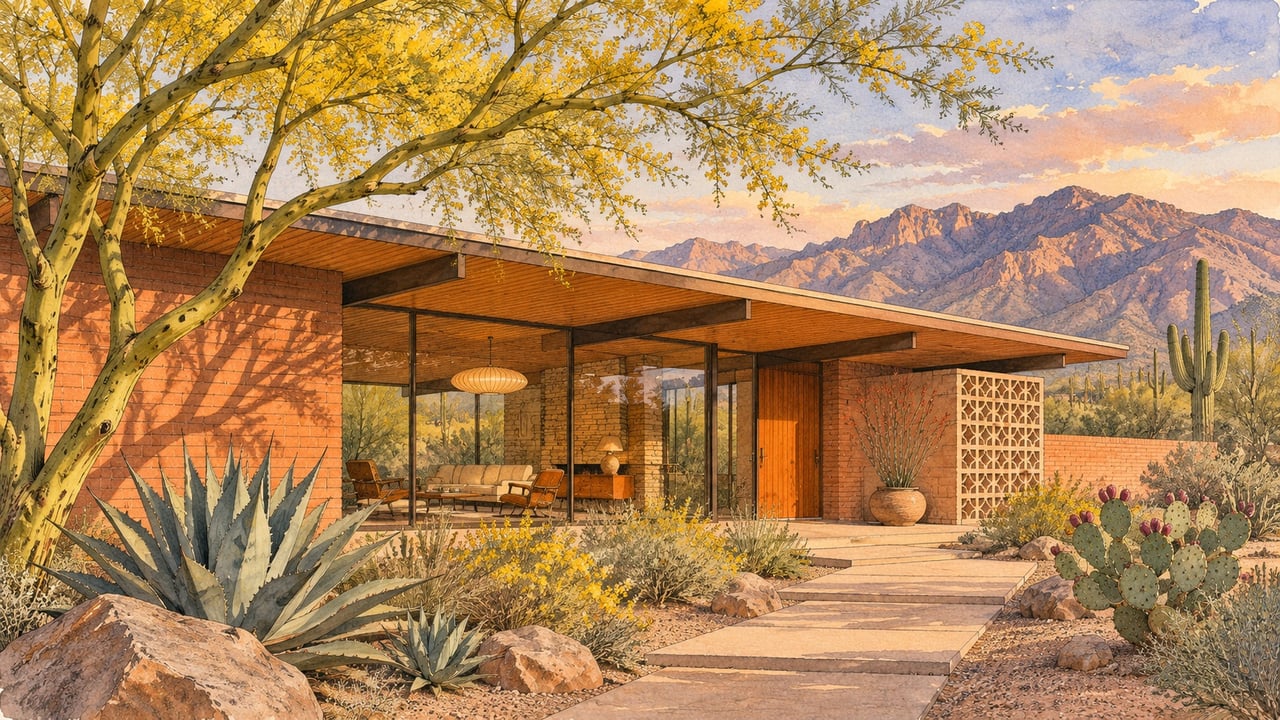
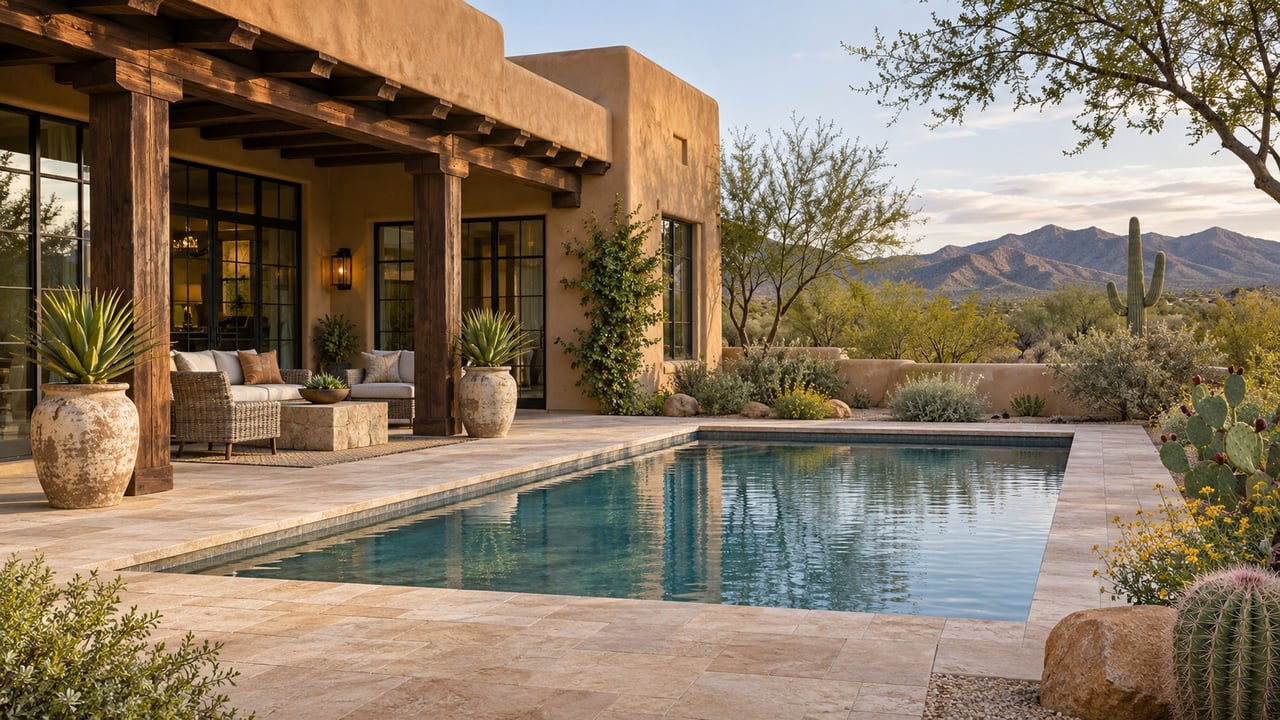
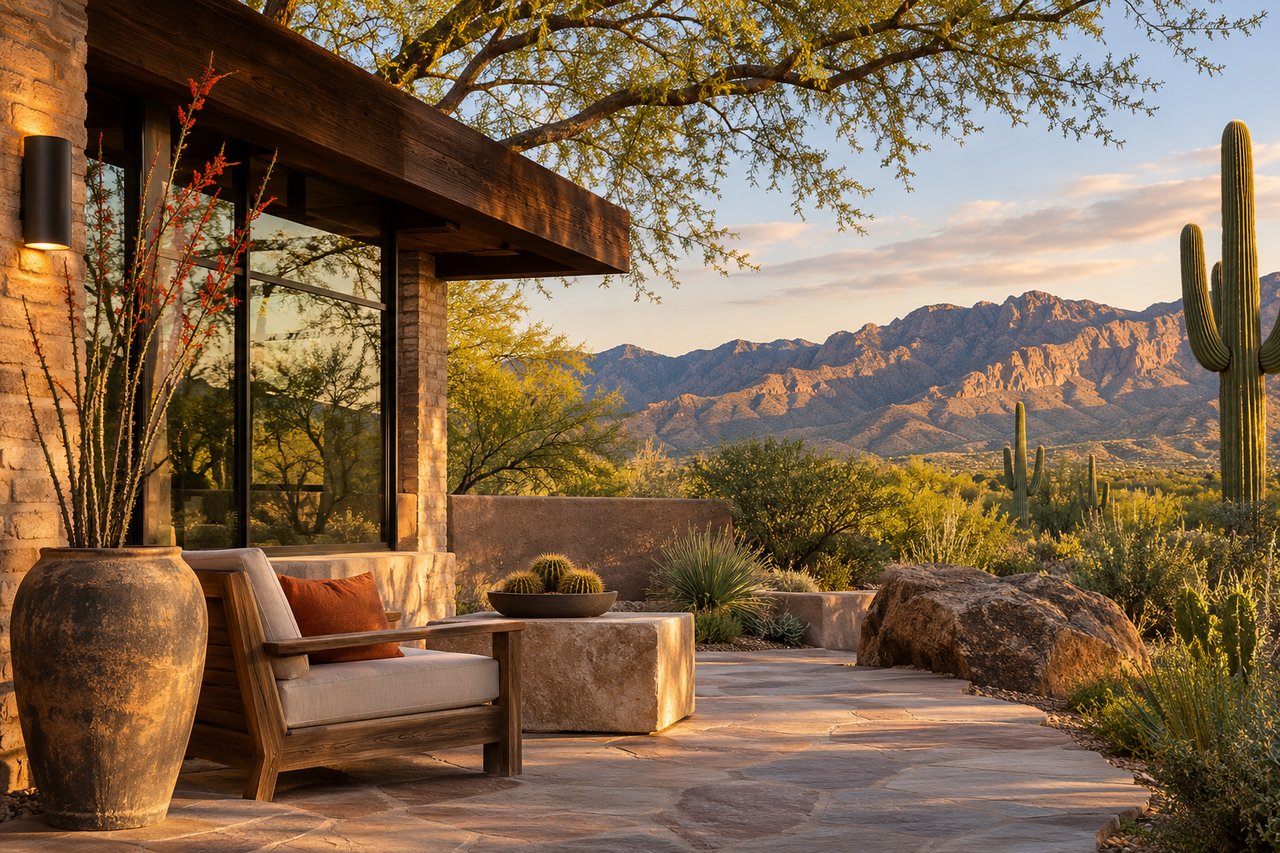
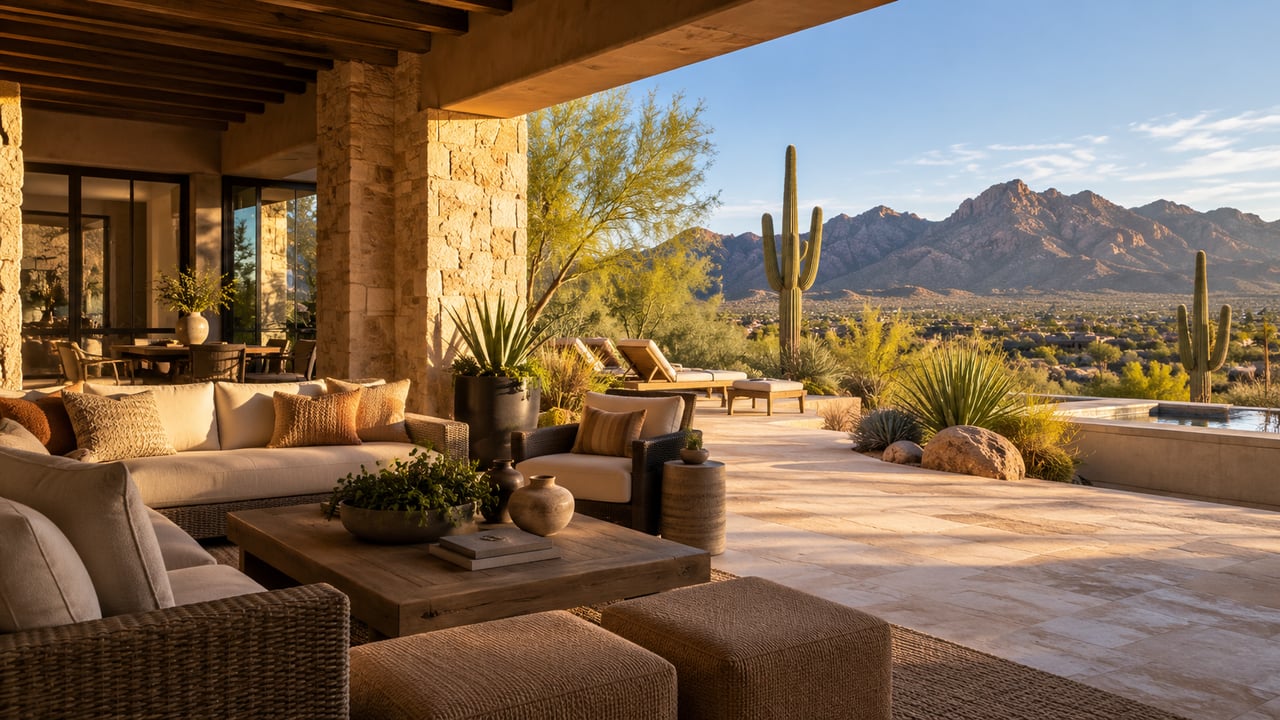
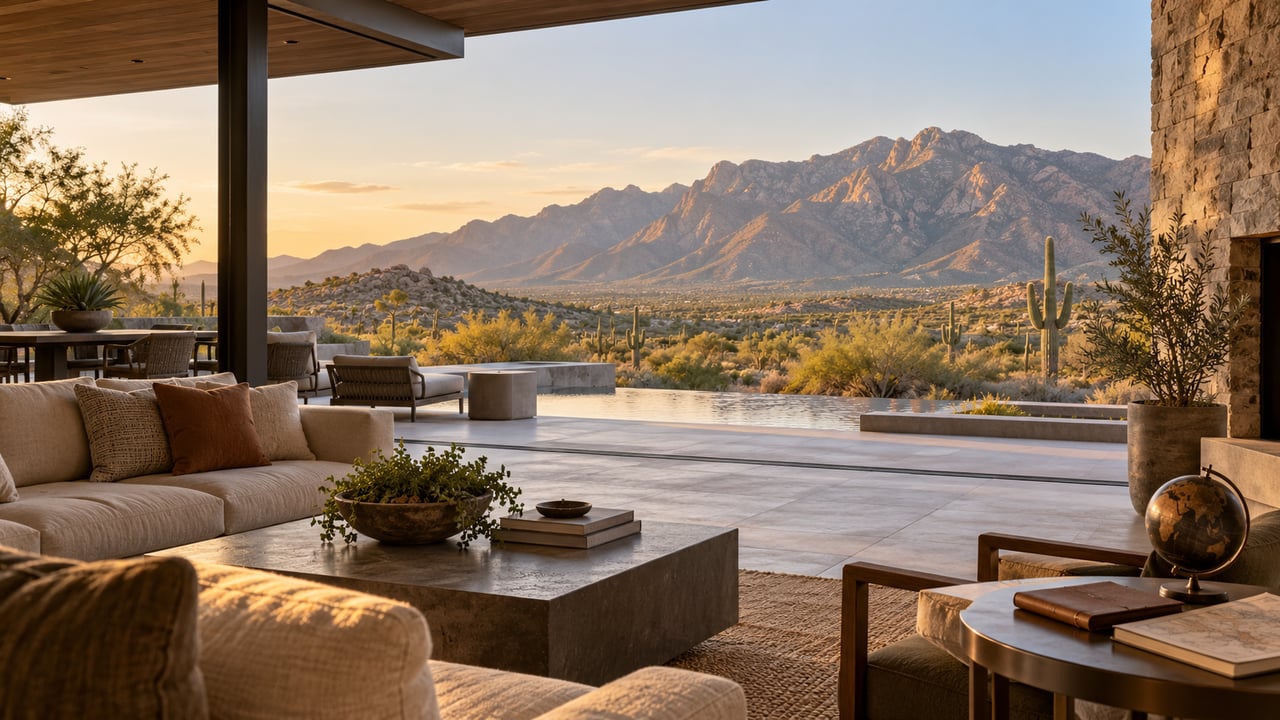
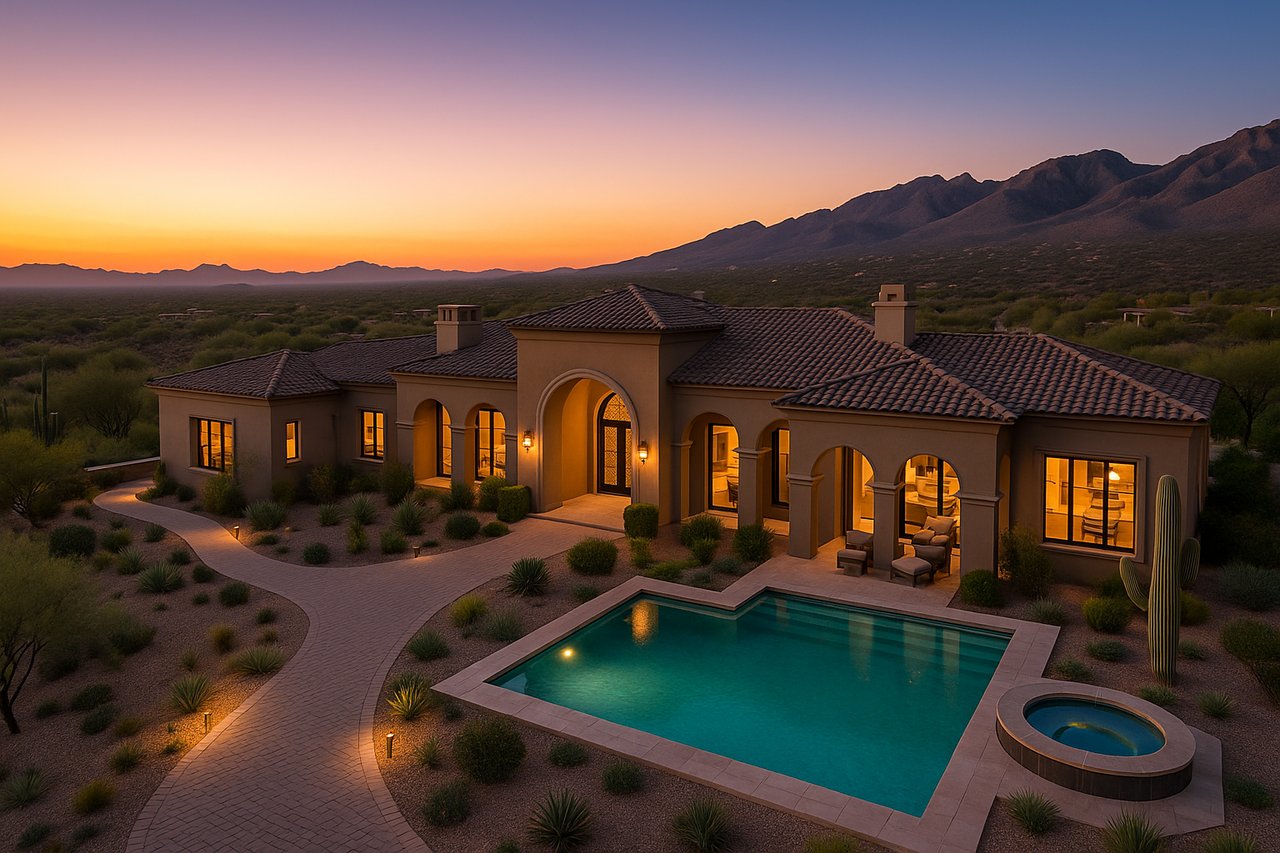
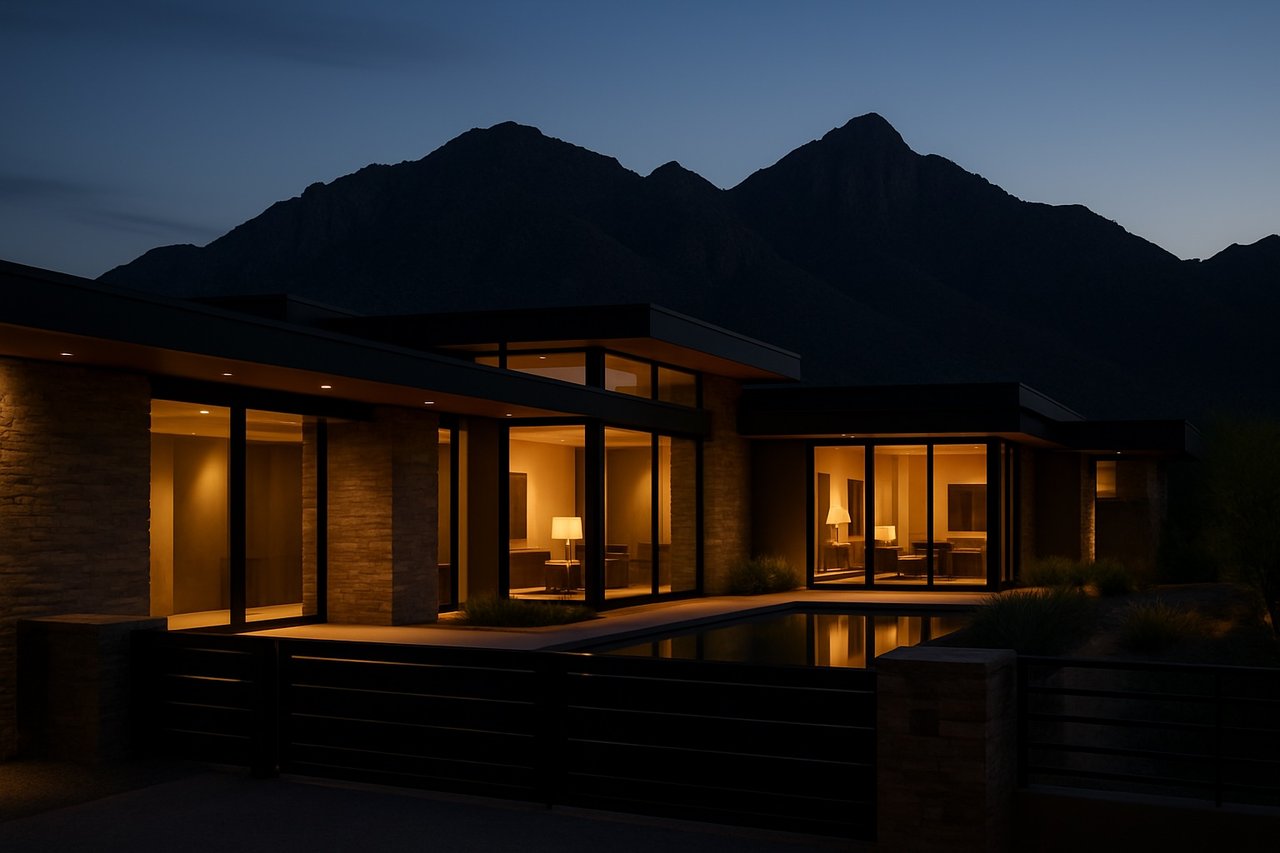
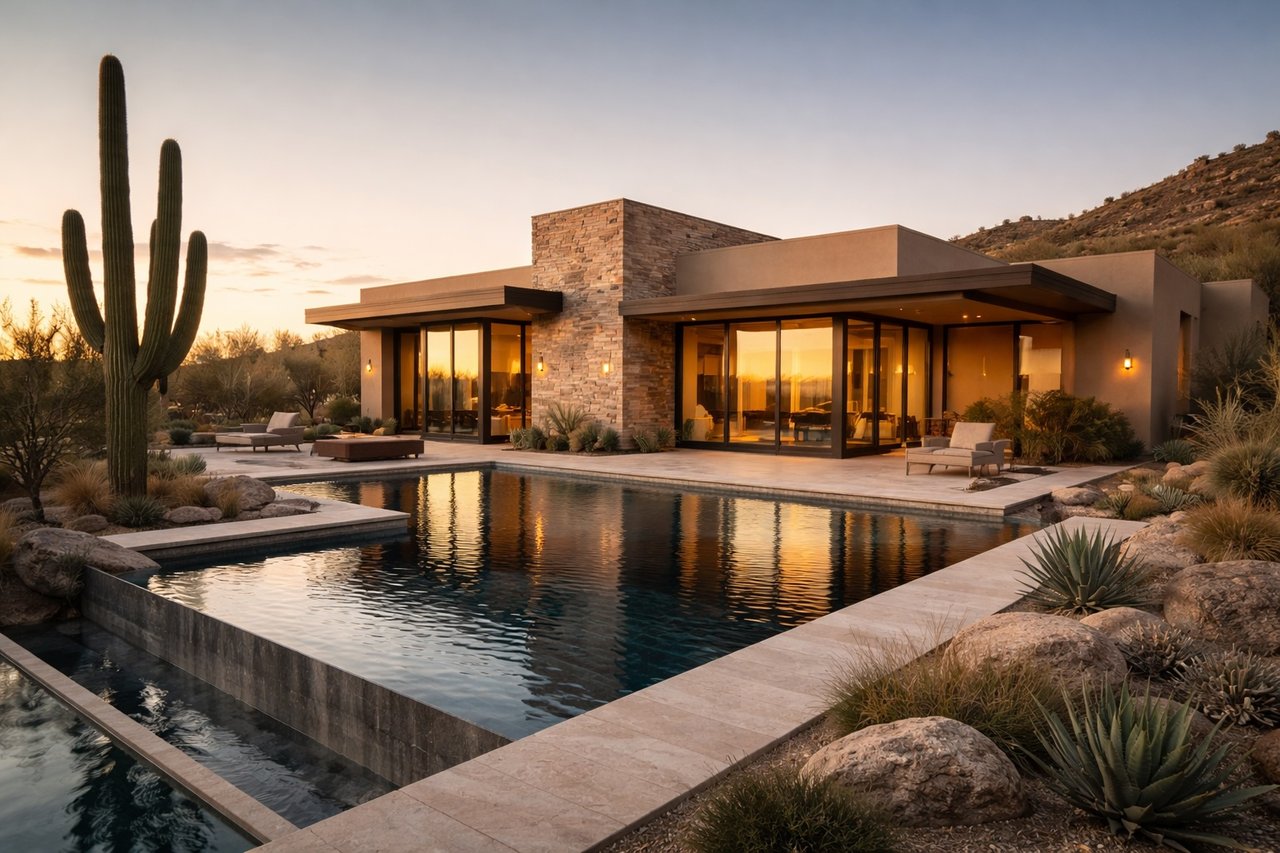
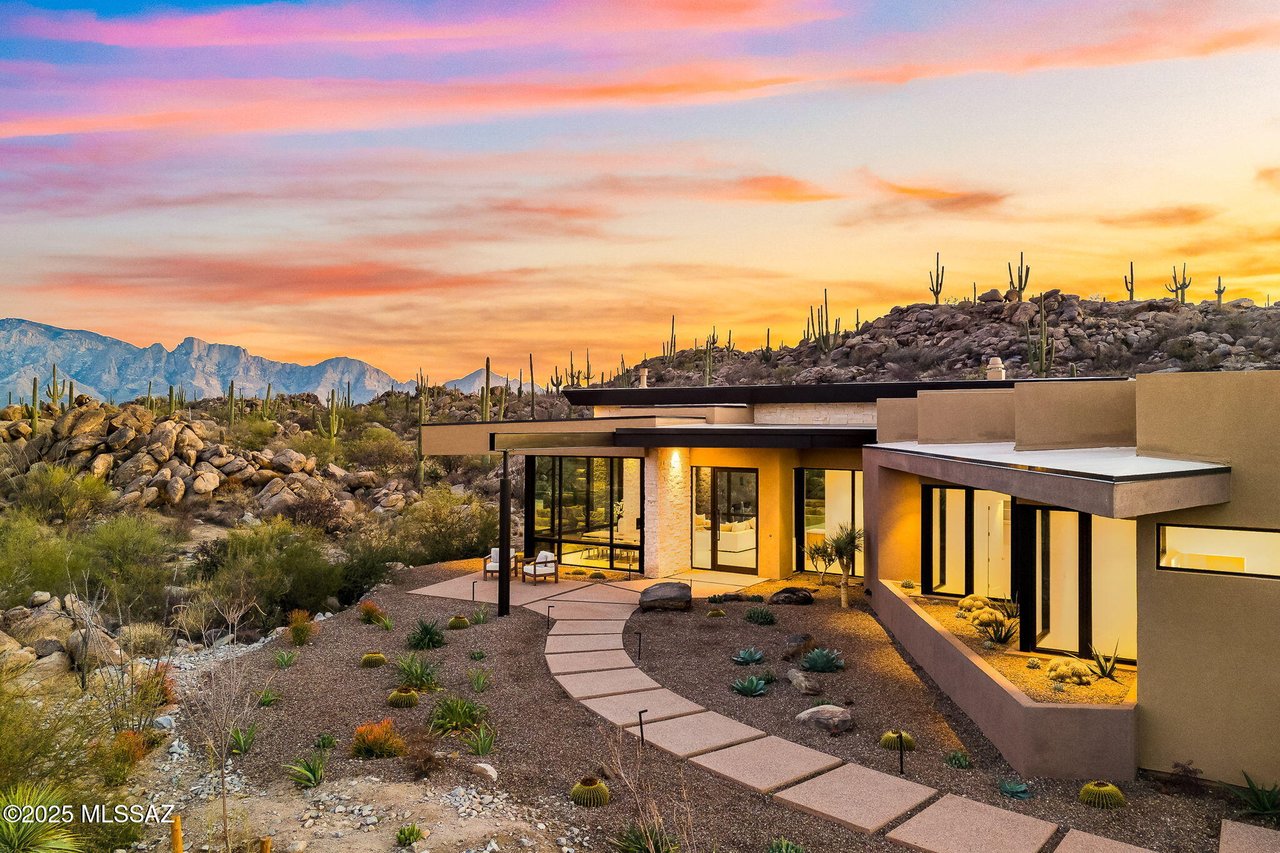
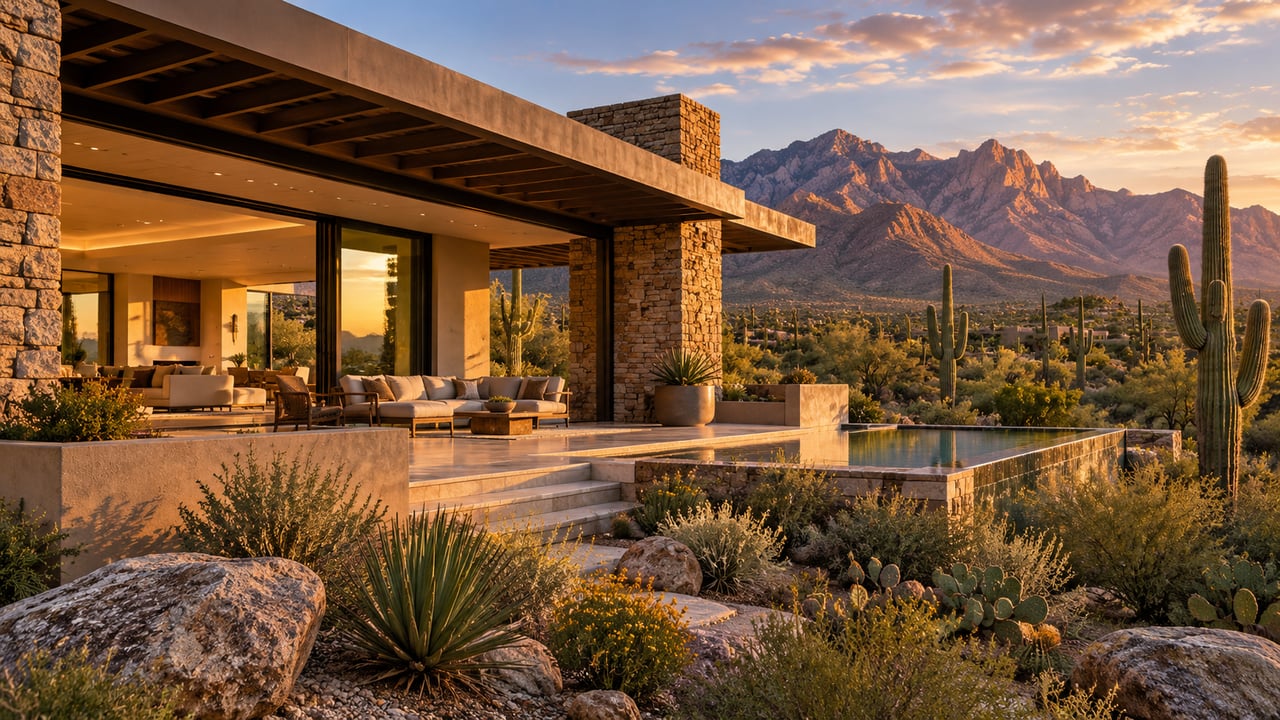
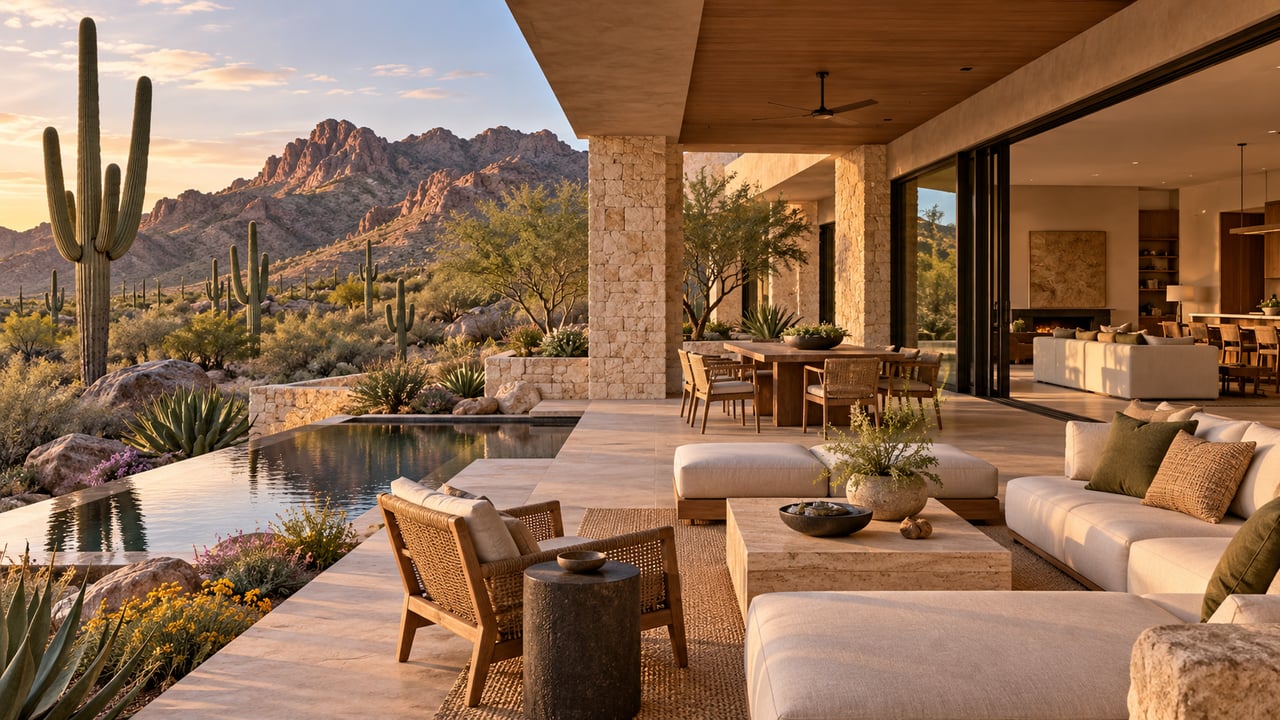
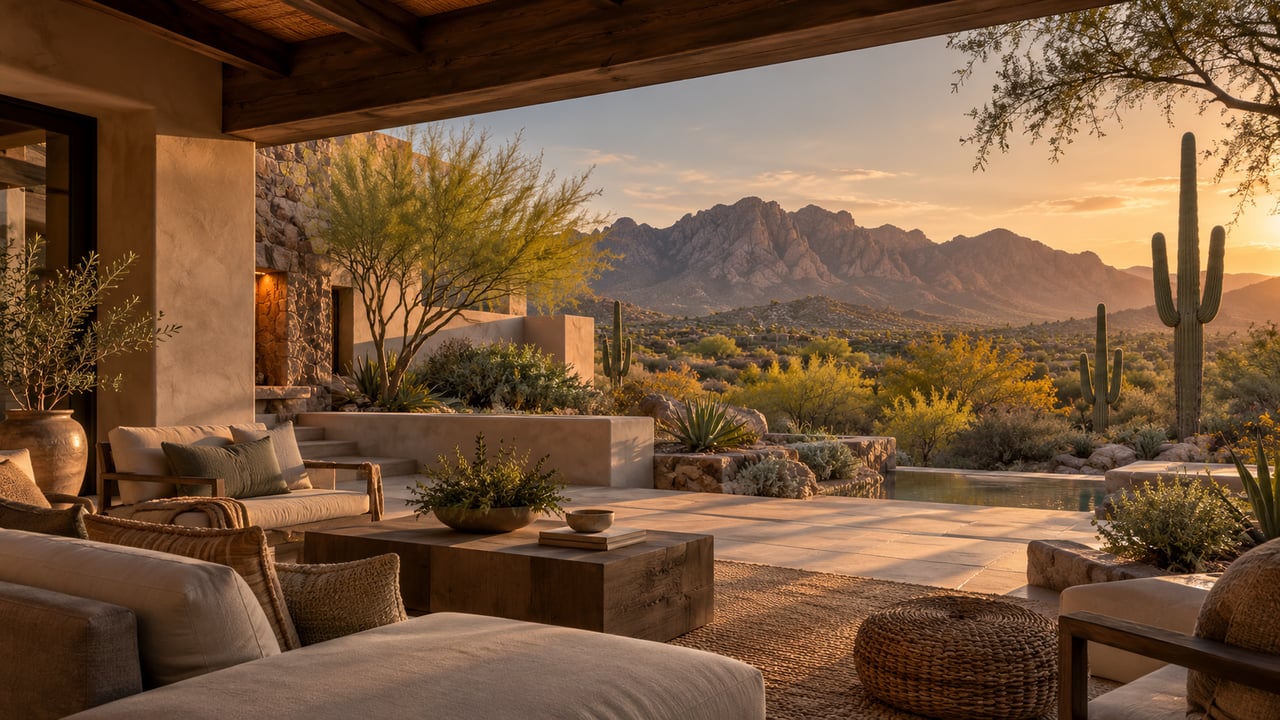
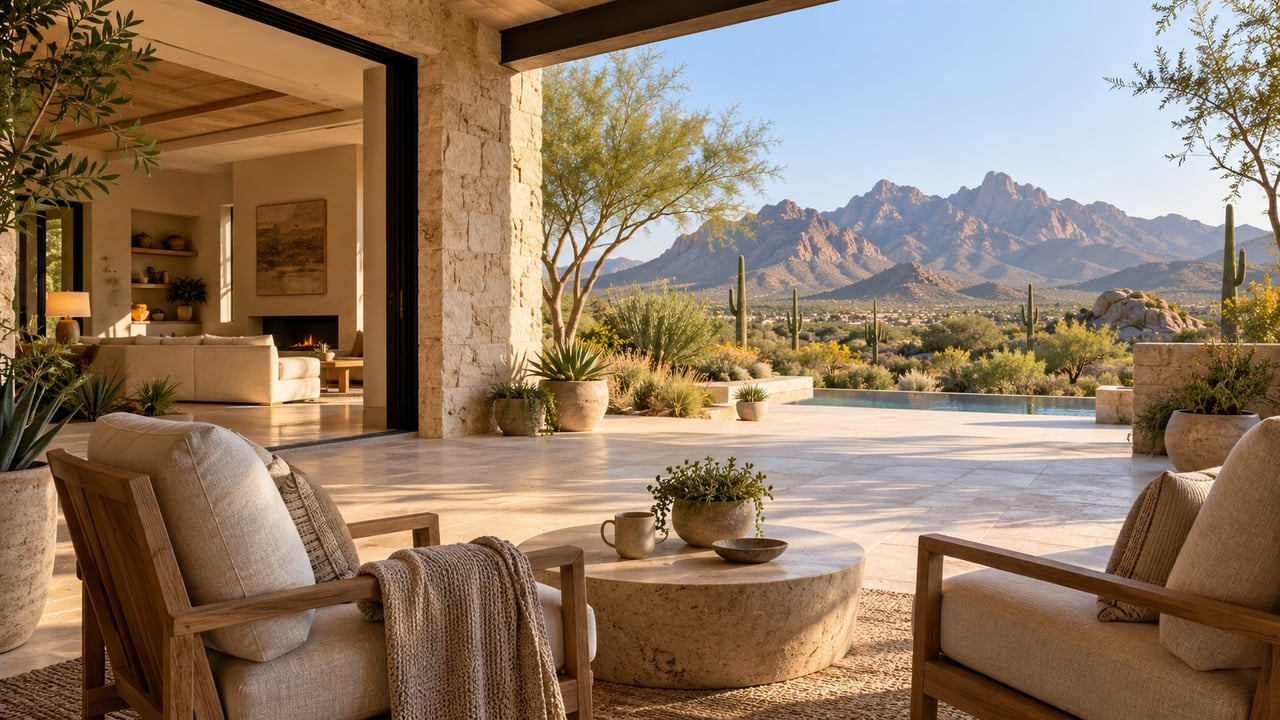
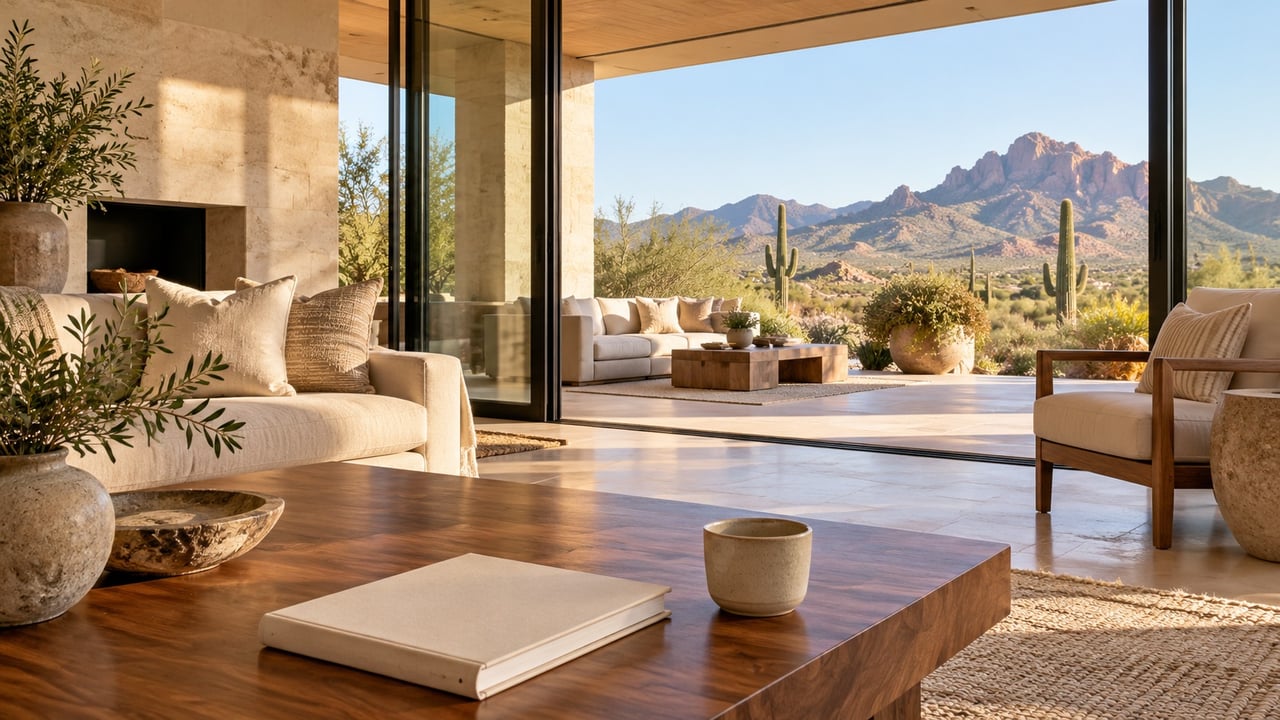
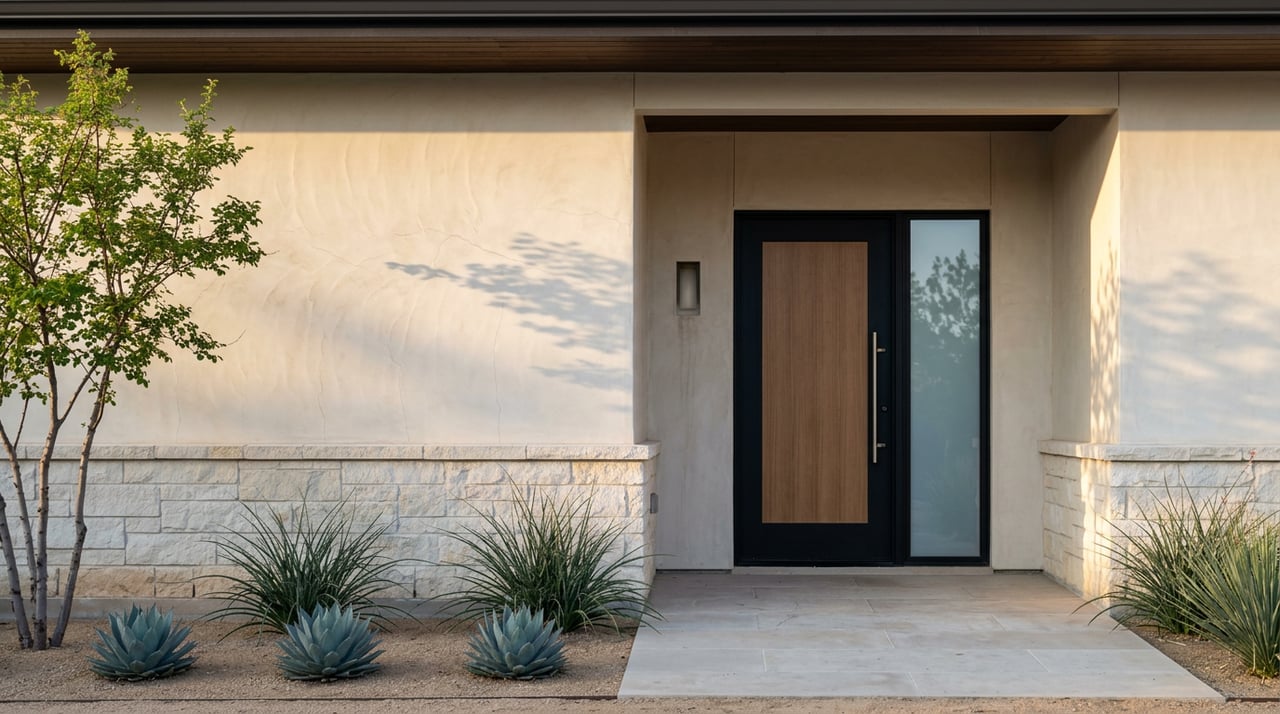
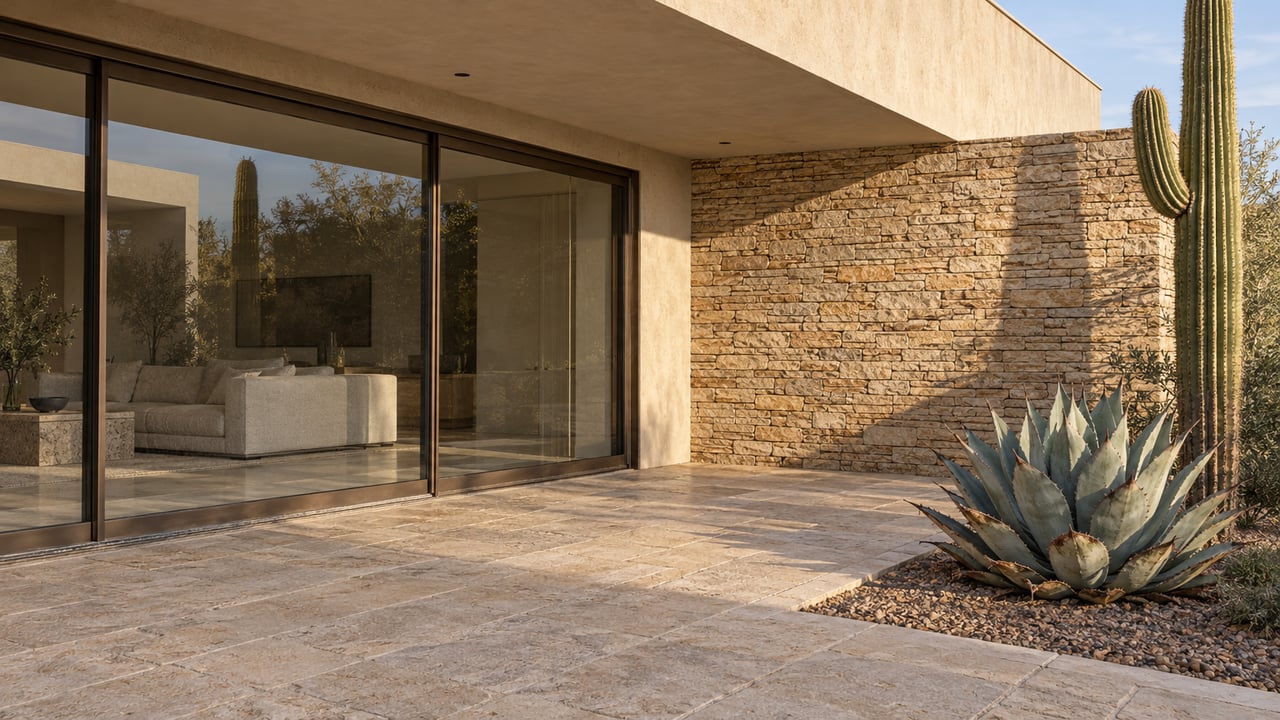
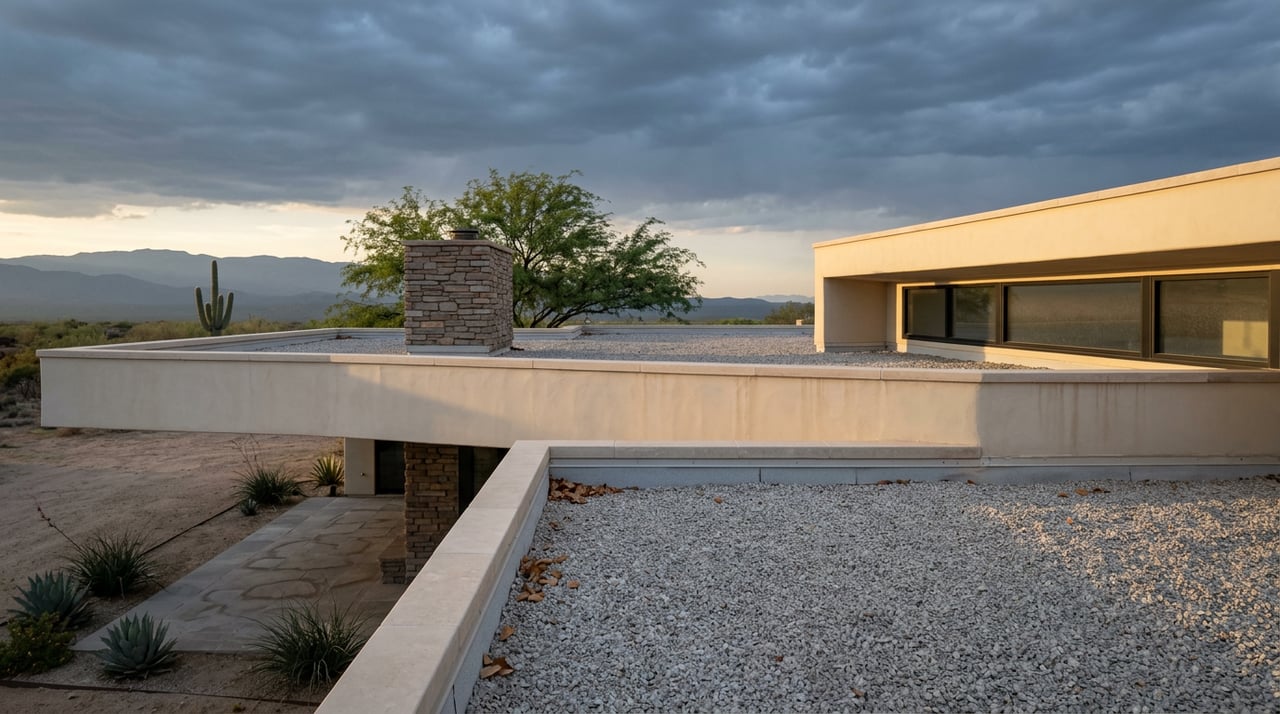
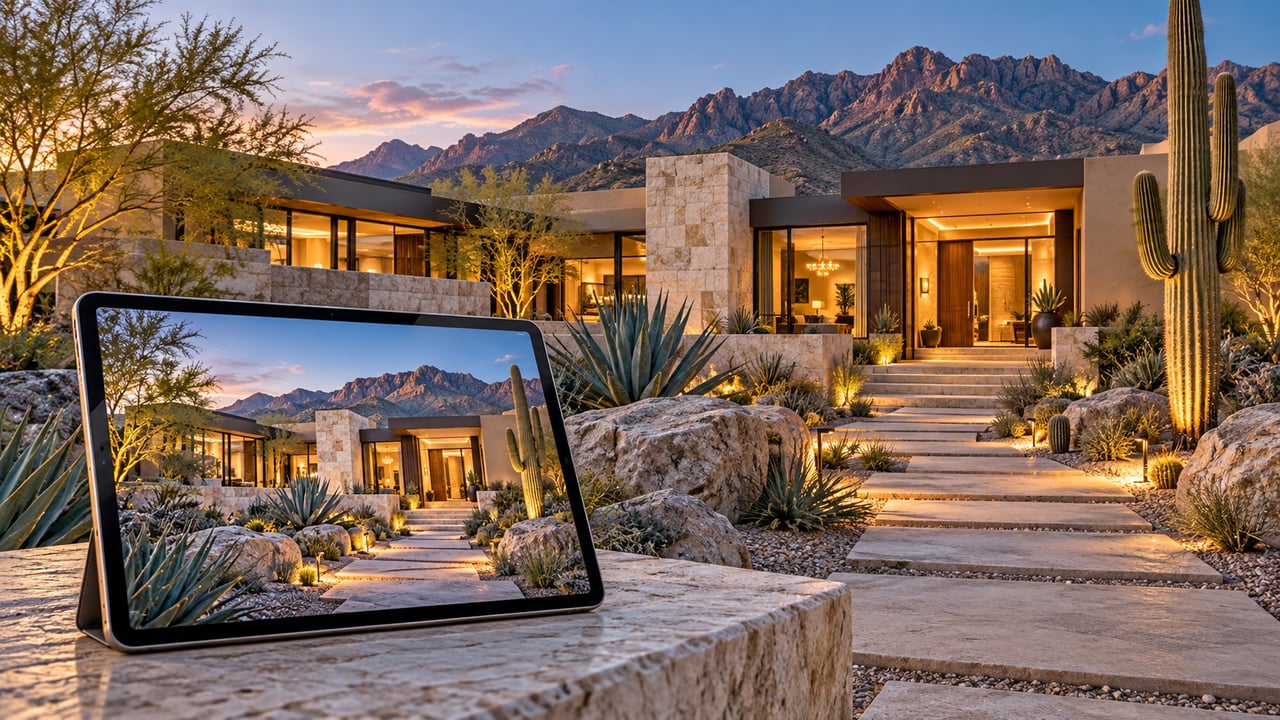
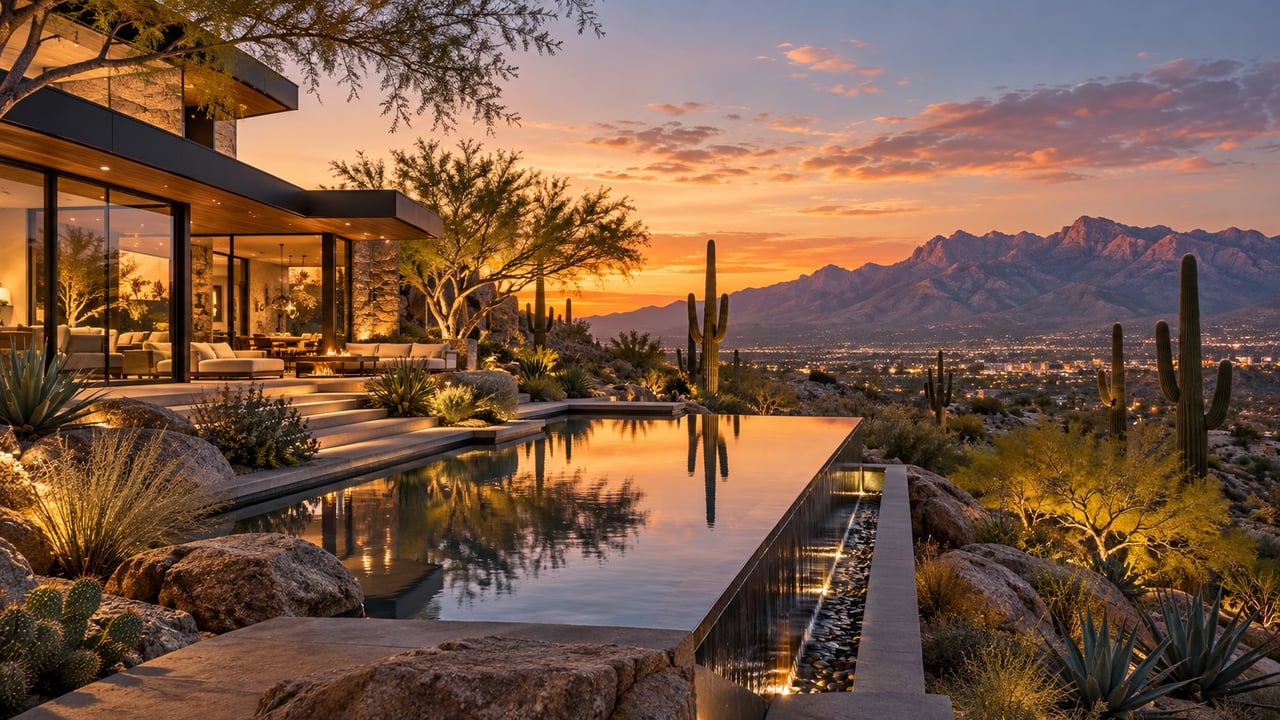
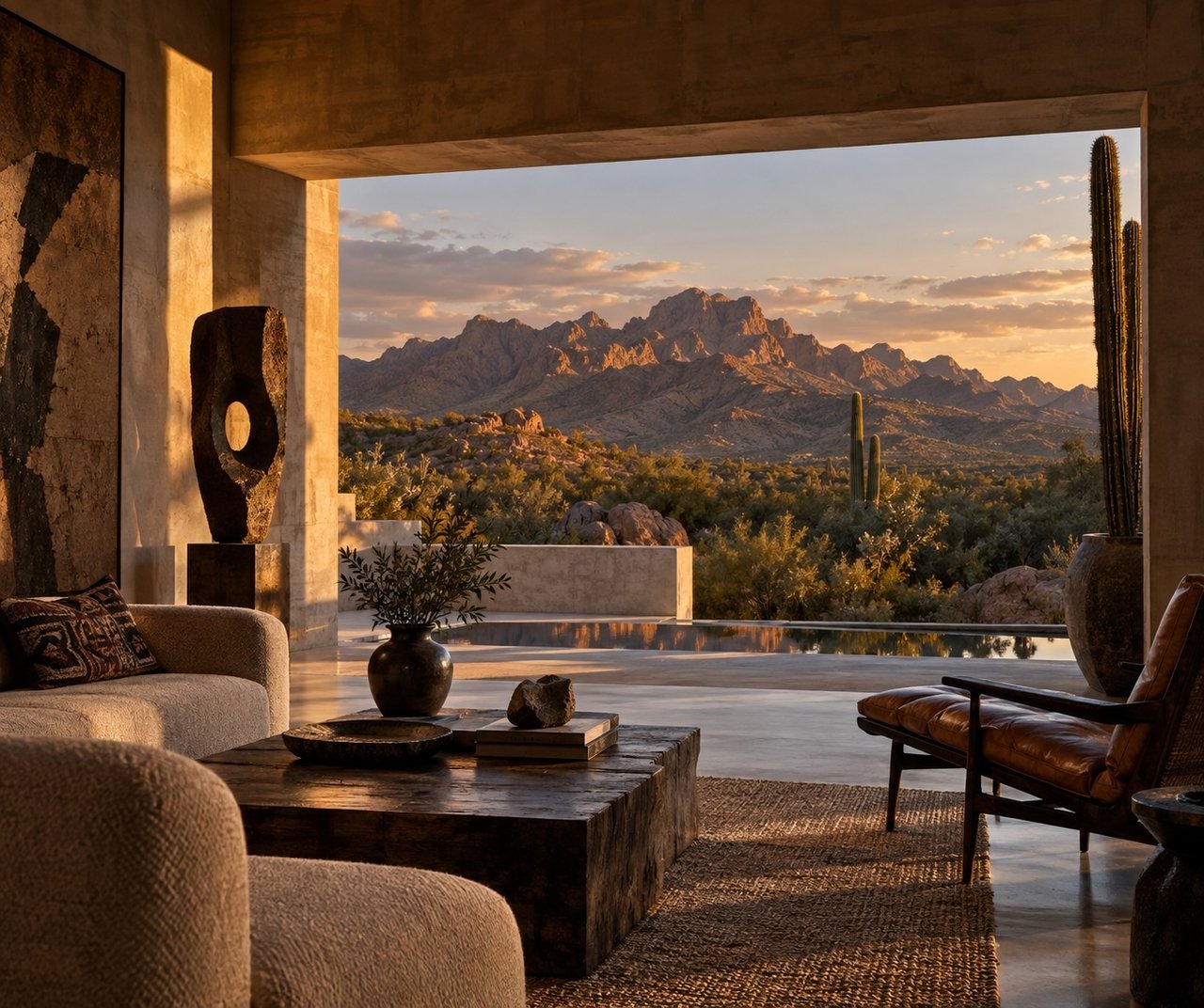
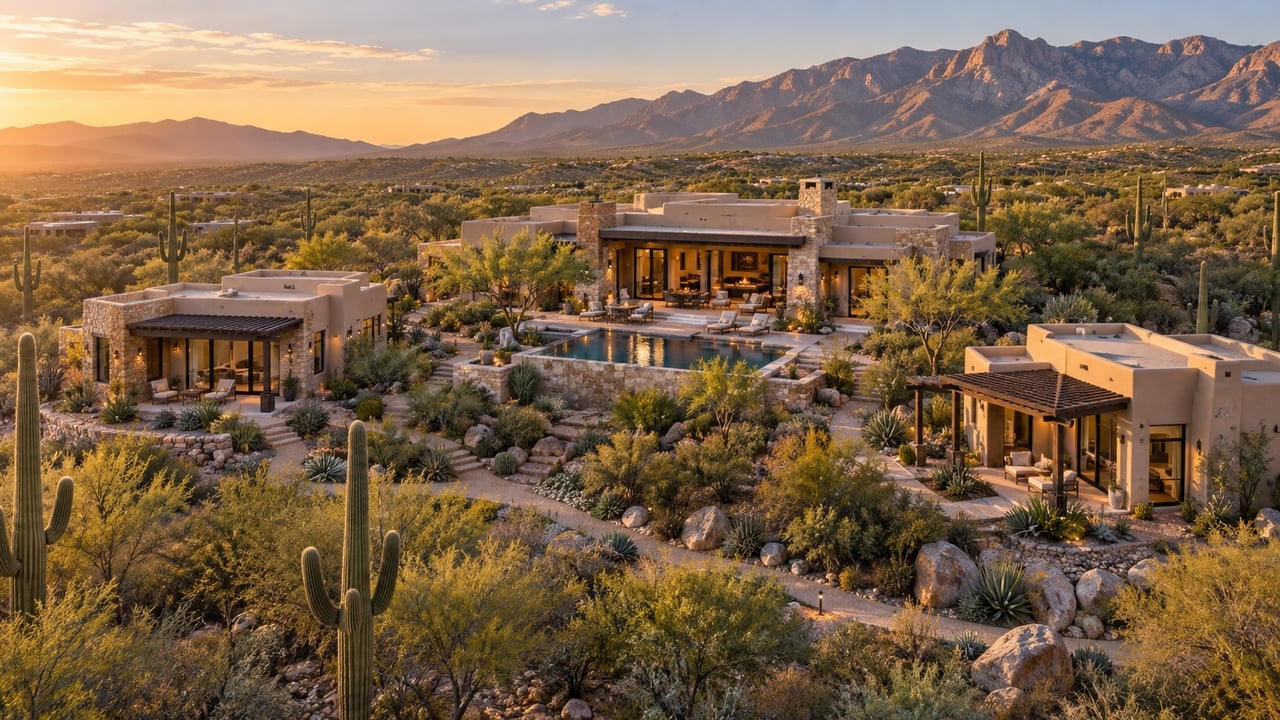
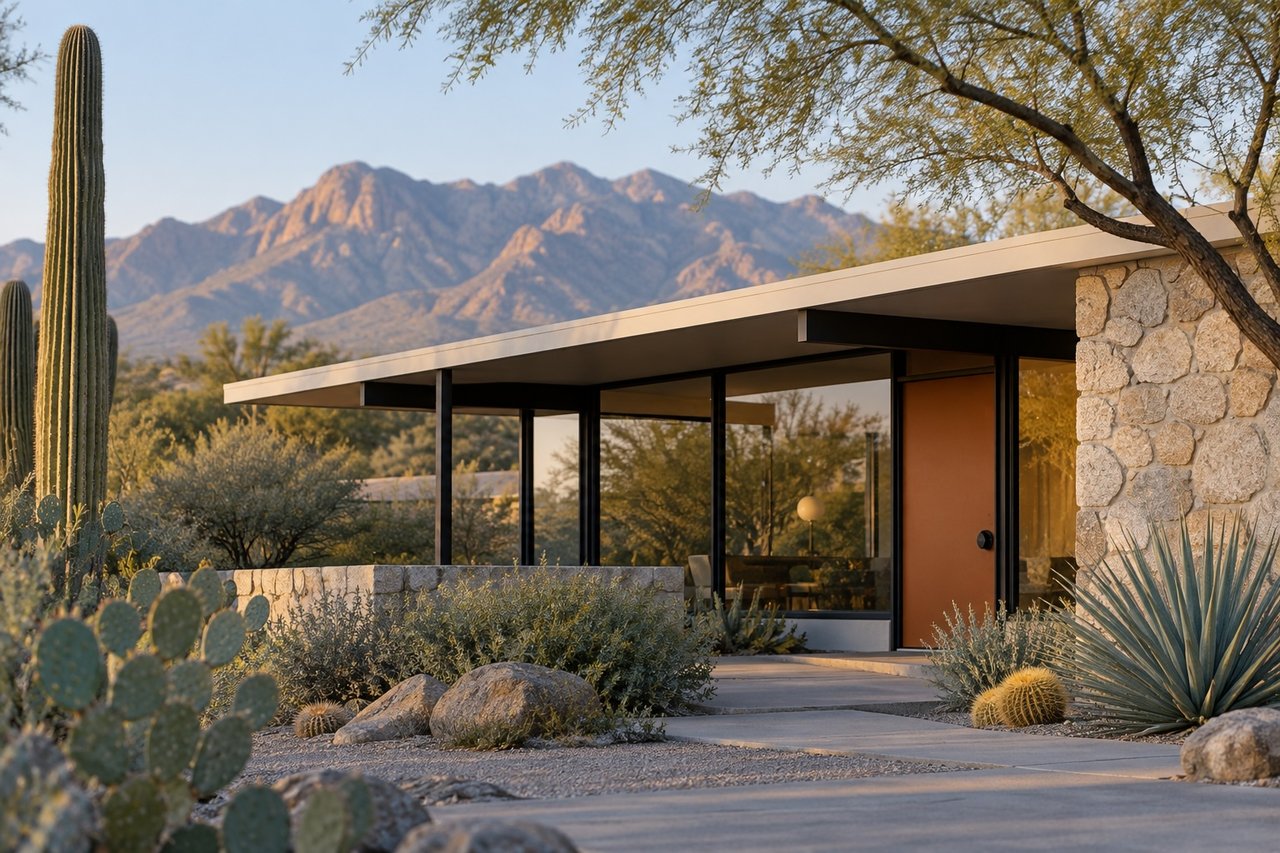
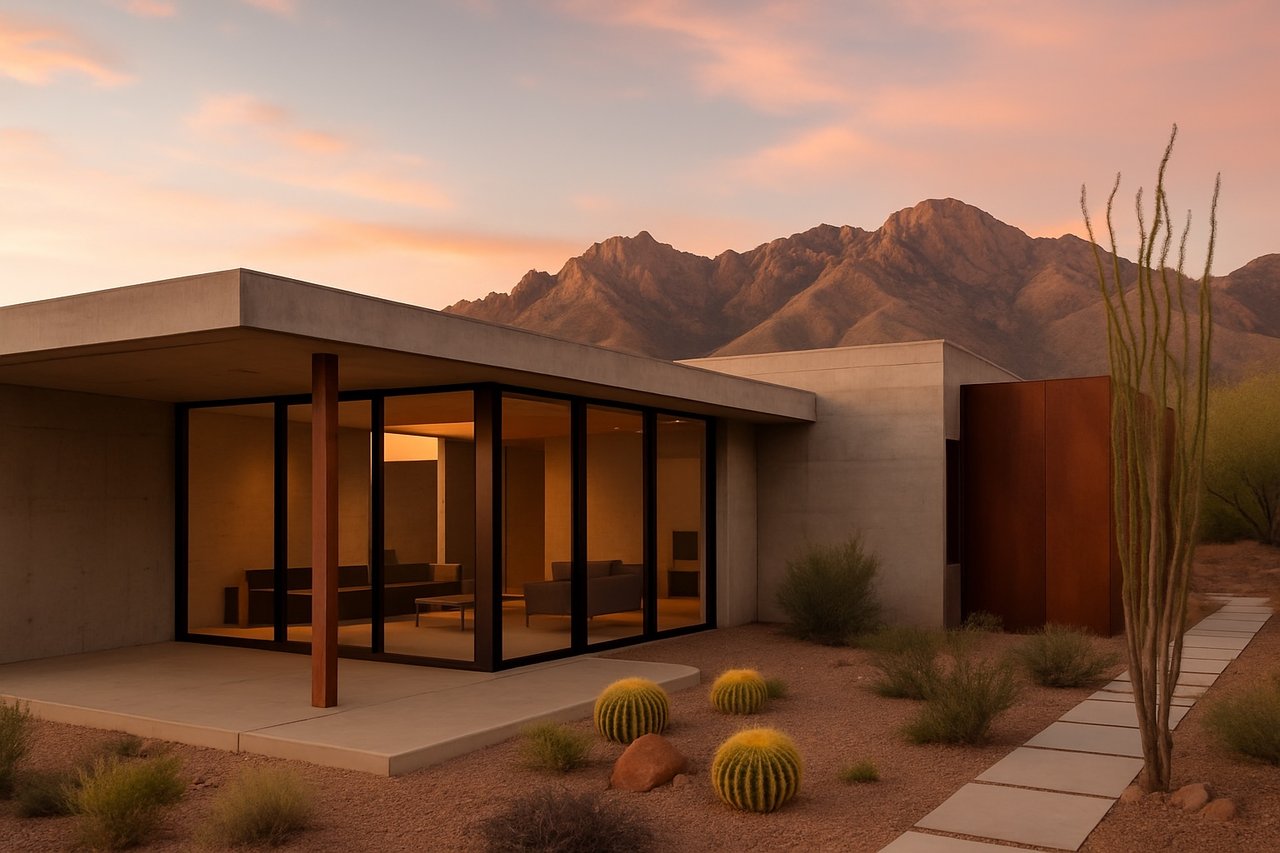
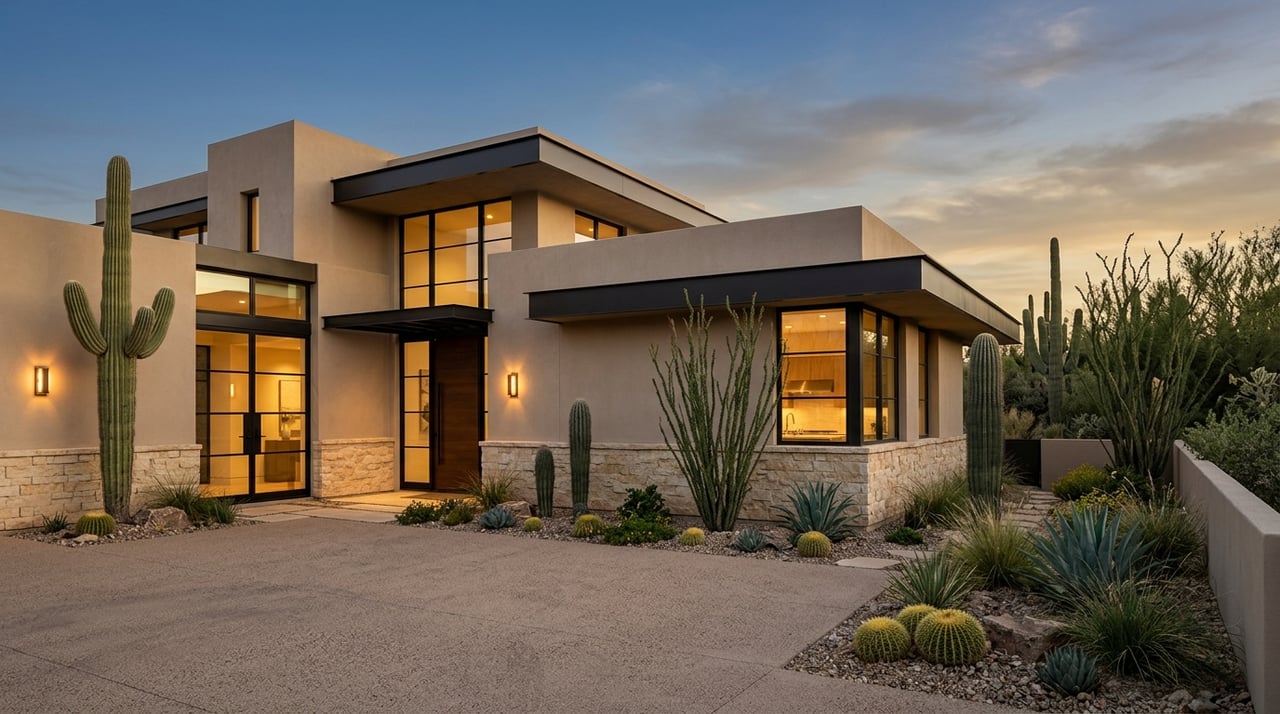
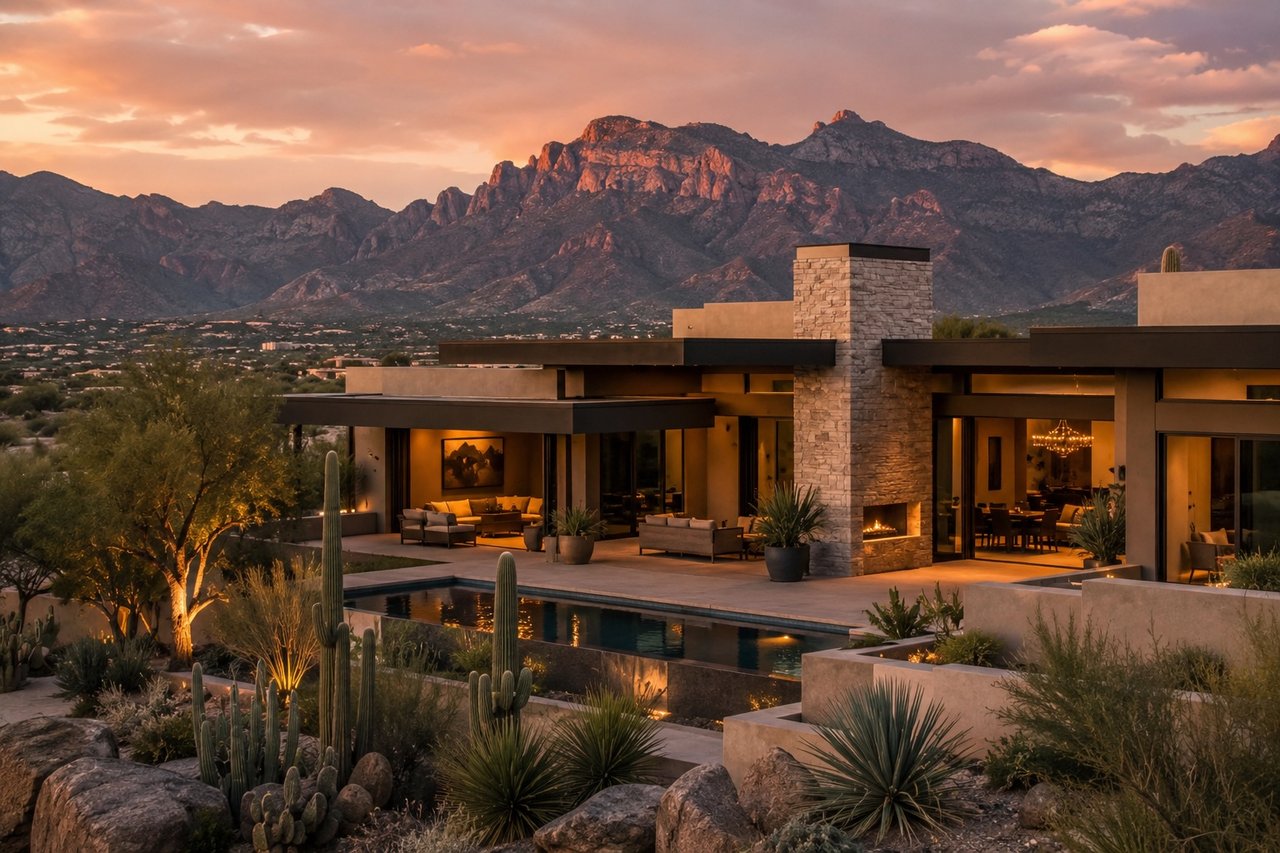
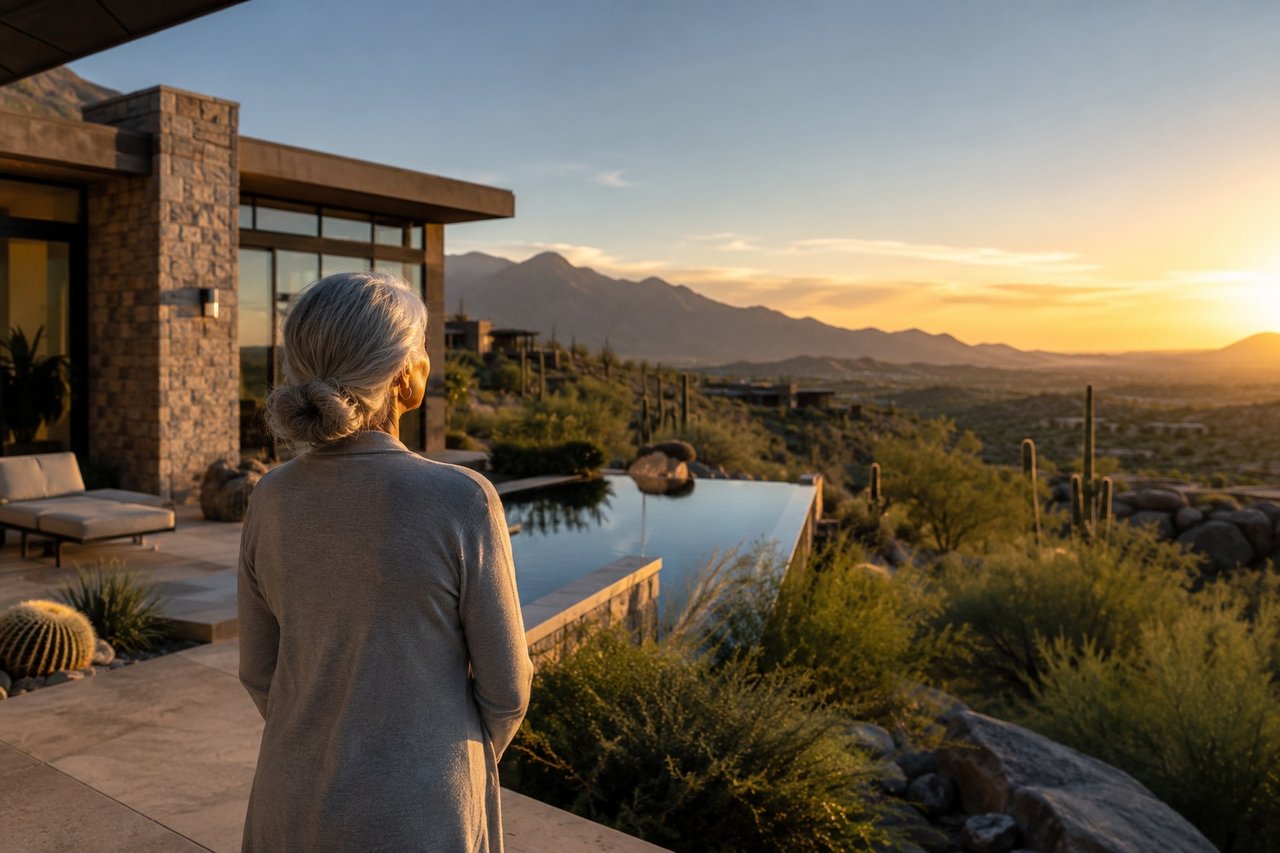
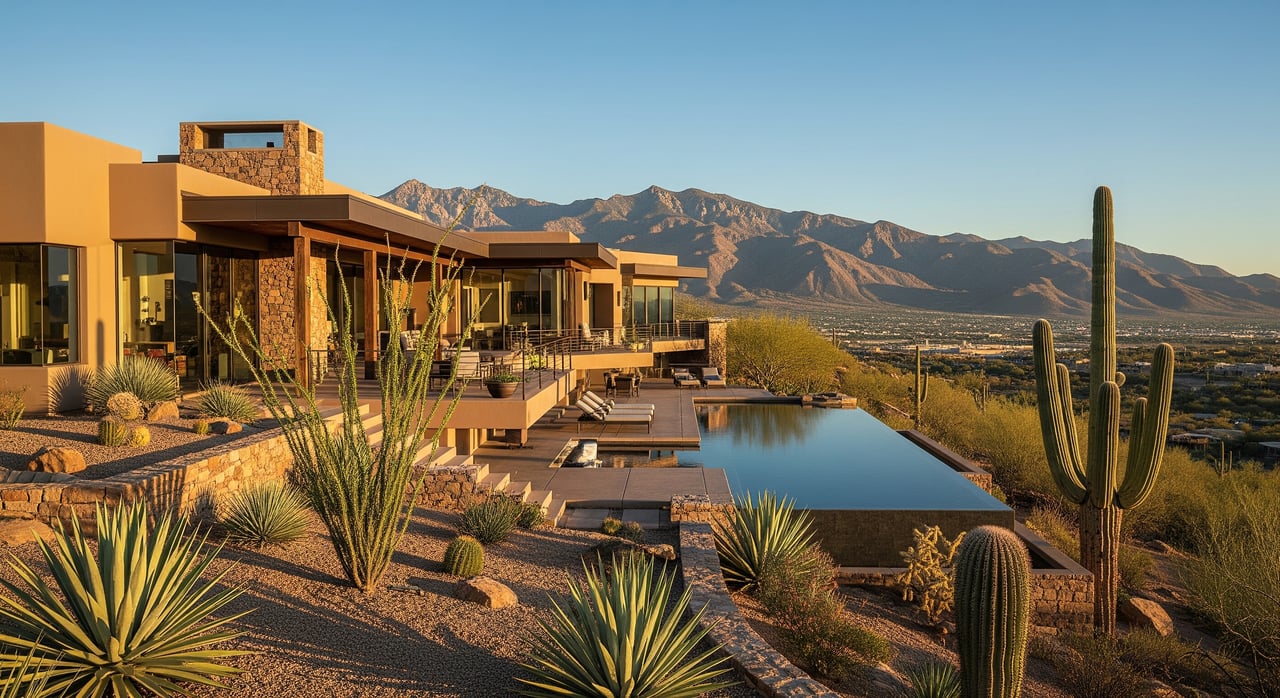
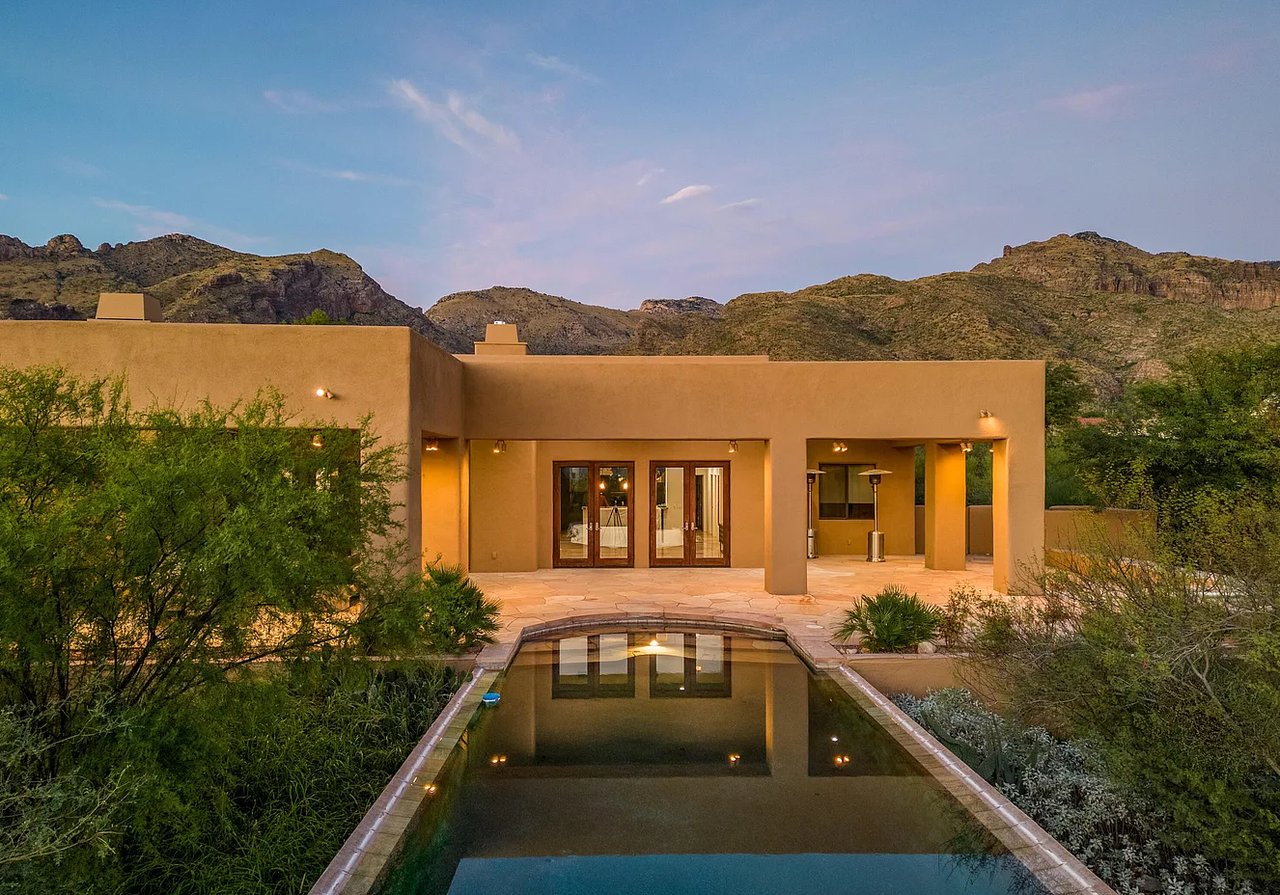
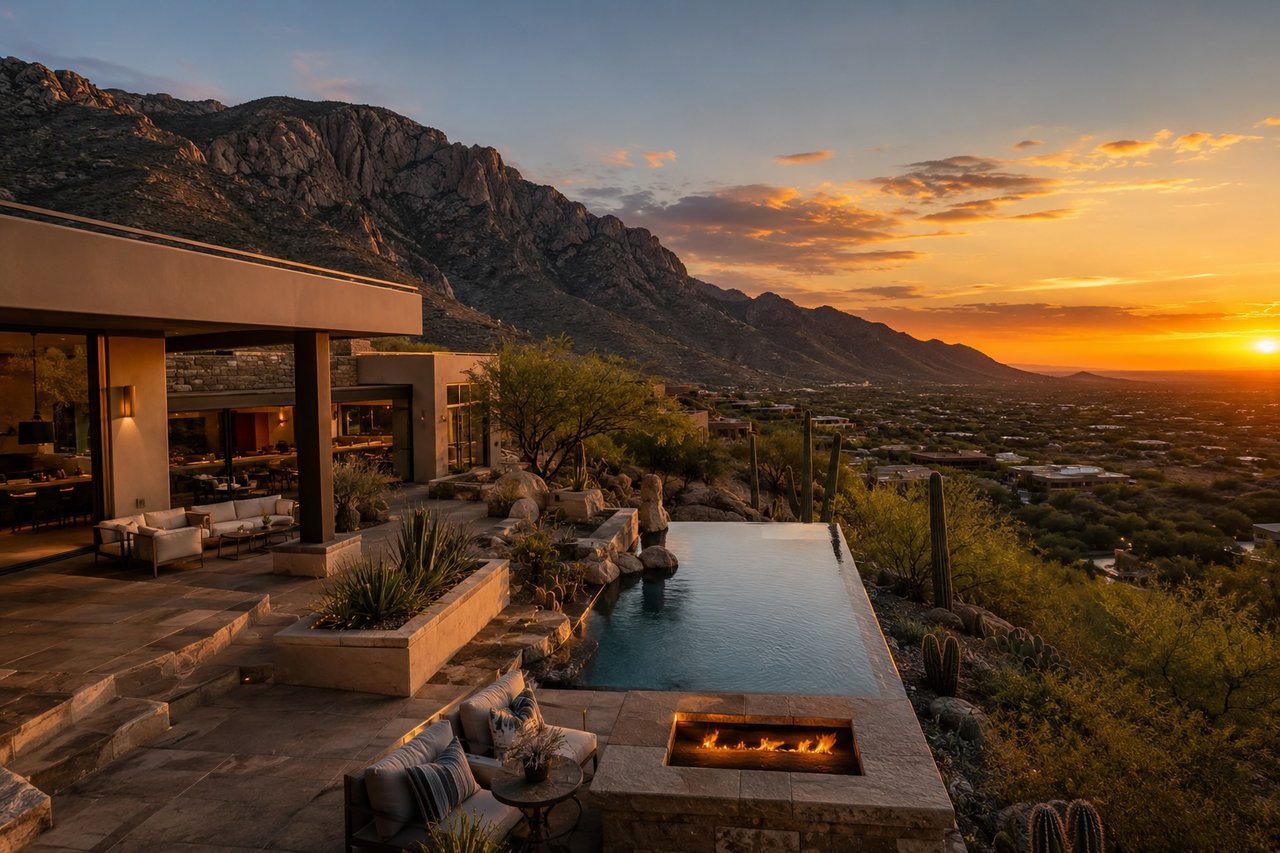
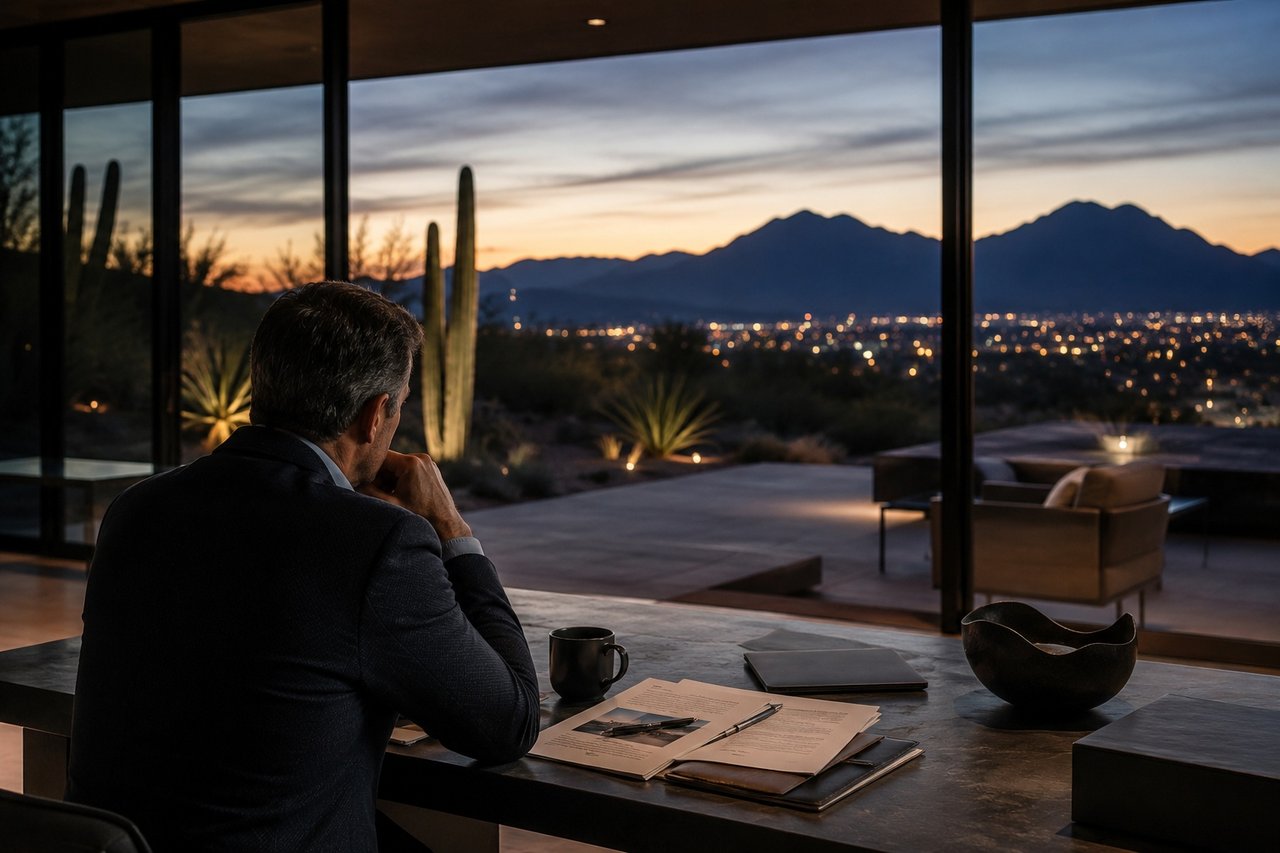
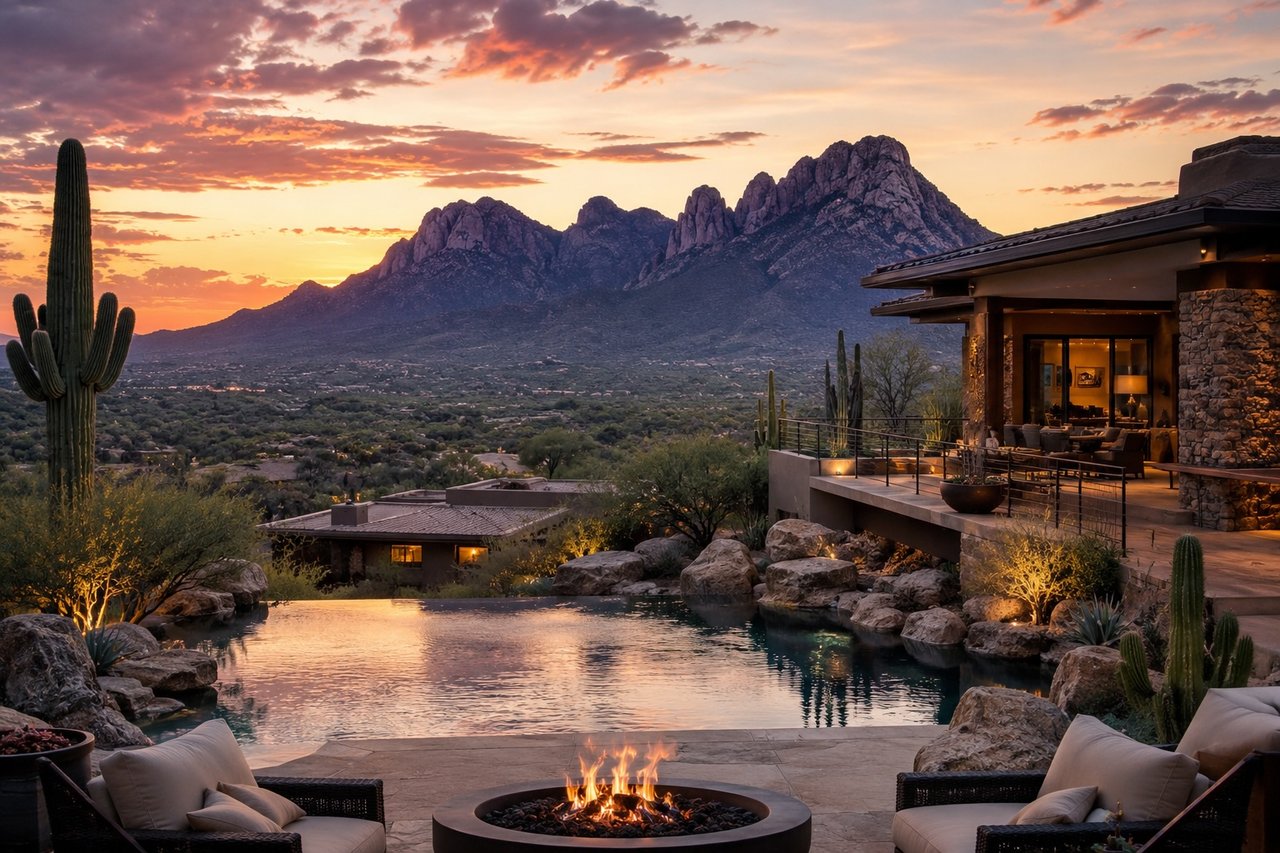
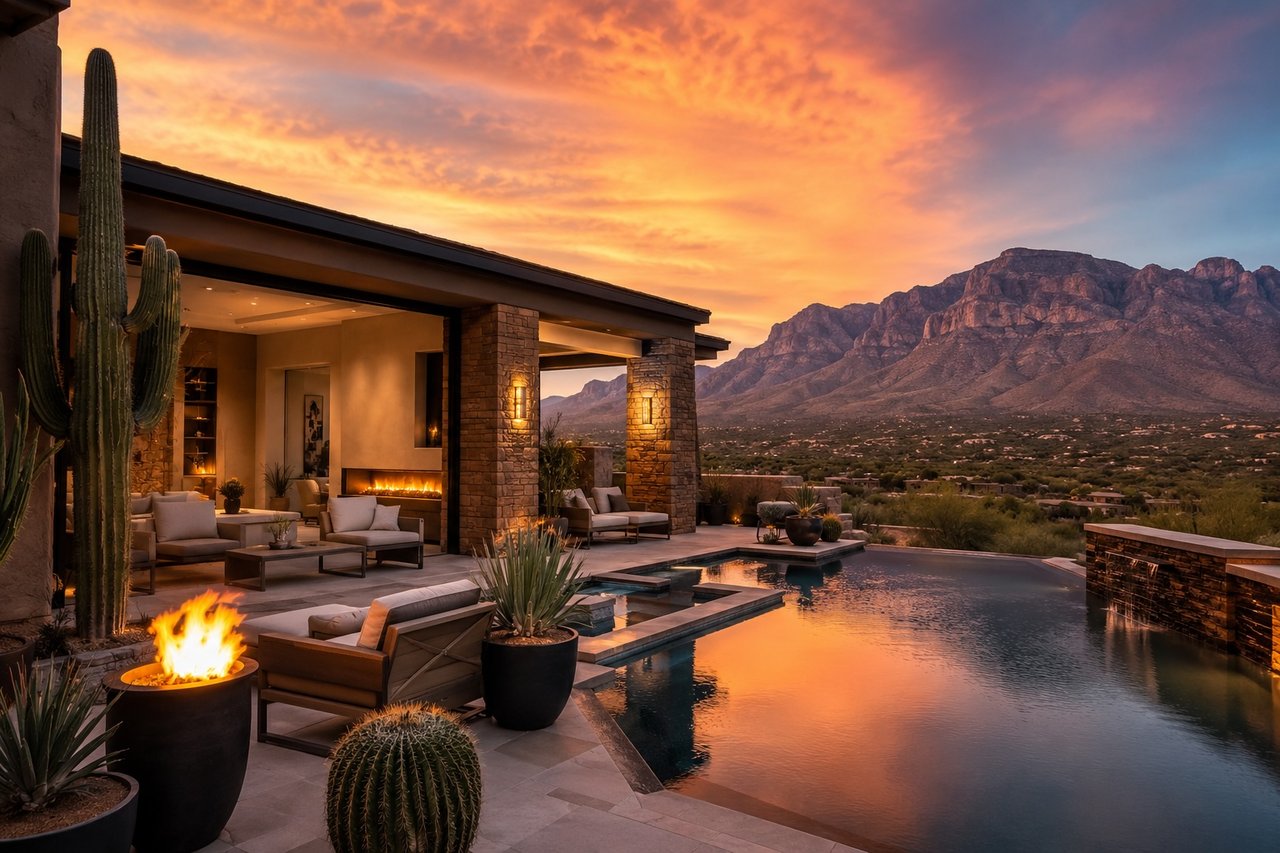
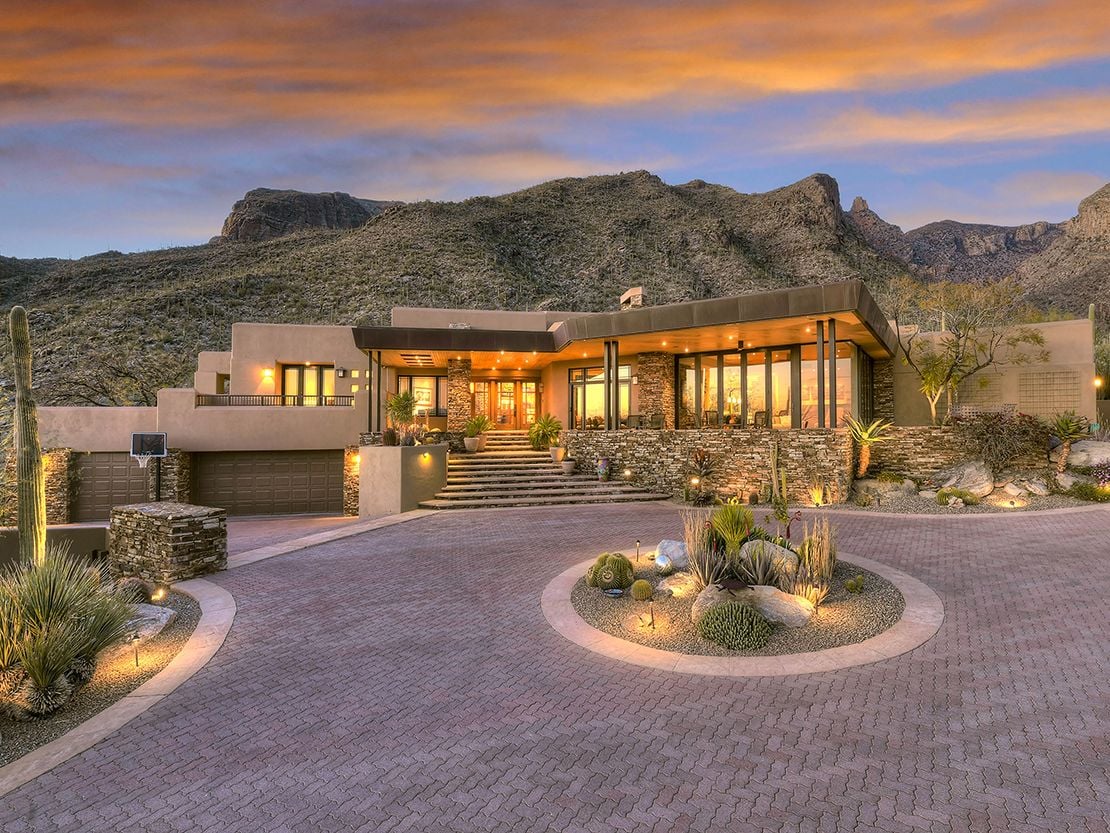
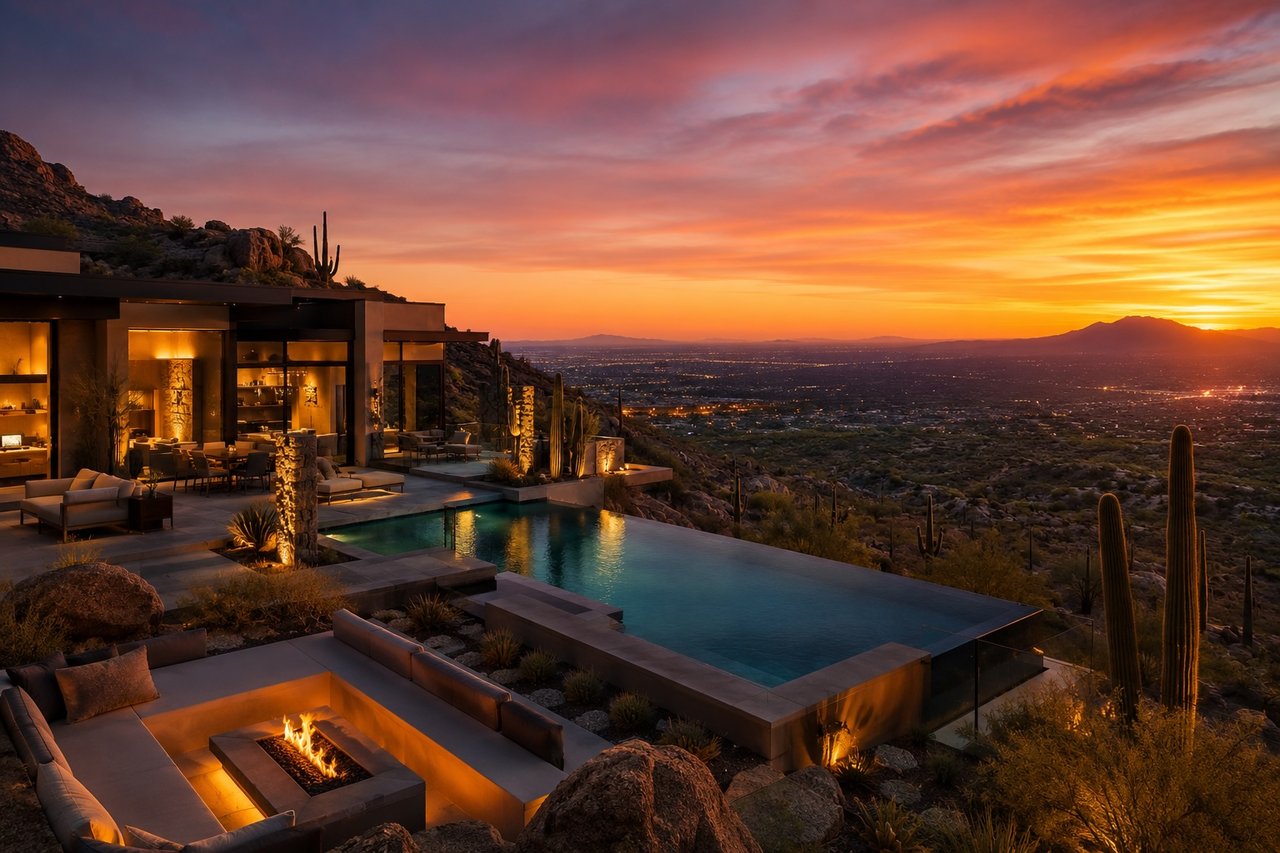
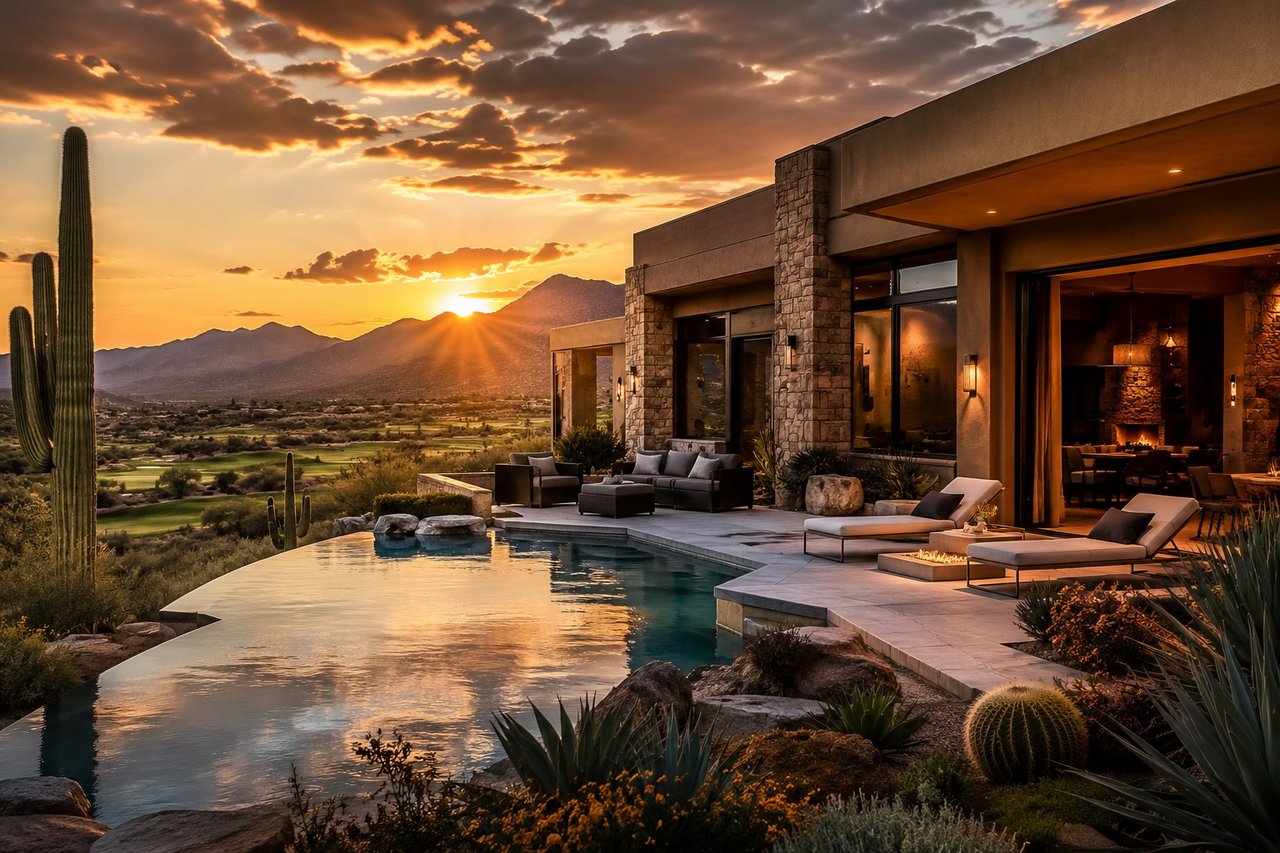
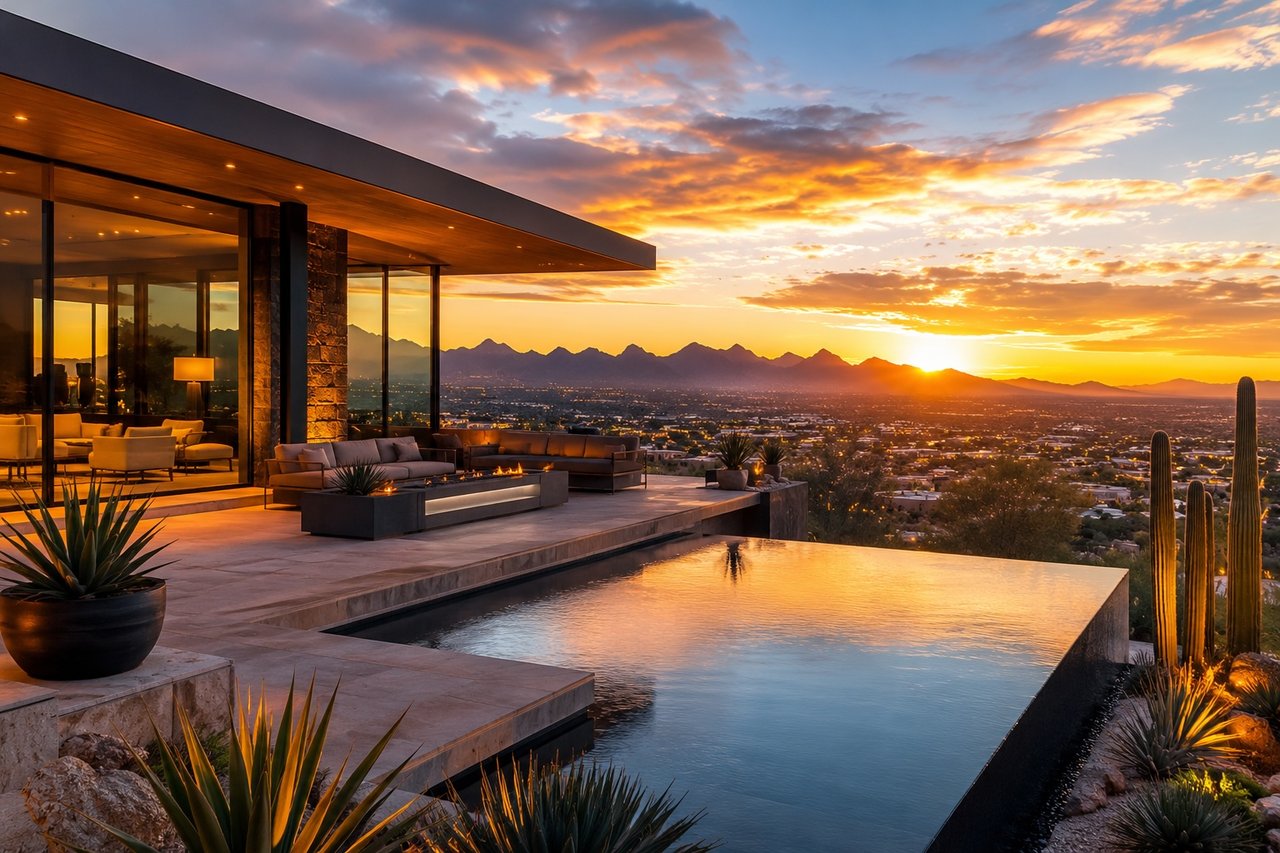
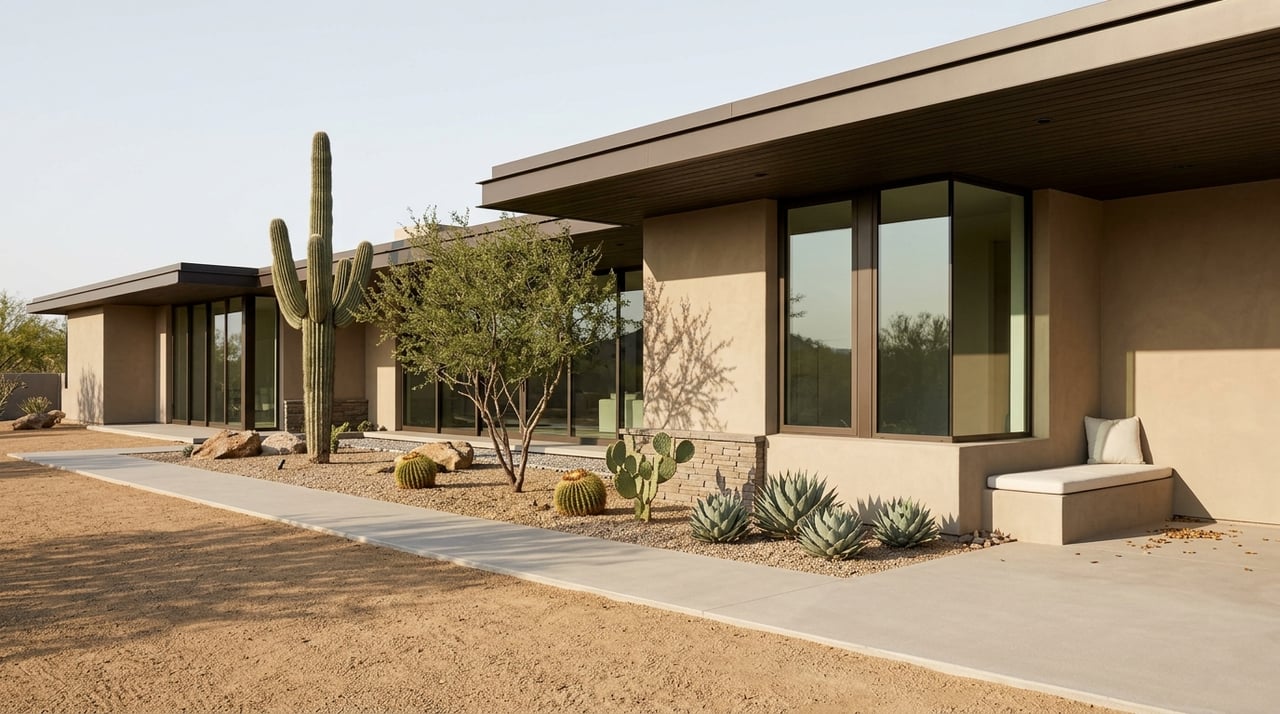
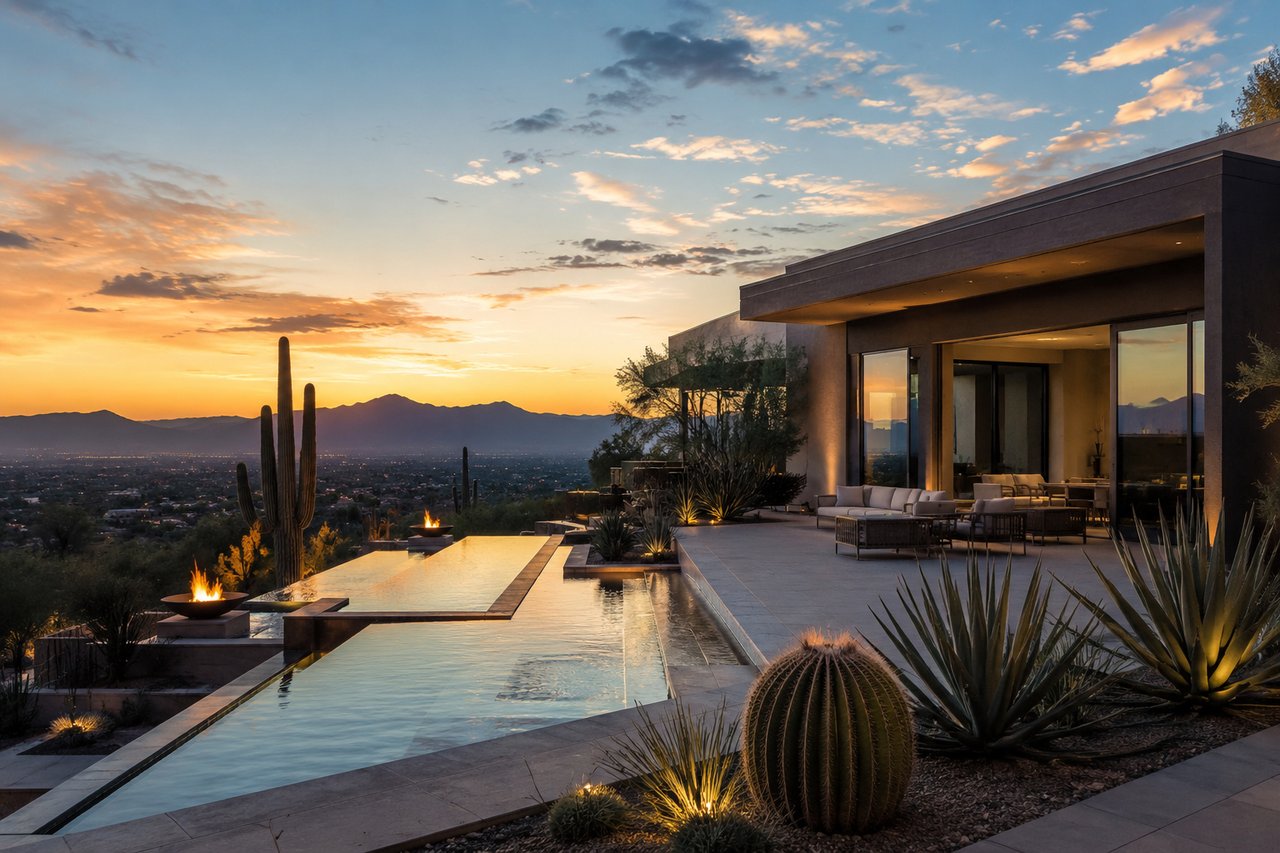
A desert contemporary home in the Catalina Foothills may offer a very different experience: broad glazing, long views, and a living room oriented toward the Santa Catalinas. Neither arrangement automatically makes a better collected home. They ask different things of a collection.
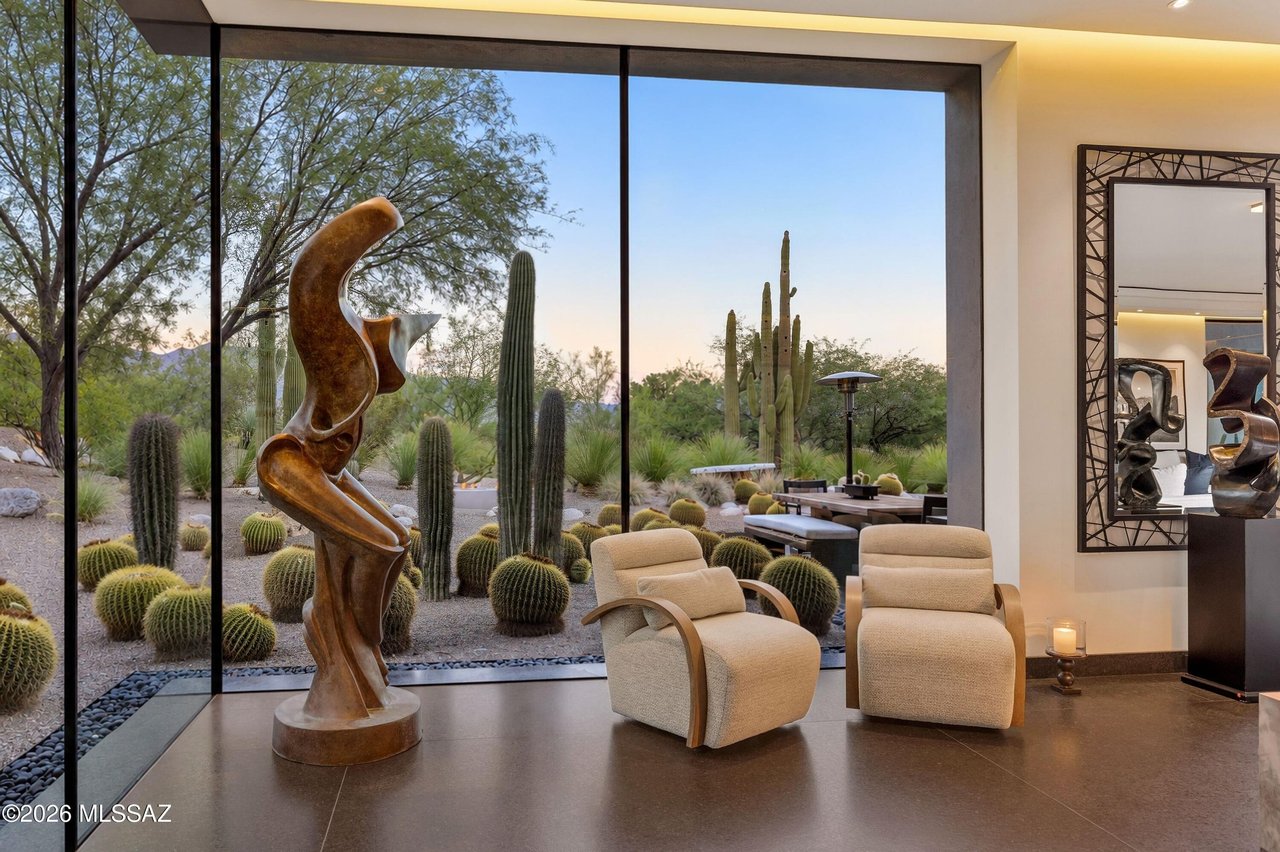
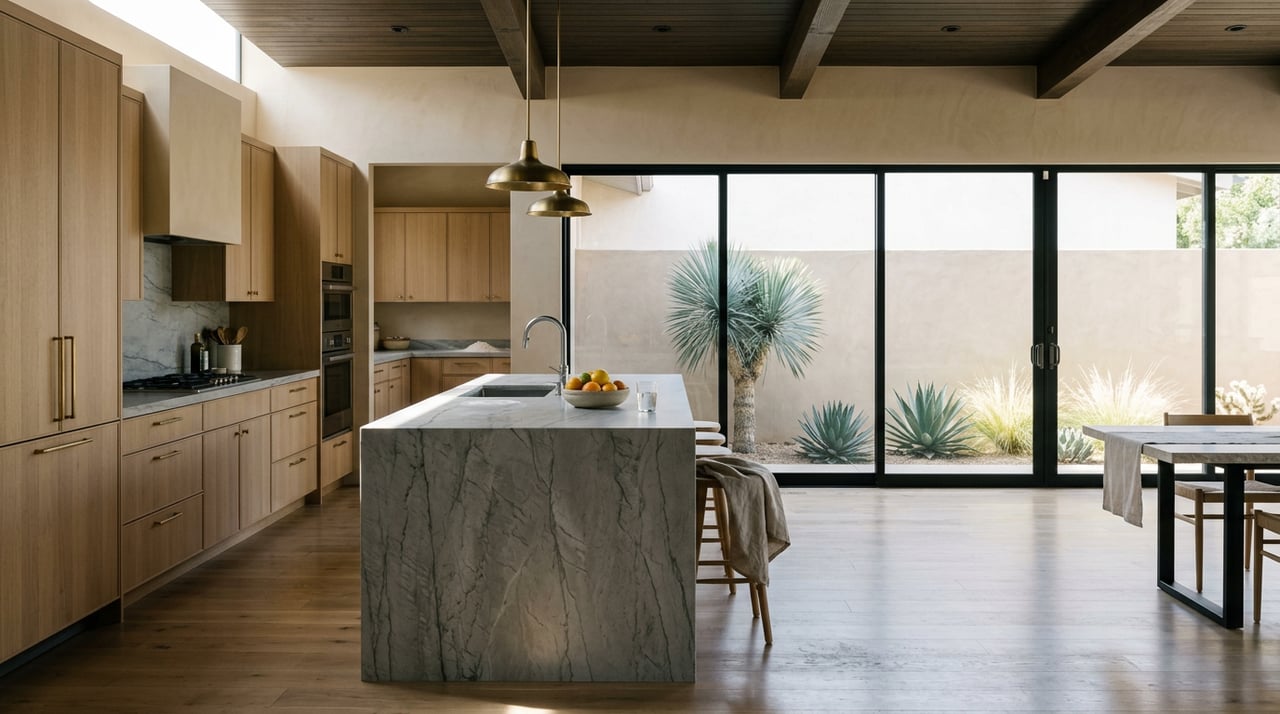
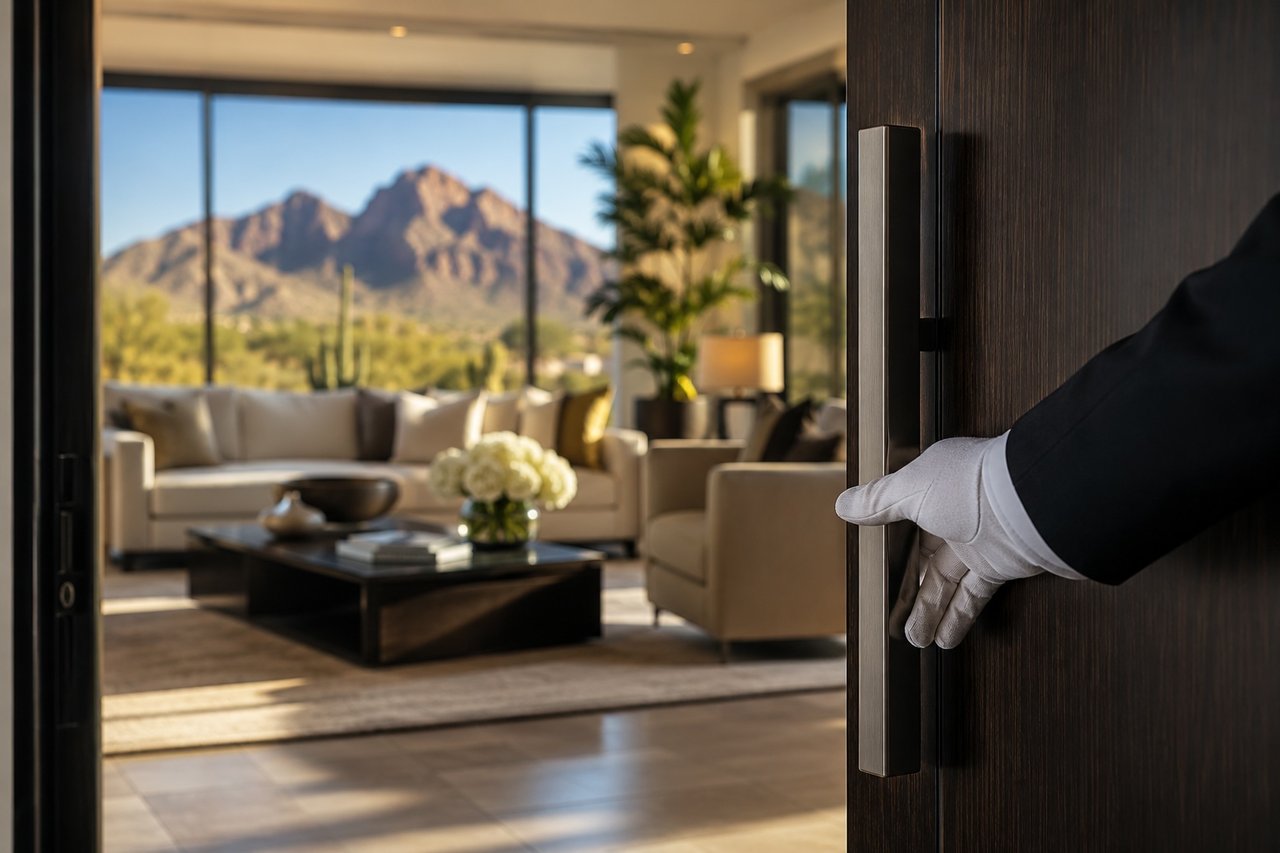
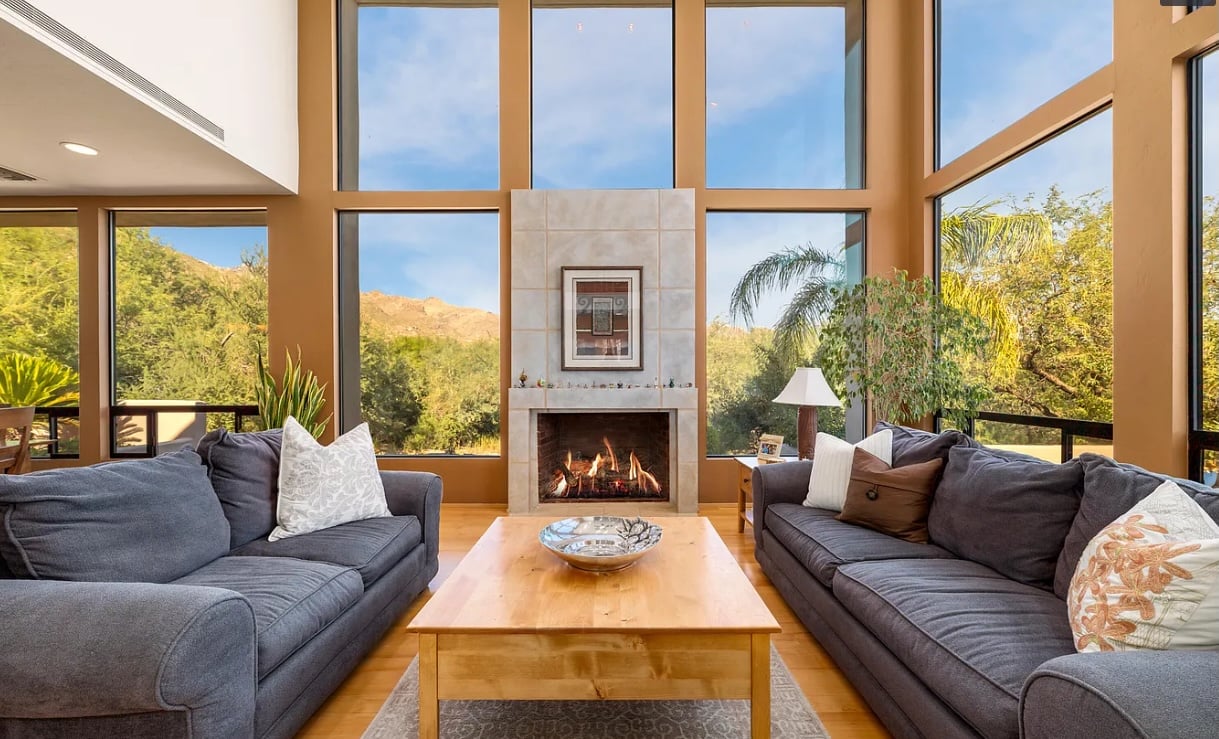
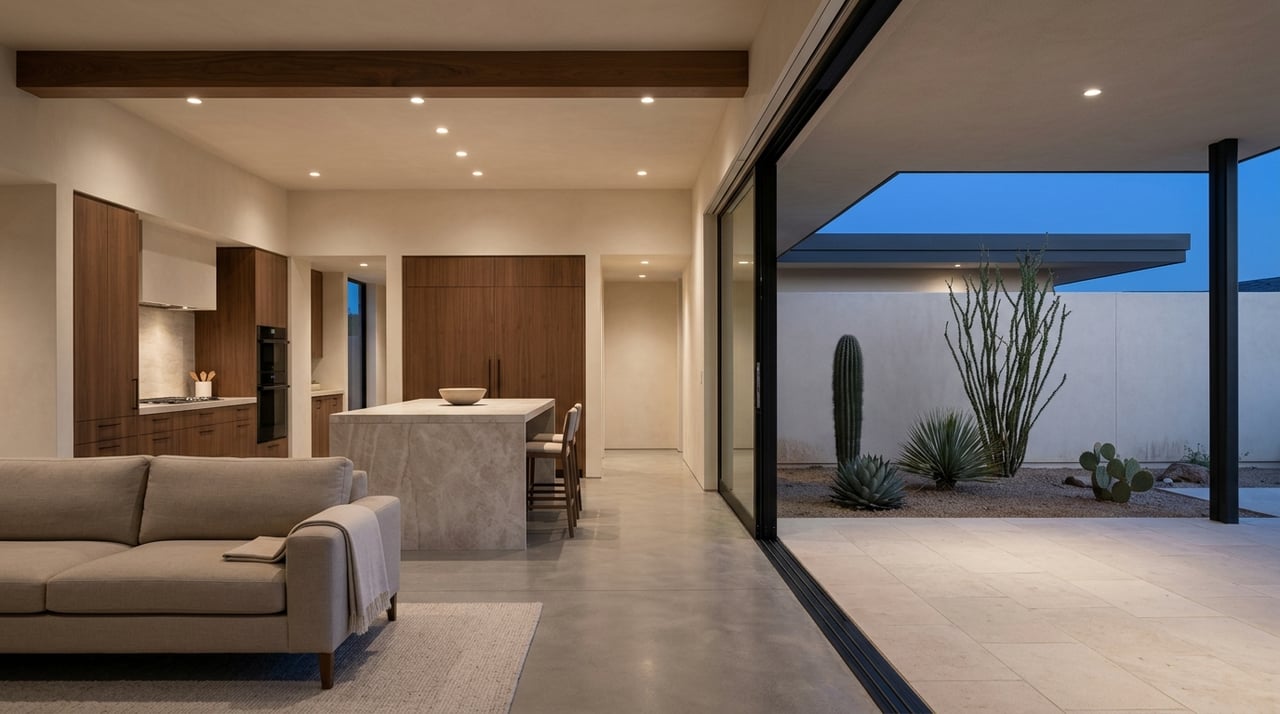
Consider two hypothetical showings. In a courtyard-oriented home, a painting might be encountered at close range as you move between rooms. You would want to check the wall’s dimensions, the available viewing distance, and whether a large piece can actually pass through the doorway. In a view-oriented home, you might find an expansive room with surprisingly little uninterrupted wall space. The glass is beautiful, but it cannot do the work of a wall.
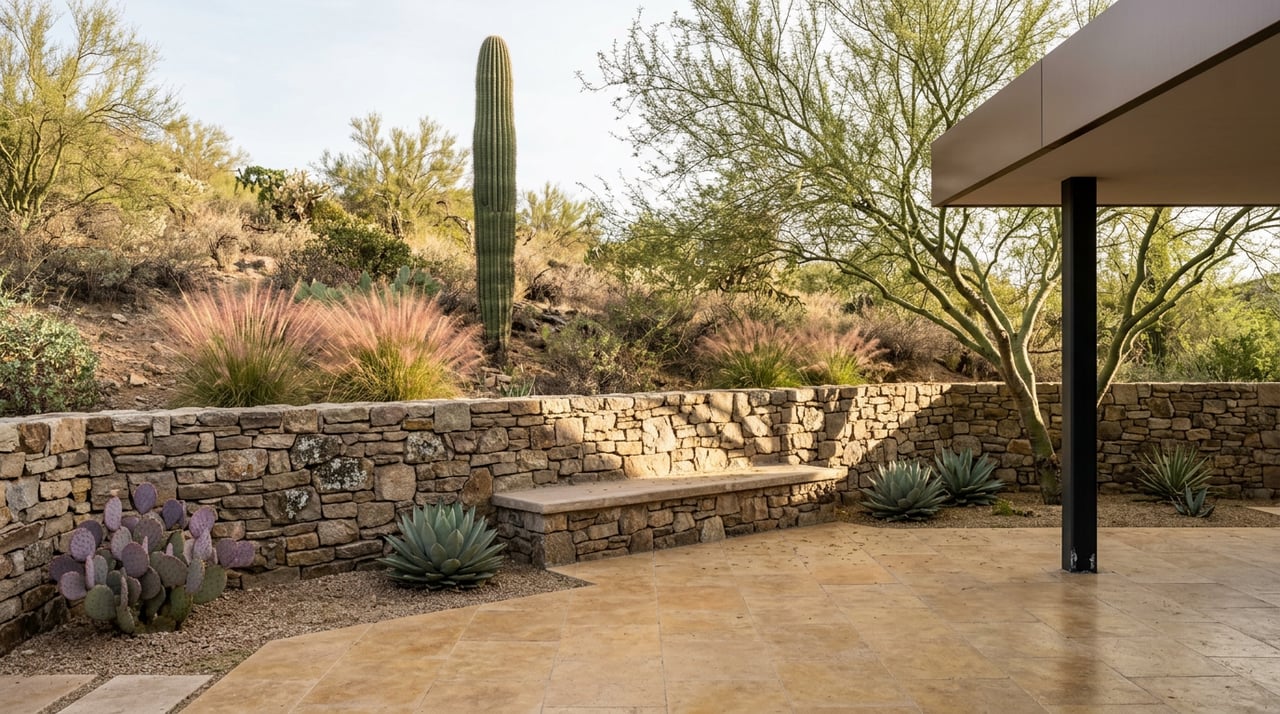
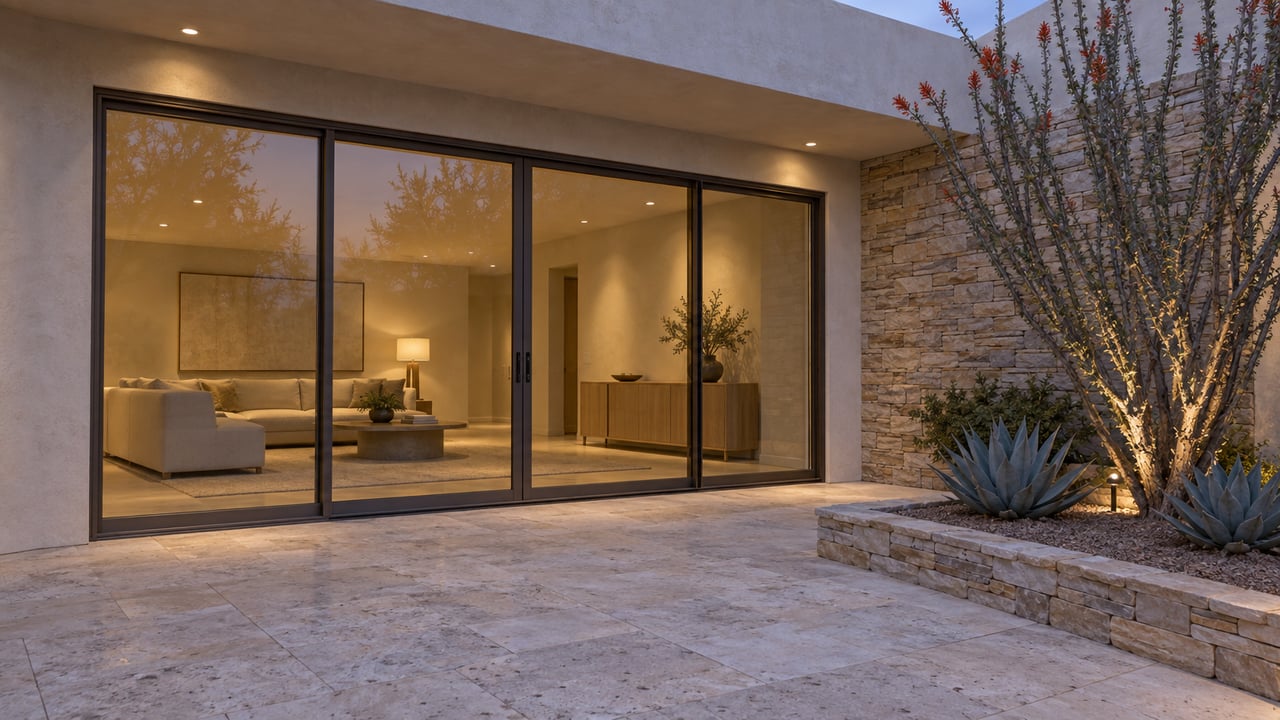
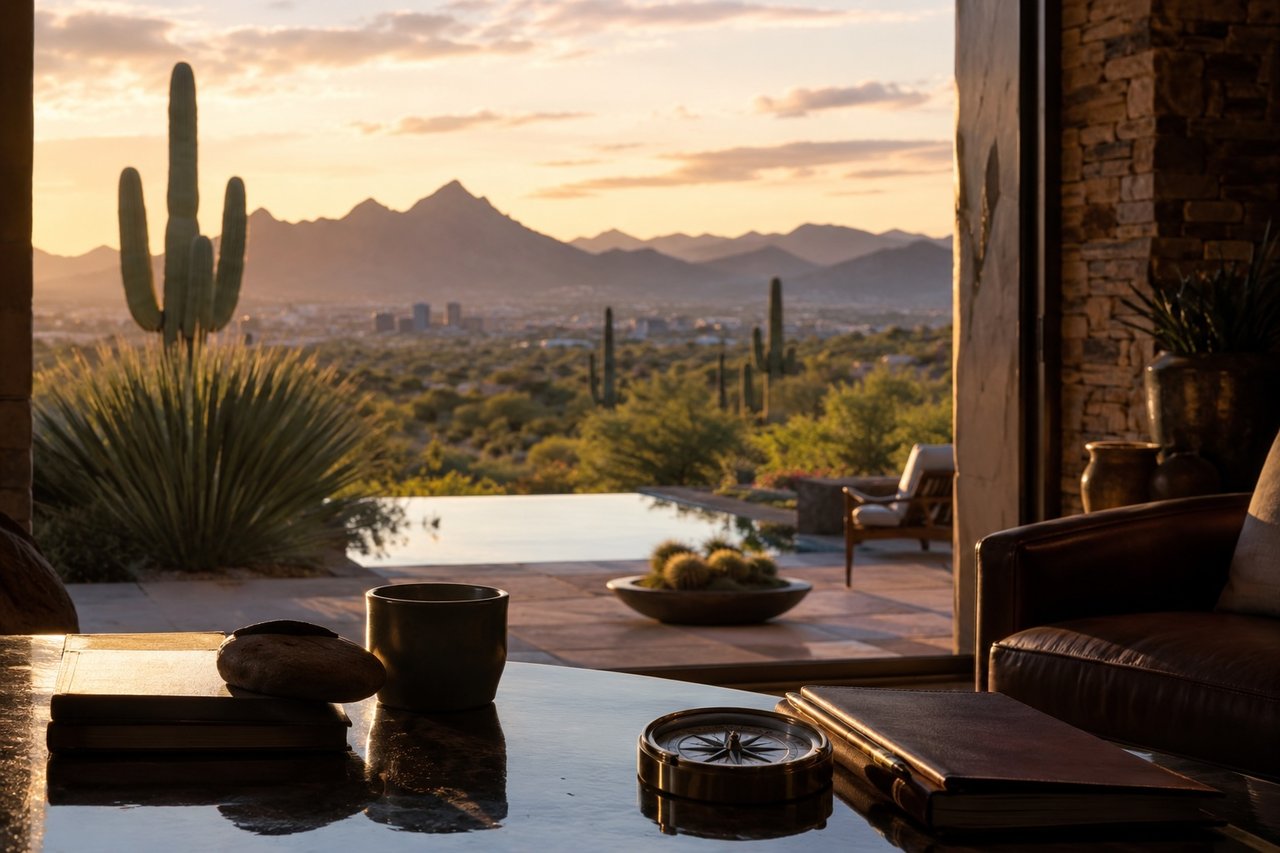
For Catalina Foothills luxury homes, I would also look at how the terrace connects to the room. Does the path outside cut between the sofa and the art you want to live with? Can a bookcase occupy a quieter interior wall? Where would you sit after dark, when the mountain view no longer supplies the room’s focal point?
Indoor-outdoor living becomes more satisfying when the interior has its own reasons to hold your attention.
Desert light is a design decision and a care decision
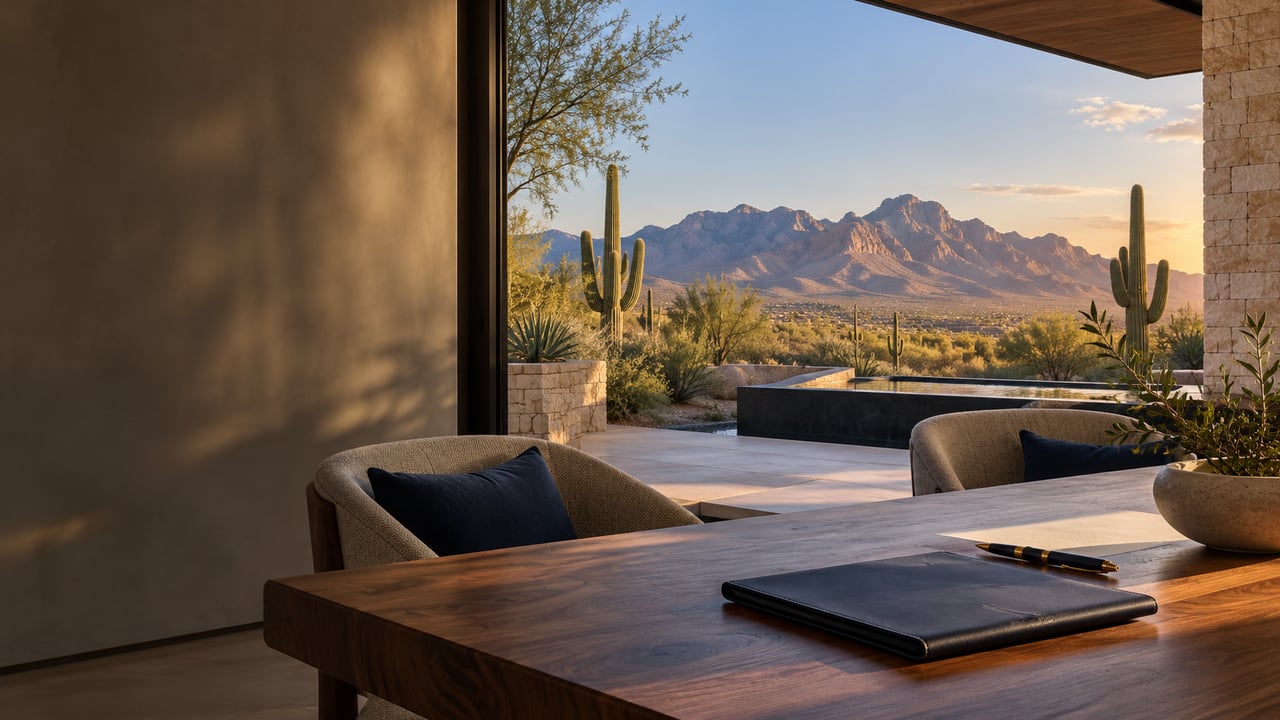
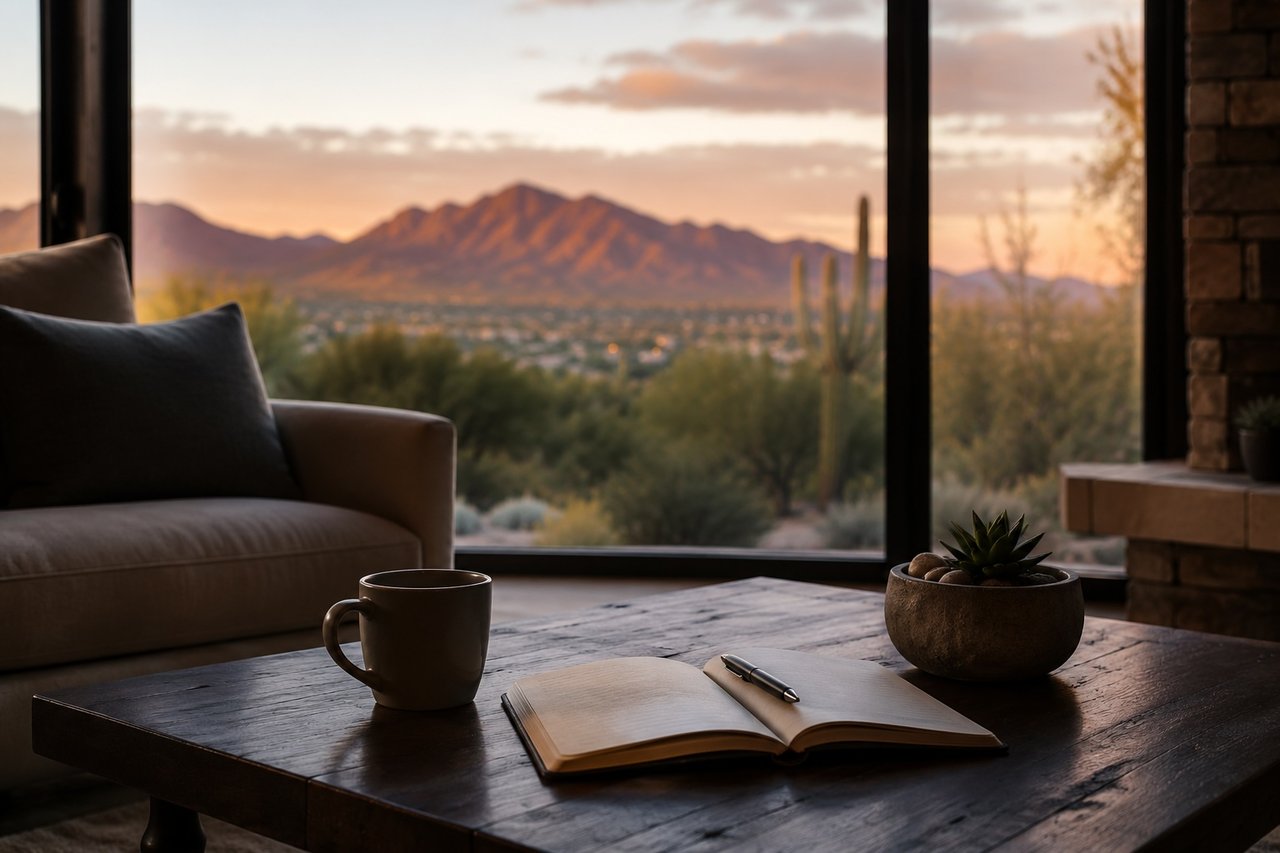
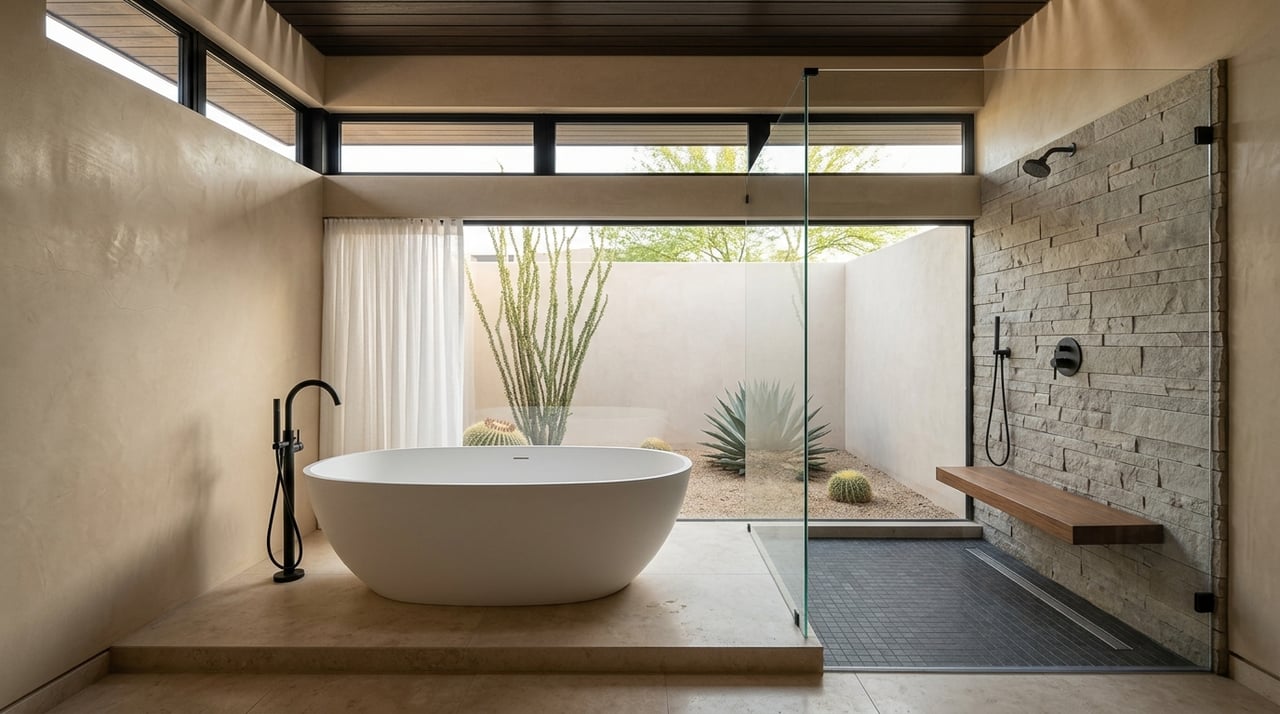
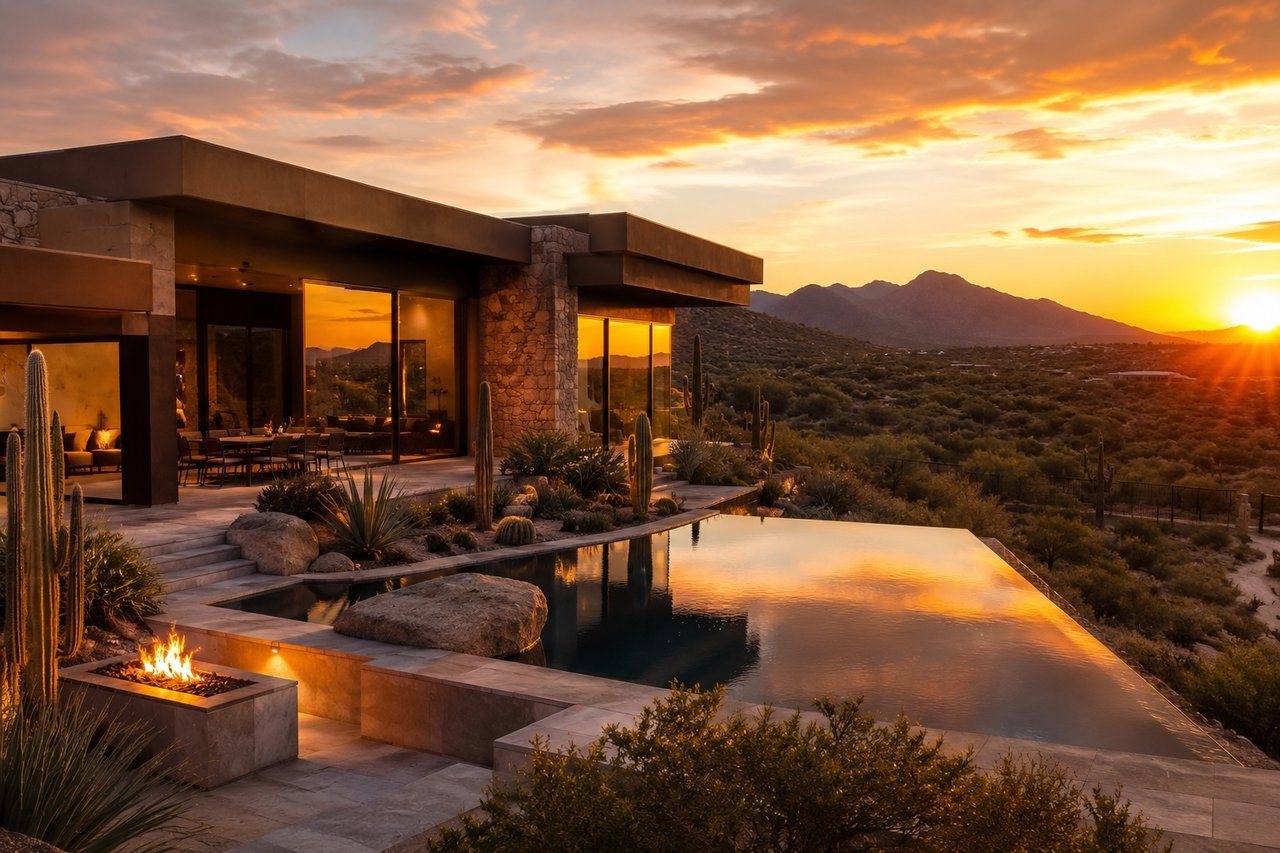
In Tucson, light should be part of the showing conversation from the beginning. Look at the depth of the window openings, the shade cast by an overhang or covered patio, and the direction the glass faces. Then look at the particular wall where you imagine a photograph or work on paper.
The Library of Congress explains that light damage to collection materials is cumulative and irreversible. Its guidance also makes an important distinction: filtering ultraviolet light does not eliminate damage from visible light.
That does not mean living in a dark house. It means making thoughtful choices about which objects belong in which conditions. A sensitive photograph may deserve an interior wall and controlled illumination. The bright room opening to the desert might be better suited to objects whose display requirements have been evaluated for that setting.
During a showing, ask how the room behaves at another time of day and season. An October morning does not reveal every condition a west-facing window will create. Look for a workable shading plan, and have a qualified conservator or conservation framer advise on important pieces. A beautiful wall is useful only if it is suitable for what you intend to place there.
Let provenance be more precise than “Southwestern”
Suppose a contemporary ceramic vessel purchased from a maker in Mexico becomes the first object unpacked in the new house. The maker’s name, the place of production, and the process behind it offer more to consider than a broad decorative category.
Keep the studio or gallery information, receipt, purchase date, and any description supplied with the work. If the maker or date is unknown, preserve that uncertainty. An attractive guess should not harden into a fact simply because it has been repeated.
The same principle applies to a Tucson house. If architectural provenance is part of its appeal, ask for the plans, names, dates, and records that establish it. A later addition deserves its own history. A seller’s recollection may be valuable, but it should remain distinguishable from documented authorship.
I am interested in the specificity of these stories. Learning who made something can alter the way we look at it. It can also change what we choose to place beside it. This is the curiosity at the center of my original Intellectual Maximalism essay.
Patina deserves attention, and condition deserves its own examination
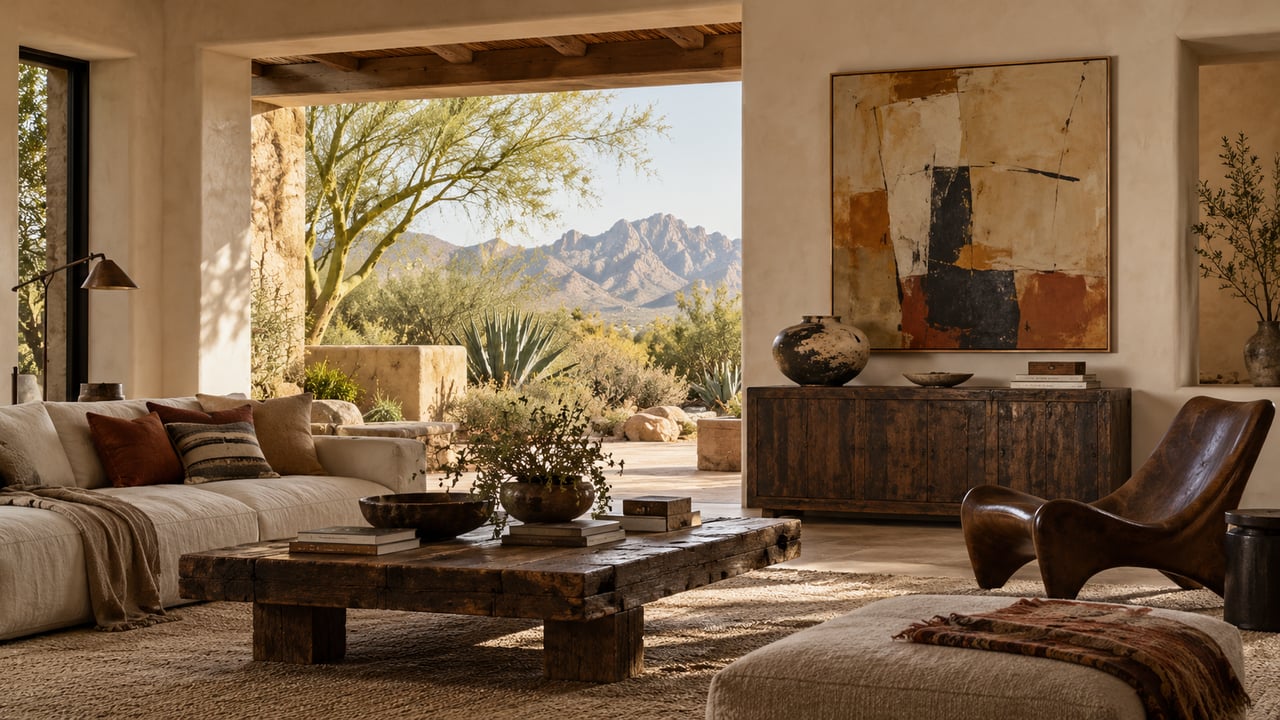
A worn cabinet can bring warmth to a precise contemporary room. An older plaster surface can give a painting an unexpectedly compelling setting. I find those relationships more interesting when the objects retain their individuality.
But appreciation should not turn every irregularity into a virtue. In a home purchase, the pleasure of an aged surface and the condition of the building are separate questions. Ask an appropriate inspector or specialist to evaluate staining, deterioration, movement, and repairs. Do not assume that an appealing texture explains how a wall has been maintained.
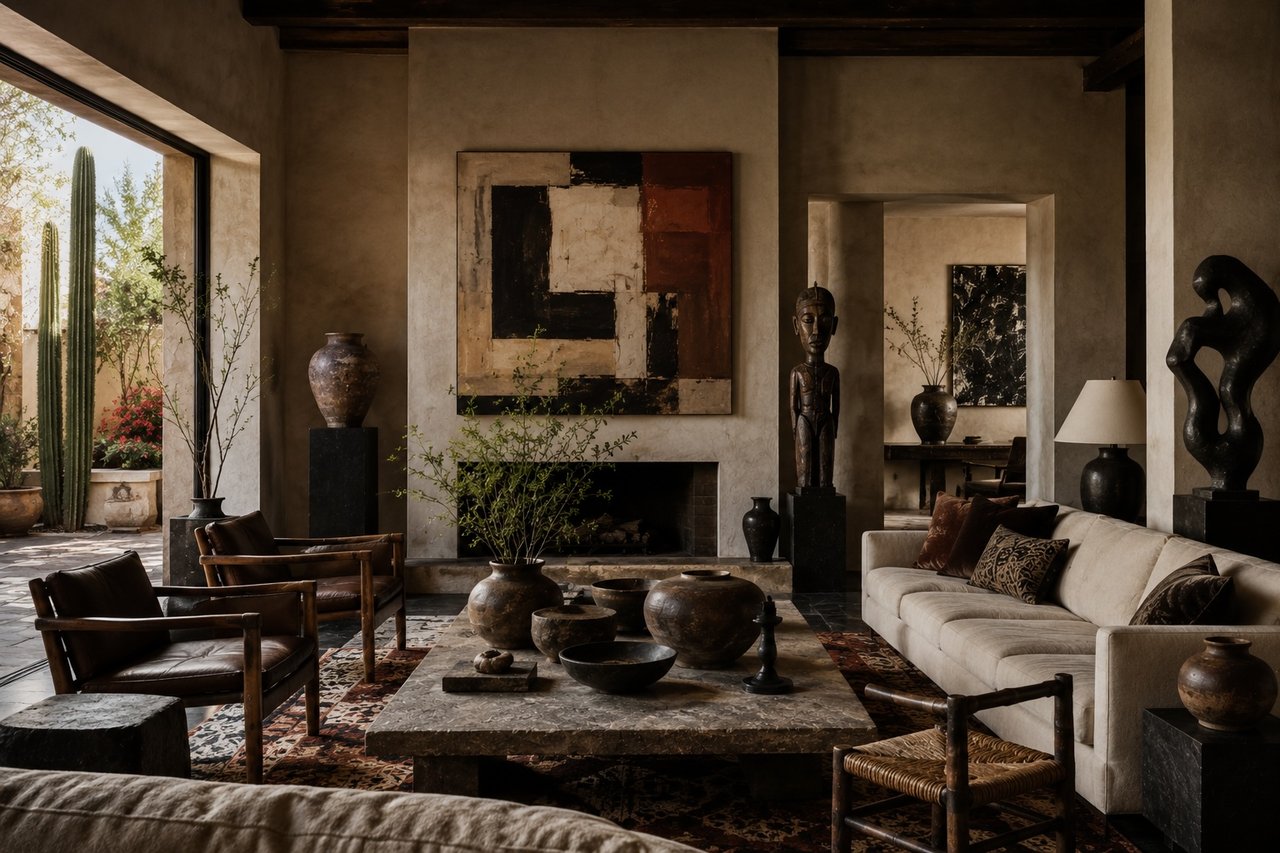
Once the practical questions are understood, the interior can have room for contrast. A quiet desert contemporary house can hold an inherited table and a small collection of ceramics. A historic room can accommodate a sharply drawn modern piece. Intelligent friction should give the eye something to explore while allowing people to move, sit, read, and talk comfortably.
A room can be restrained and still carry considerable meaning. The connection between Intellectual Maximalism and Tucson luxury real estate is the depth of the experience, rather than the quantity of furnishings.
A Tucson showing checklist for the things you intend to keep
Before touring, photograph a few important pieces and record their dimensions. Include the dining table you use, the painting you would regret storing, and the books that need a permanent place. This makes the conversation about a home more concrete.
- Measure the usable wall. Note doorways, switches, vents, built-ins, and the distance from which you would see the artwork. A long room may have a short useful wall.
- Follow the light. Identify direct sun, shade, and realistic window-treatment options. Separate the appeal of mountain views from the display needs of sensitive objects.
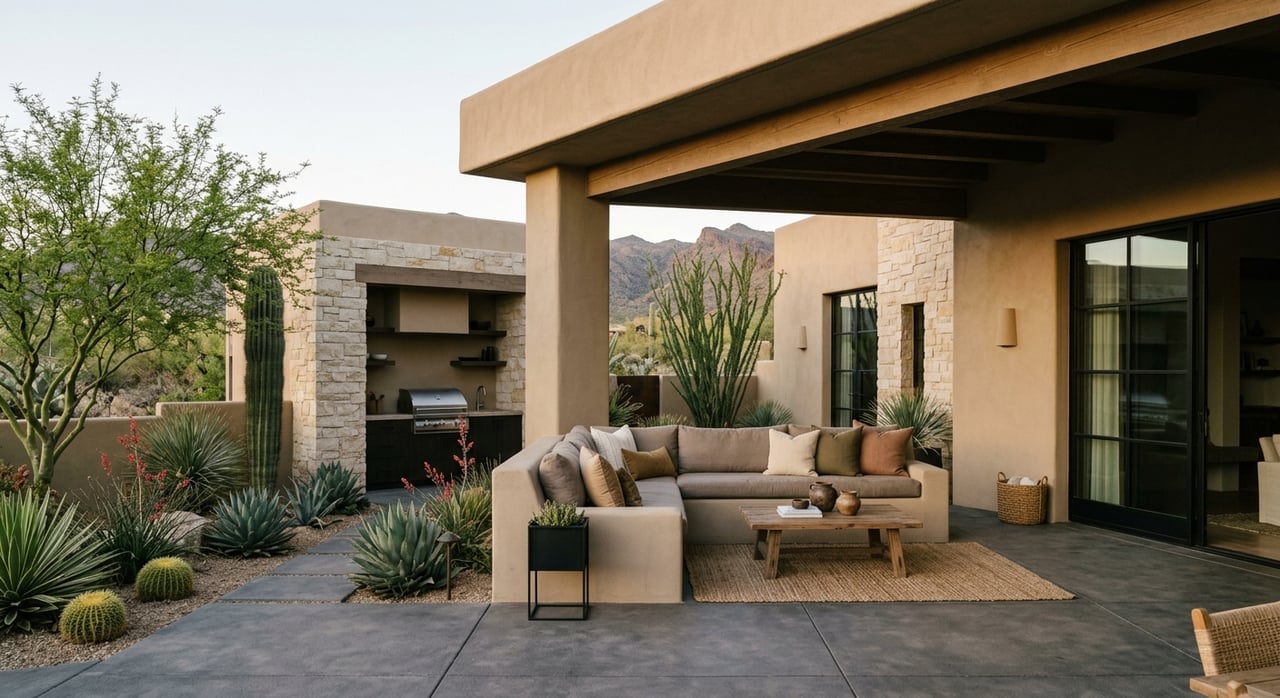
- Walk the route to the courtyard or terrace. Imagine your furniture in place. Check whether indoor-outdoor circulation would interrupt a seating group or put a vulnerable object beside a busy opening.
- Consider arrival and storage. Measure doorways and turns for substantial pieces. Look for suitable interior storage rather than assuming the garage will serve every collection.
- Read the house’s history. Request available architectural and renovation records, and identify questions that need a specialist before committing to changes.
These questions give a Tucson luxury home search a more personal definition of fit. They also help distinguish the architecture you are buying from the furnishings that happen to make the listing photographs attractive.
Choose a home that can keep becoming yours
The painting from our opening may eventually find another wall. A new interest may develop. A cabinet may come to mean something different as you learn more about it.
I like the possibility of a home that leaves room for that evolution. In Tucson, the architecture, the desert, and the objects we choose to live with can each contribute something. A collected home gives those relationships time to develop.
Browse Tucson-area homes for sale, then connect with Daniel Sotelo about the architecture, setting, and pieces you want your next home to accommodate. Bring photographs and measurements of what matters to you; we can make those priorities part of the showing plan.
Quick answers
Can a minimalist Tucson home be a collected home?
Yes. A few thoughtfully placed objects can carry history, personal meaning, and contrast. Visual abundance is optional.
What should art collectors look for when buying a Tucson home?
Prioritize usable wall space, controllable light, suitable storage, access for substantial pieces, and comfortable circulation. Have a specialist assess important objects’ care requirements.
Does a collected interior have to match the home’s architectural period?
No. Old and new can work together when scale, placement, care, and daily use are considered. Understanding the building and the objects makes the contrast more deliberate.
About Daniel Sotelo
Daniel Sotelo is a Tucson real estate advisor with Russ Lyon Sotheby’s International Realty. His Intellectual Maximalism series explores architecture, art, culture, personal expression, and Sonoran Desert living. The interpretations in this series are his own.